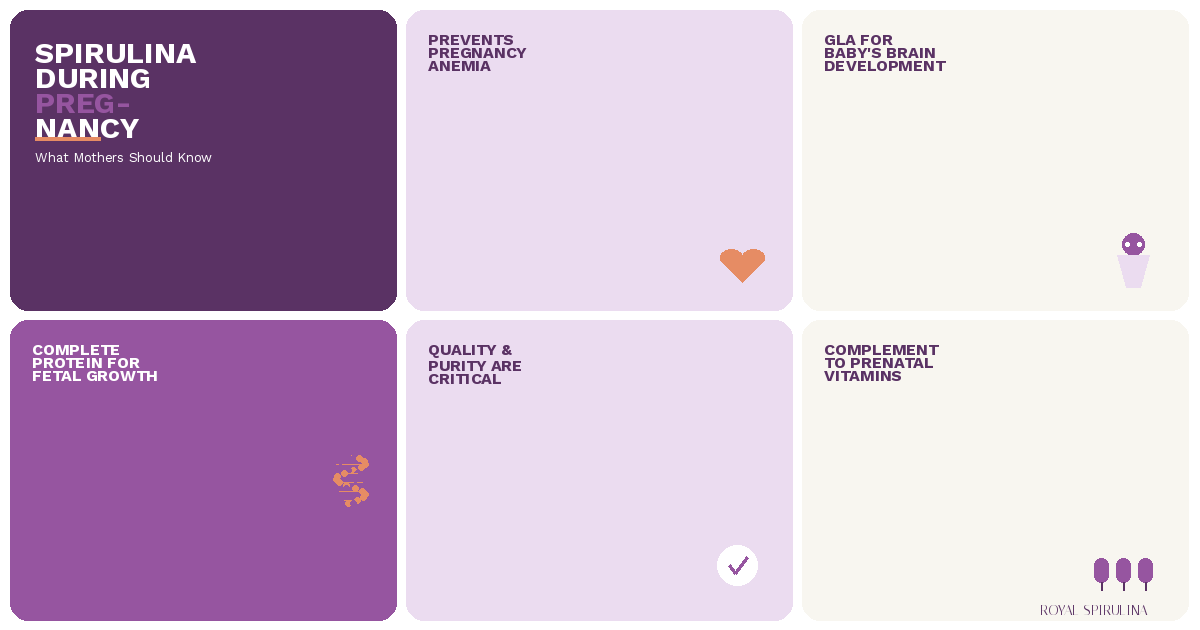
Spirulina and Pregnancy: What Expecting Mothers Should Know
Pregnancy increases your nutritional demands dramatically. Your body needs more iron, protein, folate, calcium, and essential fatty acids to support both your health and your baby’s development. Many pregnant women struggle to meet these needs through diet alone, turning to prenatal supplements to fill the gaps.
Spirulina — nature’s most nutrient-dense superfood — offers a remarkable nutritional profile that aligns closely with pregnancy needs. But is it safe? What does the research say? And what should you look for in a spirulina supplement if you’re expecting?
Key Nutrients in Spirulina That Support Pregnancy
1. Iron: Preventing Pregnancy Anemia Naturally
Iron deficiency anemia affects up to 40% of pregnancies worldwide and is associated with premature birth, low birth weight, and increased maternal mortality. The iron demands of pregnancy are enormous — your blood volume increases by nearly 50%, and your developing baby builds its own iron stores from your supply.
Spirulina is one of the most iron-rich foods on the planet, providing approximately 28.5 mg of iron per 100g — significantly more than red meat, spinach, or lentils. Critically, spirulina’s iron is naturally chelated and highly bioavailable, making it easier to absorb than the iron sulfate found in most prenatal vitamins (which commonly causes constipation and nausea).
For women who struggle with iron supplement side effects during pregnancy, spirulina offers a gentler yet effective alternative. Read our full guide on spirulina for iron deficiency and anemia.
2. Complete Protein for Fetal Development
Protein needs increase by approximately 25 grams per day during pregnancy, particularly in the second and third trimesters when the baby is growing rapidly. Spirulina’s 60–70% protein content — with all essential amino acids — makes it one of the most protein-efficient foods you can consume.
Unlike many plant proteins that lack certain amino acids, spirulina provides a complete amino acid profile with exceptional digestibility (85–95% absorption). This makes it superior to most plant-based protein sources and even competitive with animal proteins. See our comparison of spirulina protein vs meat.
3. GLA for Baby’s Brain Development
Gamma-linolenic acid (GLA) is a rare anti-inflammatory omega-6 fatty acid found naturally in spirulina. GLA is a precursor to DGLA (dihomo-gamma-linolenic acid), which plays a critical role in infant brain development, nervous system formation, and healthy inflammatory regulation.
Most Western diets are severely deficient in GLA. Spirulina is one of the few dietary sources, making it uniquely valuable during pregnancy when essential fatty acids are in high demand. Learn more about spirulina’s GLA benefits.
4. B Vitamins Including Folate
Spirulina contains naturally occurring B vitamins including B1, B2, B3, B6, and some folate. While spirulina alone may not provide sufficient folate to prevent neural tube defects (most doctors recommend at least 400mcg of folic acid daily), it contributes meaningfully to overall B vitamin status and supports the energy metabolism that pregnancy demands.
5. Antioxidant Protection
Pregnancy naturally increases oxidative stress. Spirulina’s phycocyanin, beta-carotene, and superoxide dismutase provide powerful antioxidant protection for both mother and developing baby — helping to protect against preeclampsia (which is associated with oxidative stress) and supporting healthy placental function.
6. Calcium and Magnesium
Both minerals are essential for fetal bone development and maternal health. Spirulina provides both in bioavailable forms, contributing to the increased calcium and magnesium demands of pregnancy.
What Research Says About Spirulina During Pregnancy
A 2016 study published in the European Journal of Nutrition found that spirulina supplementation in pregnant women significantly improved iron status and reduced the incidence of anemia compared to standard iron supplementation — with fewer gastrointestinal side effects.
Research in the Journal of Medicinal Food demonstrated that spirulina supplementation during pregnancy improved birth outcomes including birth weight and reduced the risk of small-for-gestational-age babies in malnourished populations.
Animal studies have shown spirulina’s antioxidants protect against pregnancy complications associated with oxidative stress, including preeclampsia models and gestational diabetes.
Safety Considerations for Pregnancy
Is Spirulina Safe During Pregnancy?
Spirulina has a long history of safe human consumption and is classified as Generally Recognized as Safe (GRAS) by the FDA. It has been consumed by pregnant women in various cultures for generations. Current research has not identified adverse effects from spirulina consumption during pregnancy at recommended doses.
However — and this is critically important — quality and purity matter more during pregnancy than at any other time.
Why Sourcing Quality Is Non-Negotiable
The biggest safety concern with spirulina during pregnancy is contamination, not the spirulina itself. Low-quality spirulina products can contain:
Heavy metals: Lead, mercury, cadmium, and arsenic can accumulate in spirulina grown in contaminated water. These are especially dangerous during fetal development.
Microcystins: Toxic compounds produced by some blue-green algae species that can contaminate spirulina harvested from natural lakes or poorly controlled ponds.
Bacteria and other contaminants: Spirulina grown in unsanitary conditions may harbor harmful microorganisms.
This is why choosing a premium, independently tested spirulina product is essential during pregnancy. Royal Spirulina is grown in controlled environments, regularly tested for heavy metals and microcystins, and freeze-dried to preserve maximum nutrient integrity. Learn why processing matters in our freeze-dried vs spray-dried comparison.
Recommended Dosage During Pregnancy
Start with 1–2 grams per day and consult your healthcare provider before increasing. Many practitioners are comfortable with 3–5 grams daily during pregnancy, but individual circumstances vary. Always discuss spirulina supplementation with your OB-GYN or midwife.
When to Avoid Spirulina During Pregnancy
Avoid spirulina if you have phenylketonuria (PKU), as spirulina contains phenylalanine. Also exercise caution if you have an autoimmune condition, as spirulina can stimulate immune function. Consult your doctor if you’re taking any medications.
Spirulina vs Prenatal Vitamins: A Complement, Not a Replacement
Spirulina should not replace your prenatal vitamin. Prenatal vitamins provide specific amounts of folic acid, vitamin D, and other targeted nutrients essential for pregnancy. However, spirulina is an outstanding complement to prenatal vitamins — providing bioavailable iron (without the side effects), complete protein, GLA, and phycocyanin antioxidants that standard prenatal vitamins don’t contain.
Together, a quality prenatal vitamin and freeze-dried spirulina create a far more comprehensive nutritional foundation than either alone. Explore all of spirulina’s science-backed health benefits.
How to Take Spirulina During Pregnancy
Mix spirulina powder into smoothies, juices, or yogurt — many pregnant women find this the easiest way to take it, especially during the first trimester when nausea is common. The mild flavor blends well with fruits and won’t worsen morning sickness for most women. For recipe ideas, see our spirulina recipes and how to use spirulina powder.
Related Spirulina Guides
- Spirulina for Kids — continuing spirulina nutrition for your growing child
- Spirulina for Weight Loss — healthy weight management during and after pregnancy
- Spirulina for Inflammation and Joint Pain — managing pregnancy-related inflammation
- Spirulina for Skin, Hair, and Anti-Aging — supporting skin health through pregnancy changes
Frequently Asked Questions
Can I take spirulina in the first trimester?
Yes, spirulina is generally considered safe throughout pregnancy, including the first trimester. Its nutrient density can be especially helpful during early pregnancy when nutritional demands increase but nausea may limit food intake. Always consult your healthcare provider.
Will spirulina help with pregnancy fatigue?
Many pregnant women report improved energy with spirulina supplementation. This is likely due to its high iron content (addressing anemia-related fatigue), B vitamins (supporting energy metabolism), and complete protein (providing sustained energy).
Can spirulina prevent gestational diabetes?
Research shows spirulina can help regulate blood sugar and improve insulin sensitivity, which may support healthy glucose levels during pregnancy. However, it should not be considered a substitute for medical management of gestational diabetes. See our article on spirulina and diabetes.
Is spirulina safe while breastfeeding?
Spirulina is generally considered safe during breastfeeding. Its nutrient density — particularly iron, protein, and B vitamins — can help replenish maternal stores depleted during pregnancy and birth. As always, choose a high-quality, tested product.
How much spirulina is too much during pregnancy?
Most experts recommend staying at or below 5 grams daily during pregnancy. Higher doses haven’t been extensively studied in pregnant populations, so it’s wise to err on the side of caution.
