Spirulina: Nature’s Most Powerful Anti-Inflammatory
Chronic inflammation is at the root of nearly every major disease — from arthritis and heart disease to diabetes and cancer. Millions of people rely on NSAIDs like ibuprofen and naproxen for relief, but long-term use comes with serious risks including stomach ulcers, kidney damage, and cardiovascular problems.
What if a natural food could provide meaningful anti-inflammatory relief without those side effects? That’s exactly what research on spirulina is showing. Thanks to its unique compound phycocyanin, spirulina stands head and shoulders above other natural anti-inflammatories — offering COX-2 inhibition comparable to pharmaceutical drugs, wrapped in a nutrient-dense superfood.
How Spirulina Fights Inflammation
Phycocyanin: The Anti-Inflammatory Compound No Other Supplement Has
Phycocyanin is the blue pigment that gives spirulina its distinctive blue-green color — and it’s spirulina’s secret weapon against inflammation. This compound is found exclusively in spirulina and a few other cyanobacteria; you won’t find it in chlorella, wheatgrass, turmeric, fish oil, or any other common anti-inflammatory supplement.
Here’s what makes phycocyanin exceptional:
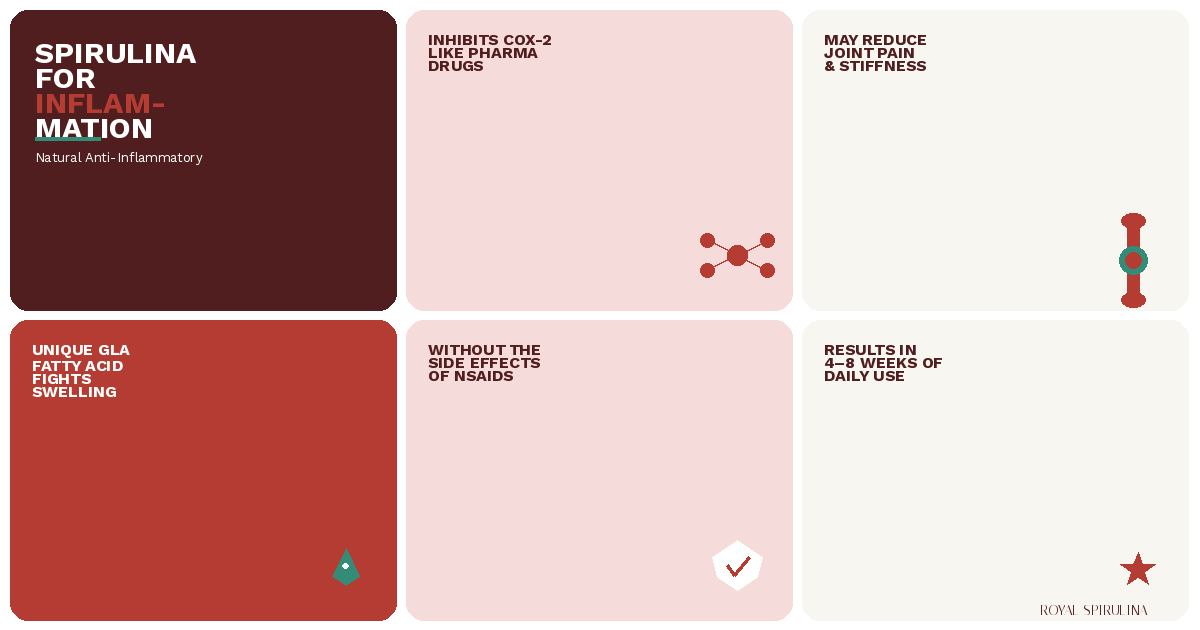
COX-2 inhibition: Research published in Biochemical Pharmacology demonstrates that phycocyanin selectively inhibits cyclooxygenase-2 (COX-2), the same enzyme targeted by anti-inflammatory drugs like ibuprofen and celecoxib. Unlike NSAIDs, phycocyanin shows selectivity for COX-2 over COX-1, meaning it reduces inflammation without significantly affecting the COX-1 enzymes that protect your stomach lining.
NF-κB suppression: Phycocyanin inhibits NF-κB, a master regulator of inflammatory gene expression. When NF-κB is overactivated, it triggers a cascade of inflammatory proteins (cytokines) that drive chronic inflammation. By suppressing this pathway, spirulina addresses inflammation at its source.
TNF-alpha and IL-6 reduction: Clinical studies have shown spirulina supplementation significantly reduces levels of tumor necrosis factor-alpha (TNF-α) and interleukin-6 (IL-6) — two key inflammatory markers elevated in arthritis, autoimmune conditions, and chronic pain disorders.
GLA: The Rare Anti-Inflammatory Fatty Acid
Spirulina is one of the few foods naturally rich in gamma-linolenic acid (GLA), a rare omega-6 fatty acid with potent anti-inflammatory properties. Unlike most omega-6 fats (which tend to promote inflammation), GLA is converted into anti-inflammatory prostaglandins that actively reduce pain and swelling.
Studies have shown GLA supplementation can significantly reduce joint pain, stiffness, and swelling in people with rheumatoid arthritis. Spirulina provides this benefit naturally, without needing a separate GLA supplement. Learn more about spirulina’s GLA benefits.
Spirulina for Joint Pain and Arthritis
Osteoarthritis
Osteoarthritis — the most common form of arthritis — involves the progressive breakdown of joint cartilage, accompanied by inflammation. A 2020 study in Clinical Nutrition ESPEN found that spirulina supplementation in osteoarthritis patients resulted in significant reductions in pain scores, stiffness, and inflammatory markers (CRP and IL-6) over 12 weeks compared to placebo.
Spirulina’s combination of anti-inflammatory compounds (phycocyanin + GLA), antioxidants that protect cartilage from oxidative damage, and amino acids that support cartilage repair makes it a multi-targeted approach to osteoarthritis — far more comprehensive than single-ingredient supplements like glucosamine alone.
Rheumatoid Arthritis
Rheumatoid arthritis is an autoimmune condition where the immune system attacks joint tissue. Spirulina’s ability to modulate immune function while simultaneously reducing inflammation makes it particularly interesting for RA patients. Animal studies have shown spirulina can reduce arthritis severity scores by up to 50%, and preliminary human research supports these findings.
Exercise-Induced Joint Pain
Athletes and active individuals often deal with joint inflammation from repetitive stress. Spirulina has been shown to reduce exercise-induced oxidative stress and inflammatory markers, which can translate to less joint discomfort after intense training. This makes it an outstanding natural recovery aid — see our guide on spirulina for athletes and workout recovery.
Spirulina vs Other Anti-Inflammatory Supplements
Spirulina vs Turmeric/Curcumin
Turmeric is the most popular natural anti-inflammatory, but it has a major limitation: curcumin has notoriously poor bioavailability (only 1–2% is absorbed without special formulations). Spirulina’s phycocyanin, by contrast, is highly bioavailable and doesn’t require piperine or liposomal delivery to be effective. Spirulina also provides complete protein, iron, B vitamins, and GLA that turmeric doesn’t. For comprehensive anti-inflammatory support, spirulina delivers far more than turmeric alone.
Spirulina vs Fish Oil
Fish oil provides EPA and DHA omega-3 fatty acids, which are anti-inflammatory. However, fish oil doesn’t contain phycocyanin, GLA, protein, iron, or the broad spectrum of antioxidants found in spirulina. Fish oil can also cause fishy burps, may contain mercury, and goes rancid easily. Spirulina provides anti-inflammatory benefits through multiple pathways without these drawbacks.
Spirulina vs NSAIDs
NSAIDs provide fast symptomatic relief but come with serious long-term risks (GI bleeding, kidney damage, cardiovascular events). Spirulina won’t replace NSAIDs for acute severe pain, but for long-term inflammation management, it provides meaningful relief without the dangerous side effects — and delivers additional health benefits in the process. For the full range of what spirulina offers, see our complete health benefits guide.
Research-Backed Evidence
The anti-inflammatory evidence for spirulina is robust and growing:
A 2021 meta-analysis of randomized controlled trials published in Complementary Therapies in Medicine confirmed that spirulina supplementation significantly reduces CRP (C-reactive protein), a key marker of systemic inflammation, across multiple studies.
A 2019 study in Nutrients found that 8 grams of spirulina daily for 12 weeks significantly reduced inflammatory markers in overweight adults, alongside improvements in cholesterol and blood pressure.
Multiple preclinical studies have demonstrated spirulina’s ability to protect against inflammatory joint damage, with some showing cartilage protection comparable to pharmaceutical interventions.
How to Use Spirulina for Inflammation and Joint Pain
Dosage
For anti-inflammatory benefits, research supports 4–8 grams daily. Start with 2 grams and increase over 2 weeks. Higher doses (up to 10g) have been used safely in clinical trials and may provide stronger anti-inflammatory effects.
Consistency Is Key
Unlike NSAIDs that provide immediate but temporary relief, spirulina works by reducing underlying inflammatory processes over time. Most studies show significant improvements after 6–12 weeks of consistent daily use. Don’t expect overnight results, but do expect lasting ones.
Complementary Approaches
Spirulina pairs well with other anti-inflammatory strategies: an anti-inflammatory diet (rich in vegetables, healthy fats, and whole foods), regular moderate exercise, adequate sleep, and stress management. Spirulina addresses the nutritional component more comprehensively than any other single supplement. For ideas on incorporating it into an anti-inflammatory diet, check our spirulina recipes.
Why Freeze-Dried Spirulina Delivers Superior Anti-Inflammatory Benefits
The phycocyanin content — spirulina’s primary anti-inflammatory compound — varies dramatically based on how the spirulina is processed. High-heat spray drying degrades phycocyanin by up to 40%, significantly reducing anti-inflammatory potency.
Freeze-dried spirulina preserves maximum phycocyanin content, active enzymes, and GLA integrity. If you’re using spirulina specifically for inflammation and joint pain, the processing method isn’t just a quality preference — it directly impacts how well it works. Royal Spirulina’s freeze-dried process ensures you get the full anti-inflammatory potential in every serving.
Related Spirulina Guides
- Spirulina for Weight Loss — chronic inflammation drives obesity and metabolic dysfunction
- Spirulina for Thyroid Health — reducing thyroid inflammation with phycocyanin
- Spirulina for Skin, Hair, and Anti-Aging — fighting inflammatory skin conditions naturally
- Spirulina During Pregnancy — managing inflammation safely during pregnancy
Frequently Asked Questions
How quickly does spirulina reduce inflammation?
Most clinical studies show measurable reductions in inflammatory markers (CRP, IL-6, TNF-α) within 4–8 weeks of daily supplementation. Some people report feeling less joint stiffness within 2–3 weeks.
Can spirulina replace my anti-inflammatory medication?
Never stop prescribed medication without consulting your doctor. Spirulina can complement anti-inflammatory treatment and may allow some people to reduce their reliance on NSAIDs over time, but this should always be done under medical supervision.
Is spirulina better than turmeric for inflammation?
Spirulina offers advantages over turmeric including superior bioavailability (no special formulations needed), multiple anti-inflammatory pathways (phycocyanin + GLA), and comprehensive nutritional benefits. For most people, spirulina provides broader and more reliable anti-inflammatory support.
Can spirulina help with back pain?
If your back pain is related to inflammation (which much chronic back pain is), spirulina’s anti-inflammatory properties may help. It’s most effective for inflammatory-driven pain rather than structural issues.
What’s the best dosage for arthritis?
Clinical studies for arthritis-related inflammation typically use 4–8 grams of spirulina daily. Start with 2–3 grams and gradually increase based on your response.
