14 Blue Spirulina Recipes: Stunning Royal Blue Smoothies, Bowls, and Treats
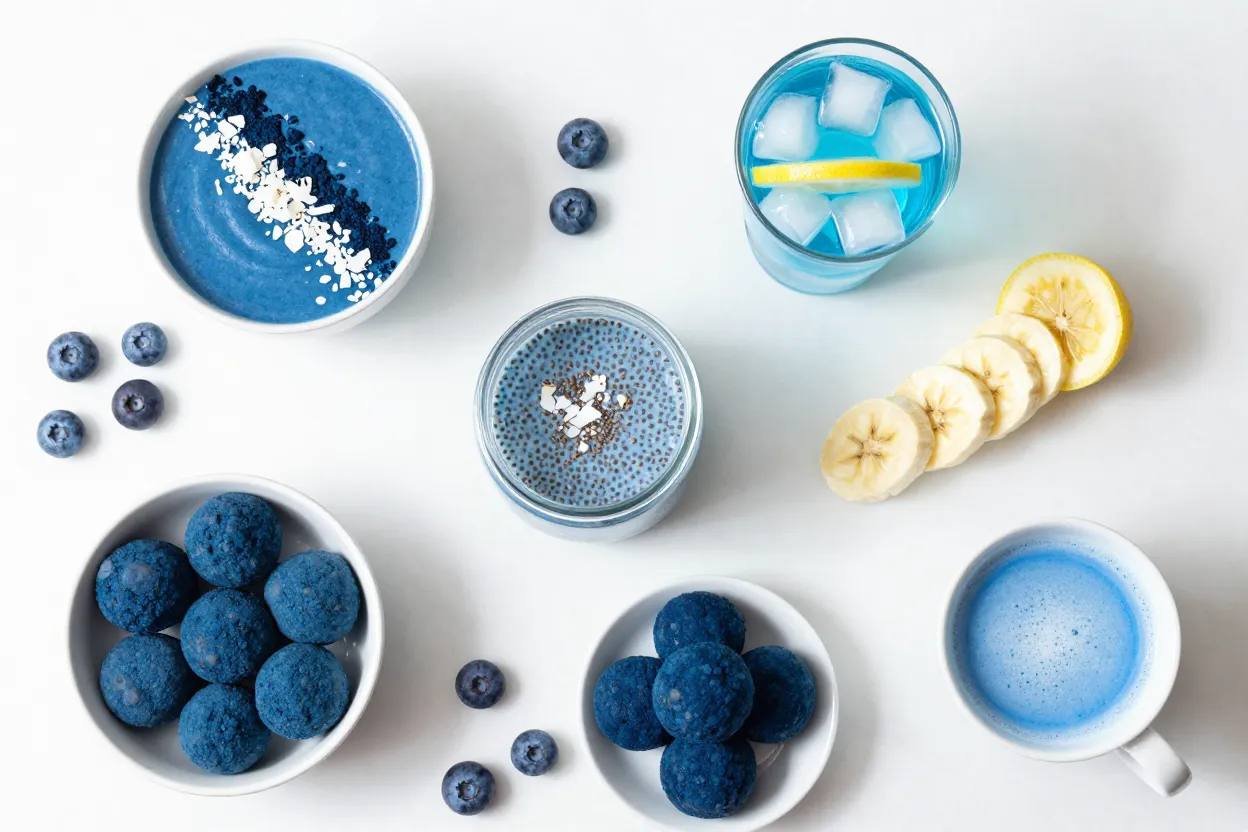
Blue spirulina has taken the food world by storm, and for good reason. This striking natural pigment, known scientifically as phycocyanin, is extracted from spirulina (Arthrospira platensis) and delivers a breathtaking ocean-blue color to any recipe it touches. Unlike regular green spirulina powder, blue spirulina extract is completely tasteless and odorless, making it the ideal ingredient for adding vibrant color without altering the flavor of your favorite foods.
What makes blue spirulina recipes so appealing goes beyond aesthetics. Phycocyanin is one of nature’s most powerful antioxidants, with well-documented anti-inflammatory properties. The FDA has approved phycocyanin as a natural color additive for food and beverages, giving you a clean-label alternative to synthetic blue dyes. Whether you are crafting Instagram-worthy smoothie bowls or simply want a healthier way to add color to your kitchen creations, blue spirulina delivers on every front.
In this guide, we share 14 easy blue spirulina recipes ranging from smoothie bowls and lattes to frozen treats, smoothies, and no-bake snacks. We also cover the essential science behind using phycocyanin in food so you get the most vibrant color and maximum nutritional benefit from every recipe.
What Is Blue Spirulina Extract?
Blue spirulina is not a different species of algae. It is phycocyanin, the blue pigment-protein complex naturally present in spirulina. Through a careful extraction process, phycocyanin is isolated from the rest of the spirulina biomass, separating it from the chlorophyll, vitamins, minerals, and other compounds that give regular spirulina its deep green color and distinctive earthy taste.
The result is a fine blue powder that dissolves cleanly into liquids, producing colors ranging from soft pastel sky blue to deep vivid teal, depending on the concentration used. Because the extraction removes the cellular material responsible for spirulina’s characteristic marine flavor, blue spirulina extract has absolutely no taste and no smell. This makes it fundamentally different from green spirulina powder and perfect for recipes where flavor neutrality is essential.
Beyond its role as a natural colorant, phycocyanin is a potent bioactive compound. It activates the Nrf2 antioxidant pathway, scavenges free radicals, and exhibits significant anti-inflammatory activity. For a deep dive into the science behind these benefits, read our comprehensive guide on blue spirulina and phycocyanin benefits.
Tips for Using Blue Spirulina in Recipes
Getting the most out of blue spirulina in your recipes requires understanding a few key principles about phycocyanin’s behavior in food. The most important factor is temperature. Phycocyanin is a protein, and like all proteins, it is sensitive to heat. Research by Yu et al. (2024) found that spirulina-derived phycocyanin demonstrates exceptional stability within temperature ranges below 45°C (113°F) and under pH conditions between 5.5 and 6.0 (PMID 38729724). Above this temperature threshold, the protein begins to unfold and degrade, causing the vibrant blue color to fade and the bioactive properties to diminish.
The second critical factor is pH. Acidic conditions below pH 4 can shift the color of phycocyanin toward purple or teal, and extreme acidity can cause degradation. A comprehensive review by Mao et al. (2024) detailed how pH, temperature, and light exposure interact to affect phycocyanin stability in food applications (PMID 39307501). Pez Jaeschke et al. (2021) further explored how stabilizing agents and optimized extraction methods can help preserve phycocyanin’s color and function in food products (PMID 33992333).
For practical purposes, follow these guidelines: use blue spirulina in cold or room-temperature recipes for the most vibrant results. If you are making a warm drink, keep the temperature below 45°C (113°F). Add blue spirulina as the last step rather than before cooking or high-speed blending. And when using acidic ingredients like lemon juice, add them gradually and enjoy the natural color transformation.
Blue Spirulina Quick Reference
| Tip | Details |
|---|---|
| Recommended dose per serving | 1/4 to 1/2 teaspoon |
| Ideal temperature | Below 45°C / 113°F |
| Best pH range | 5.5–6.0 (neutral to slightly acidic) |
| Flavor profile | Tasteless and odorless |
| Color result | Vibrant ocean blue to deep teal |
| Storage | Keep sealed, away from light and heat |
14 Blue Spirulina Recipes
1. Ocean Blue Smoothie Bowl
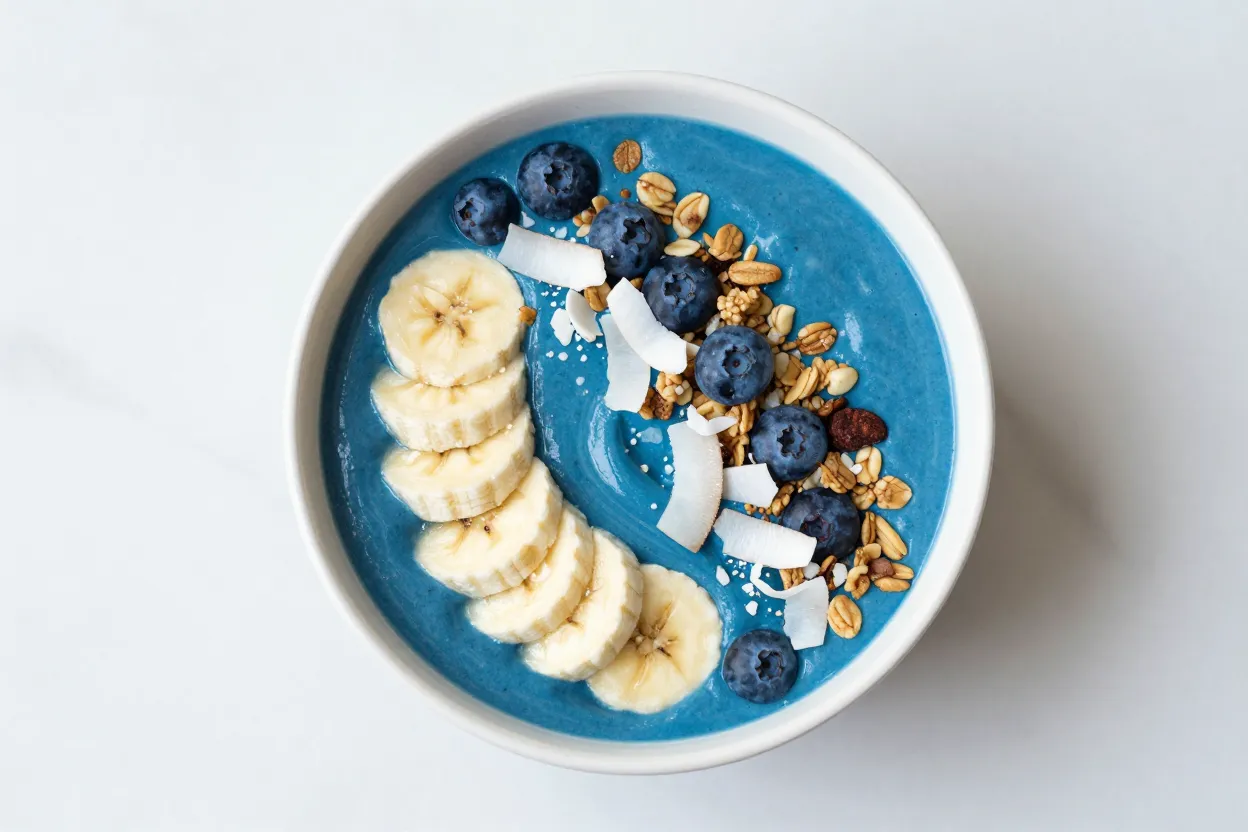
This smoothie bowl is the quintessential blue spirulina recipe and one of the easiest ways to experience the stunning color of phycocyanin. Thick, creamy, and naturally sweetened with frozen fruit, it makes for a beautiful and nutritious breakfast or snack.
Ingredients:
- 2 frozen bananas
- 1/2 cup frozen blueberries
- 1/4 cup coconut milk
- 1/2 tsp blue spirulina extract
- Toppings: granola, sliced banana, coconut flakes, fresh berries
Instructions:
- Blend frozen bananas, blueberries, and coconut milk until thick and smooth.
- Add blue spirulina extract and pulse briefly to combine evenly.
- Pour into a bowl and arrange your toppings.
2. Blue Moon Latte
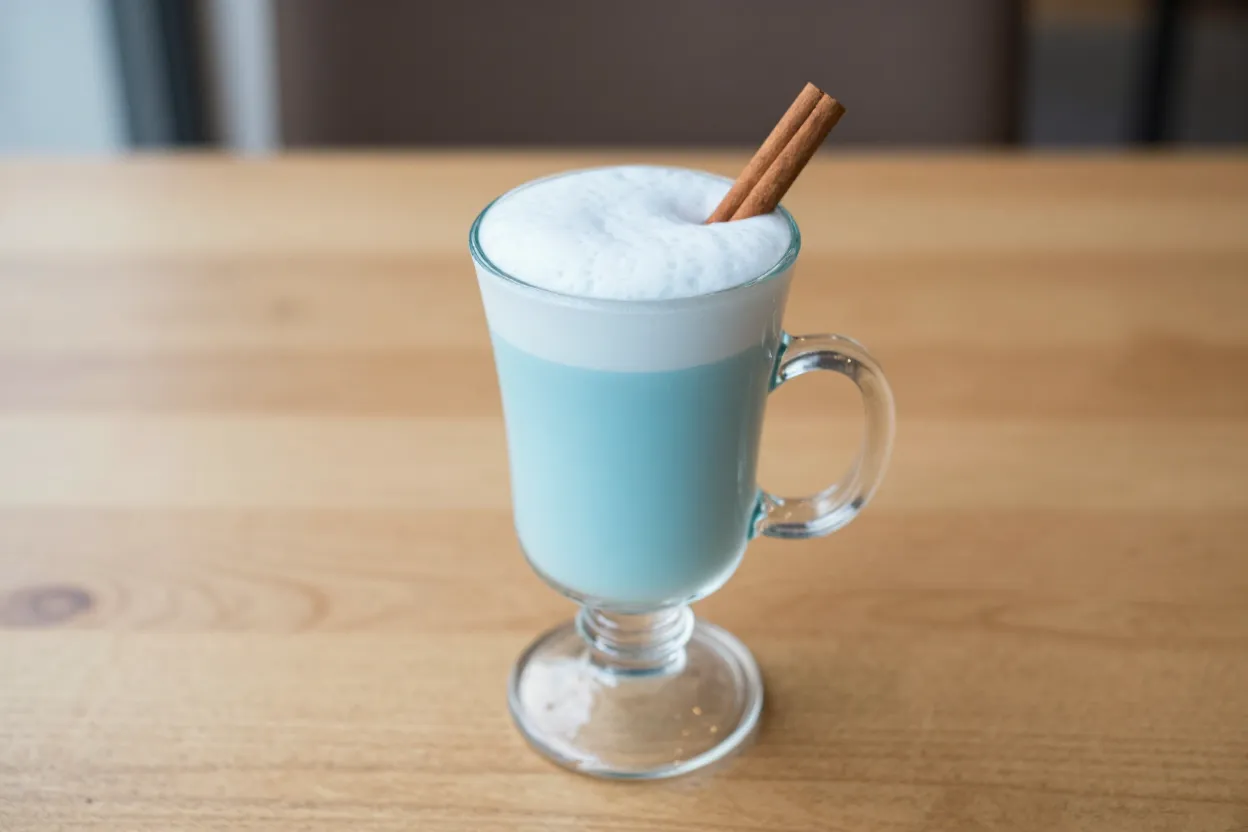
A warm, comforting latte with a mesmerizing blue hue. This caffeine-free drink is as soothing to look at as it is to sip, and it takes just minutes to prepare.
Ingredients:
- 1 cup oat milk (or coconut milk)
- 1/4 tsp blue spirulina extract
- 1 tsp maple syrup or honey
- 1/2 tsp vanilla extract
- Optional: pinch of cinnamon
Instructions:
- Warm milk gently on the stove or in a saucepan. Do not boil — keep the temperature below 45°C (113°F) to preserve the blue color.
- Whisk in blue spirulina extract until fully dissolved.
- Add sweetener and vanilla extract, stirring to combine.
- Froth with a milk frother or whisk vigorously until foamy.
- Serve warm, or pour over ice for an iced version.
3. Electric Blue Lemonade
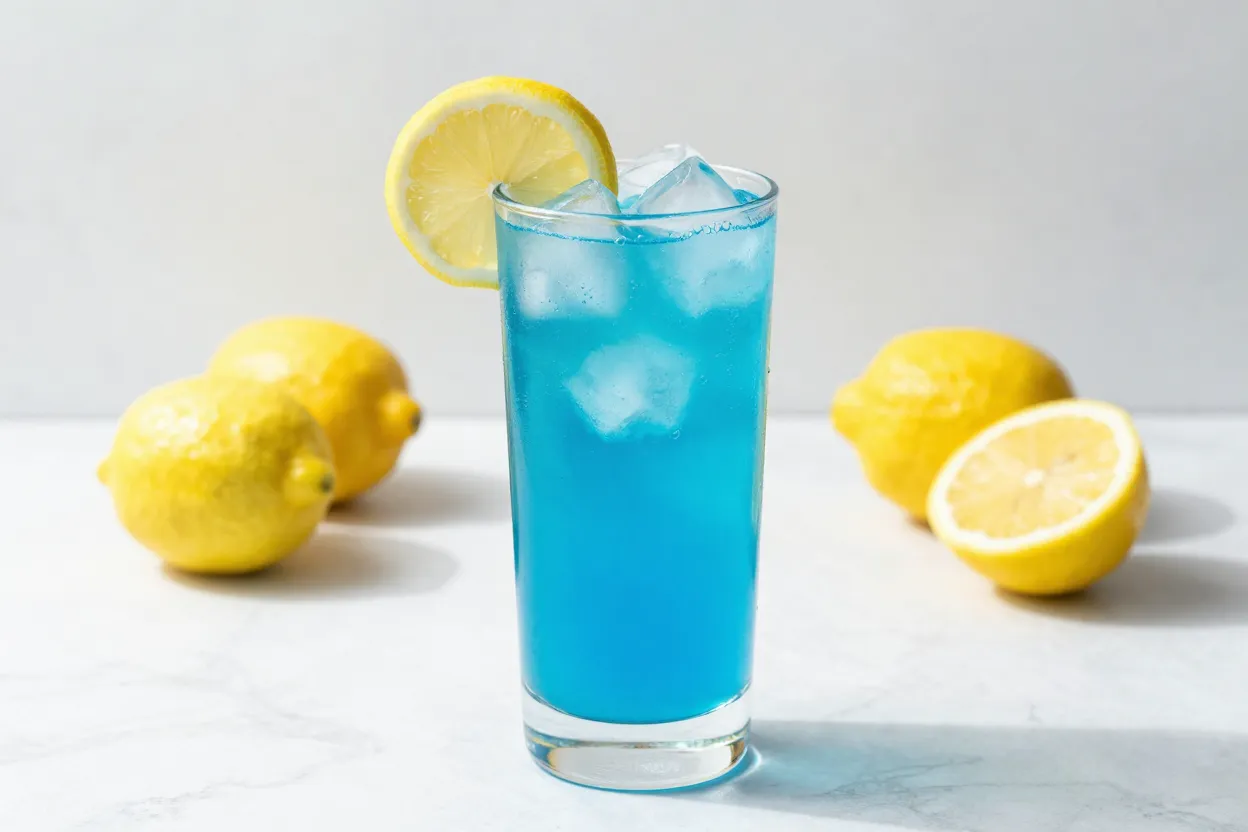
A showstopping summer drink that transforms ordinary lemonade into a color-changing spectacle. Watch as the blue spirulina reacts with lemon juice for a magical visual experience.
Ingredients:
- 4 cups cold water
- 1/2 cup fresh lemon juice
- 1/4 cup maple syrup or agave
- 1/2 tsp blue spirulina extract
- Ice and lemon slices for garnish
Instructions:
- Mix cold water, maple syrup, and blue spirulina extract until fully dissolved.
- Add lemon juice gradually. Note that the acidity will shift the color slightly toward purple or teal — this is a natural reaction and creates a beautiful effect.
- Serve over ice with lemon slices as garnish.
4. Blue Spirulina Nice Cream
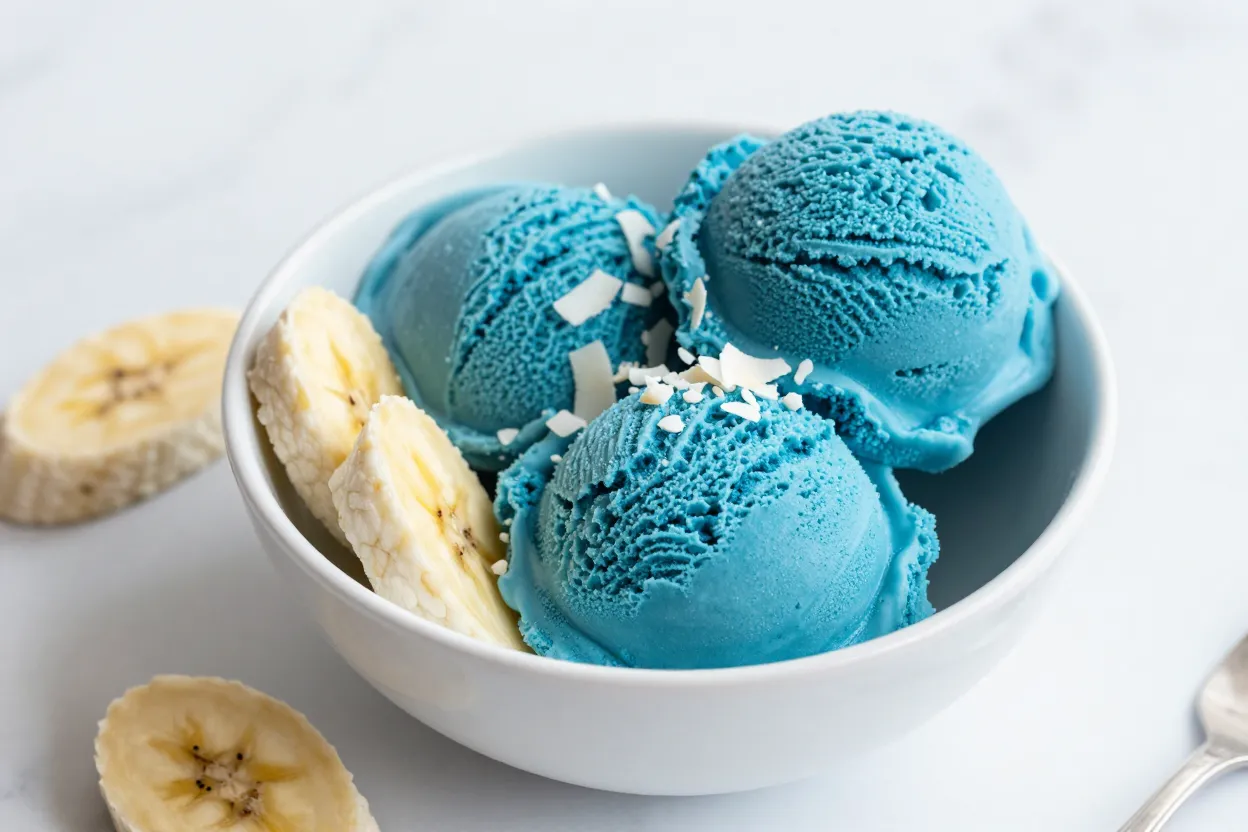
A dairy-free, no-churn ice cream alternative that delivers creamy satisfaction with a stunning blue color. Made with just a handful of ingredients and ready in minutes.
Ingredients:
- 3 frozen bananas (very ripe)
- 2 tbsp coconut cream
- 1/2 tsp blue spirulina extract
- 1/2 tsp vanilla extract
- Optional: 1 tbsp almond butter
Instructions:
- Blend frozen bananas and coconut cream in a food processor until smooth and creamy.
- Add blue spirulina extract and vanilla, then blend until evenly blue throughout.
- Serve immediately as soft-serve, or transfer to a container and freeze for 1–2 hours for a firmer texture.
5. Blue Spirulina Chia Pudding
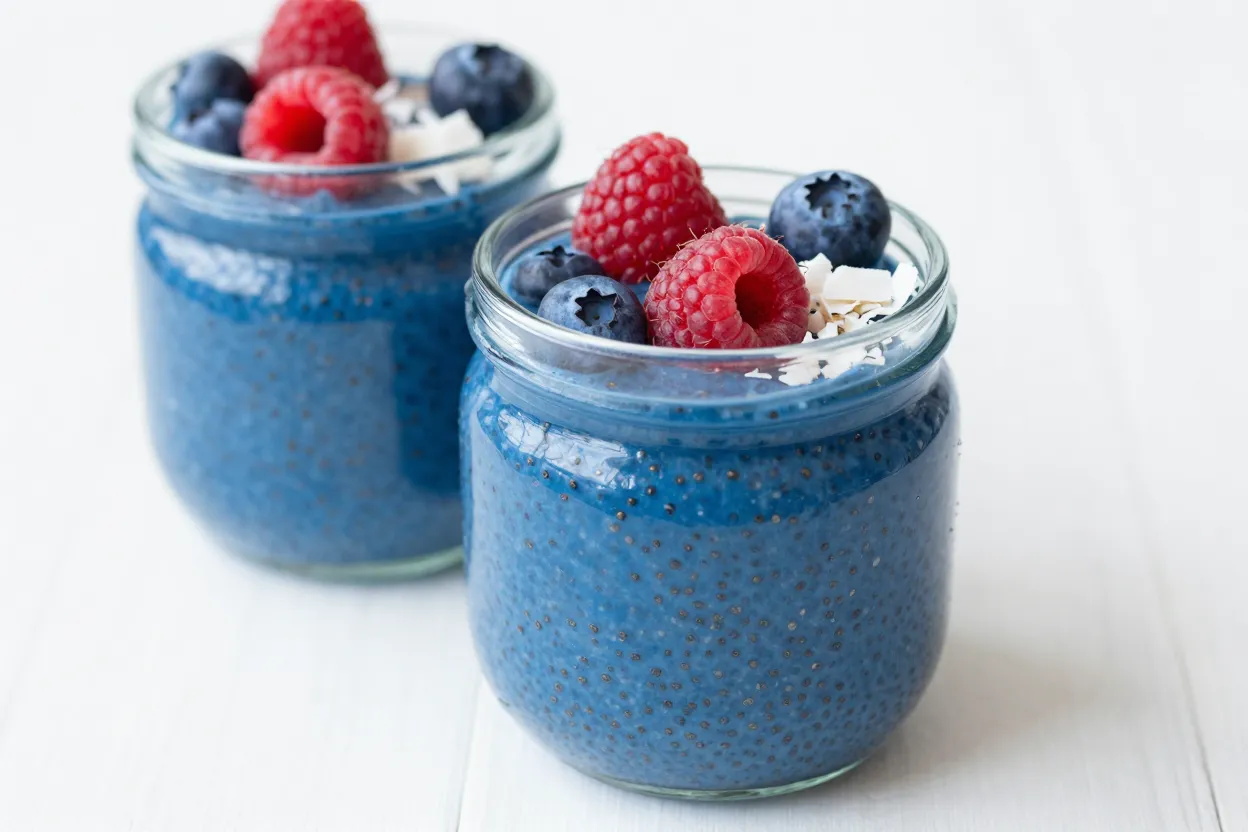
An effortless overnight recipe that practically makes itself. The blue color deepens as the chia seeds absorb the liquid, creating a gorgeous ocean-blue pudding by morning.
Ingredients:
- 3 tbsp chia seeds
- 1 cup coconut milk
- 1/4 tsp blue spirulina extract
- 1 tbsp maple syrup
- 1/2 tsp vanilla extract
- Toppings: fresh fruit, granola, coconut flakes
Instructions:
- Mix coconut milk, blue spirulina extract, maple syrup, and vanilla until well combined and uniformly blue.
- Stir in chia seeds until evenly distributed.
- Refrigerate for 4 hours or overnight, stirring once after 30 minutes to prevent clumping.
- Top with fresh fruit, granola, and coconut flakes before serving.
6. Blue Spirulina Energy Balls
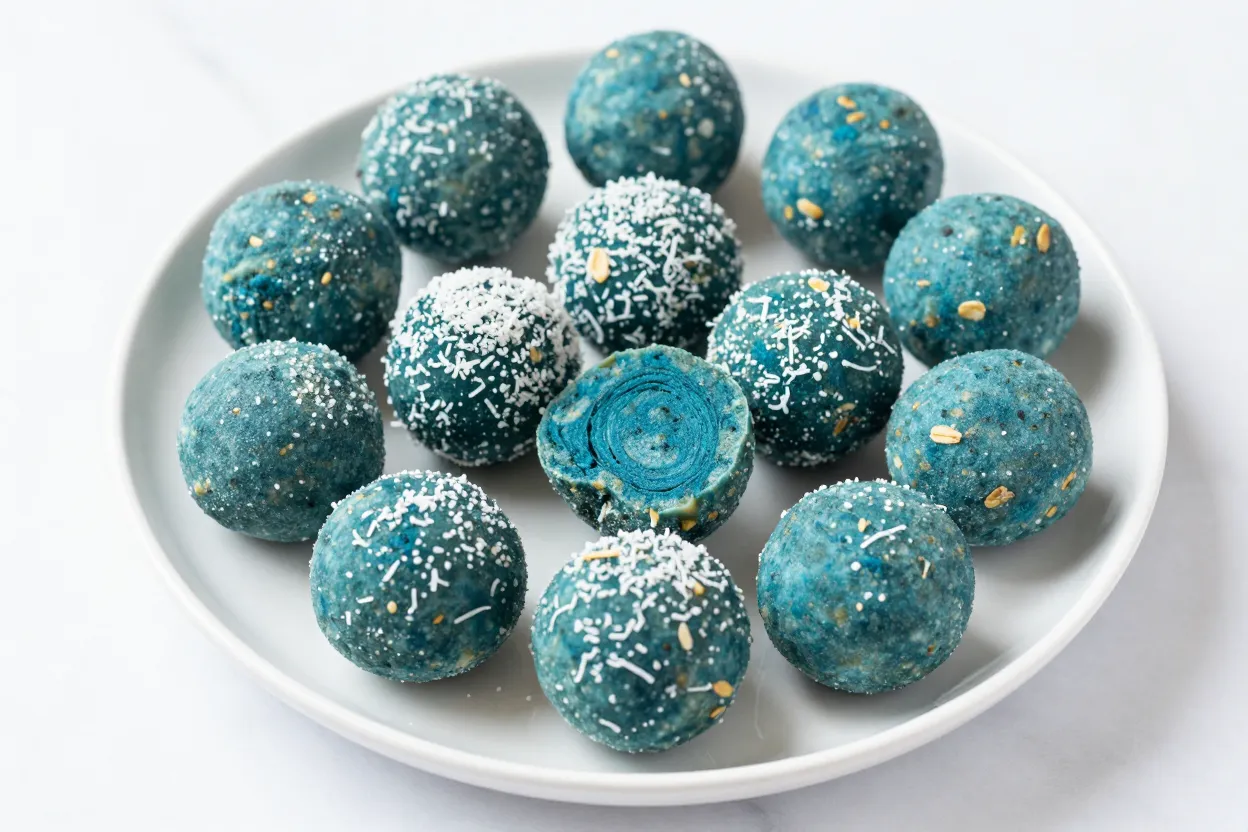
Portable, no-bake snacks with a striking blue interior. These energy balls are naturally sweetened with dates and packed with healthy fats from nuts and coconut.
Ingredients:
- 1 cup pitted Medjool dates
- 1 cup raw cashews (or almonds)
- 2 tbsp shredded coconut
- 1/2 tsp blue spirulina extract
- 1 tbsp coconut oil
- Pinch of sea salt
- Optional coating: shredded coconut or crushed freeze-dried blueberries
Instructions:
- Pulse nuts in a food processor until finely chopped.
- Add dates, shredded coconut, blue spirulina extract, coconut oil, and sea salt.
- Process until the mixture holds together when pressed between your fingers.
- Roll into 12 evenly sized balls. Roll in shredded coconut or crushed freeze-dried blueberries if desired.
- Refrigerate for 30 minutes to firm up before serving.
7. Blue Butterfly Overnight Oats
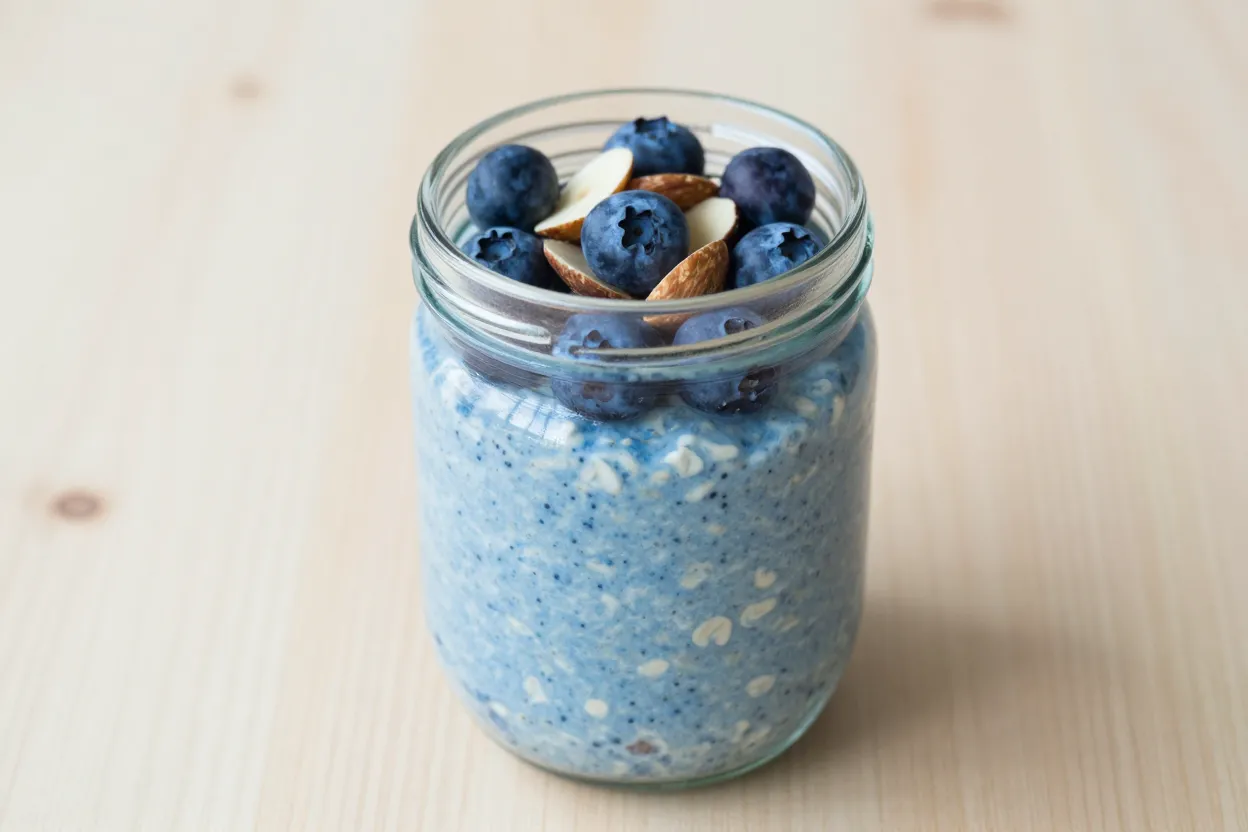
A beautiful make-ahead breakfast that combines the convenience of overnight oats with the stunning color of blue spirulina. Layer it in a clear jar for maximum visual impact.
Ingredients:
- 1/2 cup rolled oats
- 1/2 cup coconut milk (or any plant milk)
- 1/4 cup coconut yogurt
- 1/4 tsp blue spirulina extract
- 1 tbsp maple syrup
- 1 tbsp chia seeds
- Toppings: sliced banana, berries, hemp seeds
Instructions:
- Mix milk, coconut yogurt, blue spirulina extract, maple syrup, and chia seeds until smooth and evenly blue.
- Add rolled oats and stir to combine thoroughly.
- Transfer to a jar, seal tightly, and refrigerate overnight.
- Top with sliced banana, berries, and hemp seeds before serving.
8. Blue Spirulina Coconut Popsicles
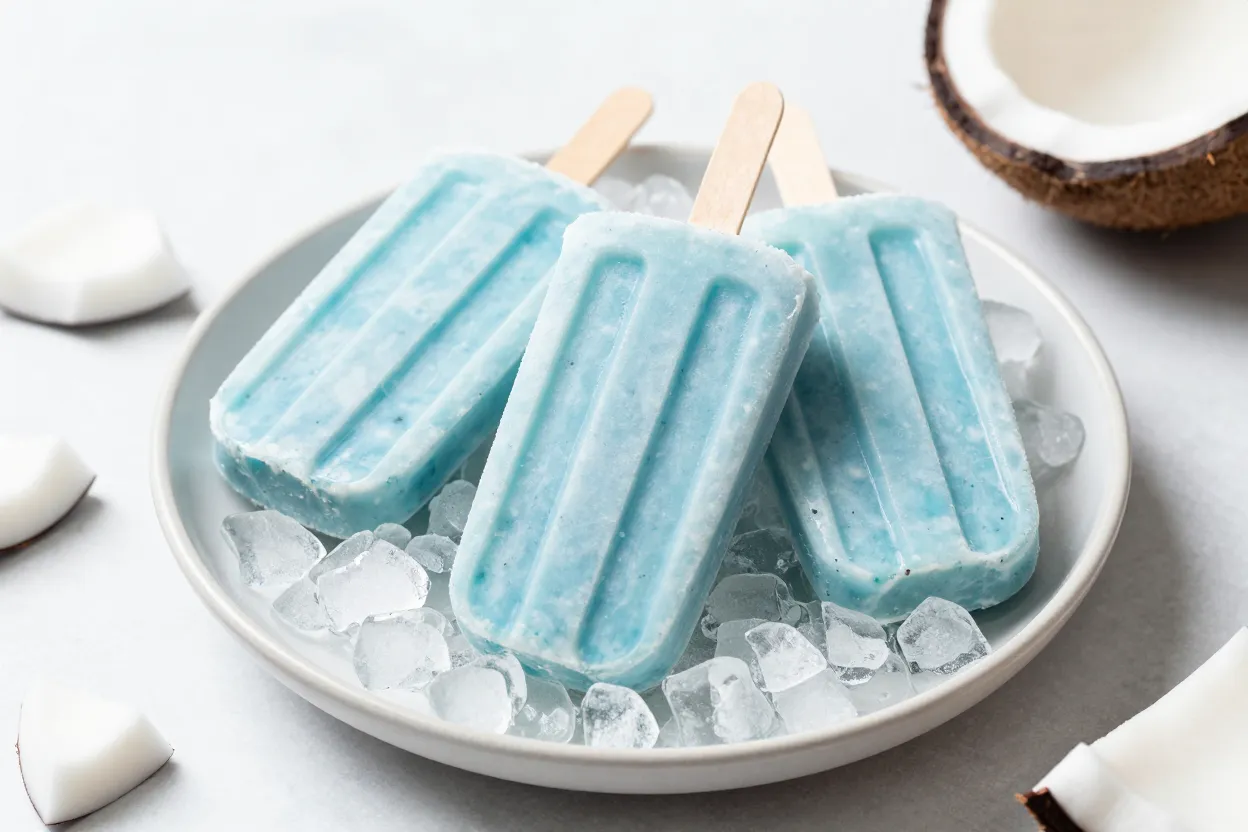
Creamy, tropical frozen treats with a gorgeous blue color that kids and adults alike will love. The optional mango swirl adds a beautiful contrast.
Ingredients:
- 1 can (400ml) full-fat coconut milk
- 2 tbsp maple syrup or honey
- 1/2 tsp blue spirulina extract
- 1/2 tsp vanilla extract
- Optional swirl: blended mango or passion fruit puree
Instructions:
- Whisk coconut milk, maple syrup, blue spirulina extract, and vanilla until smooth and uniformly blue.
- Pour into popsicle molds, filling each about three-quarters full.
- For a swirl effect, add a spoonful of mango or passion fruit puree to each mold and swirl gently with a toothpick.
- Insert popsicle sticks and freeze for 4–6 hours until completely solid.
9. Blue Spirulina Yogurt Bark
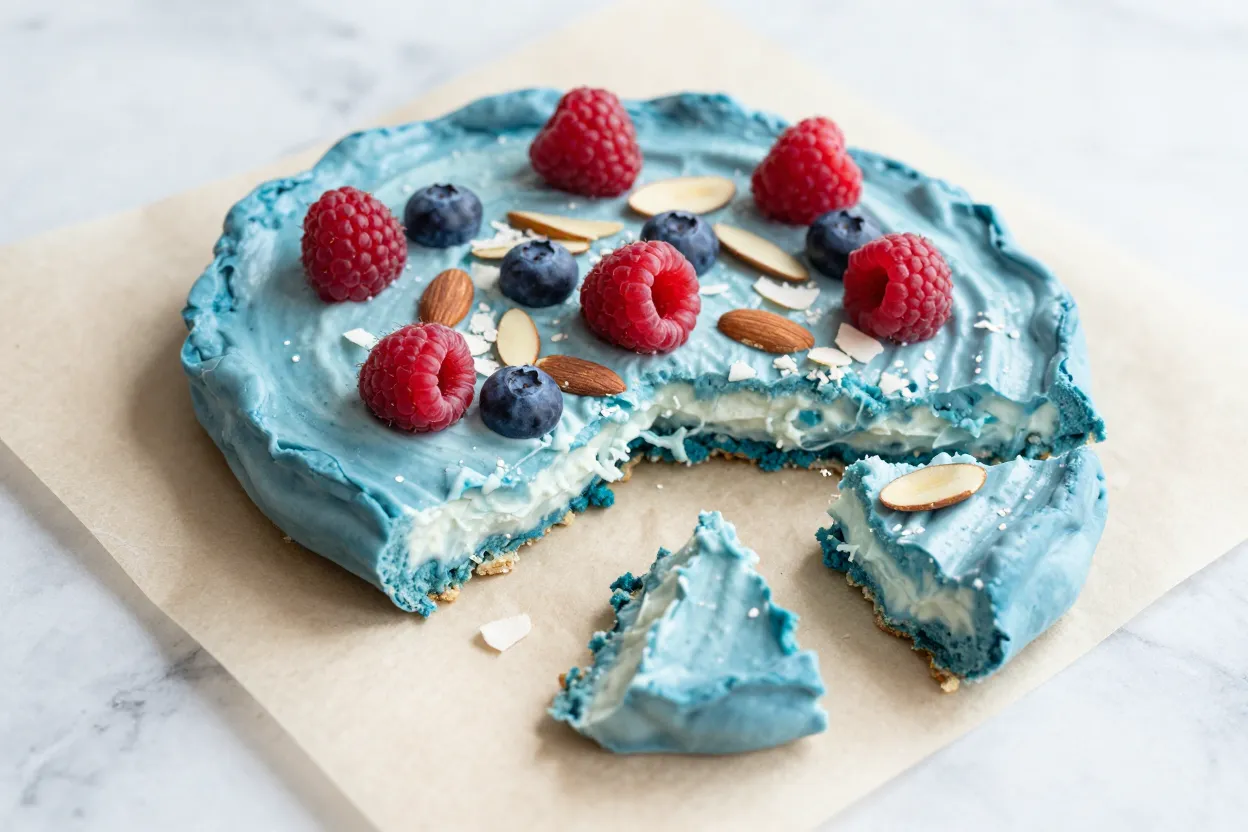
A frozen snack that is as fun to make as it is to eat. The vibrant blue yogurt base topped with colorful fruit and crunchy granola makes this a feast for the eyes and the palate.
Ingredients:
- 2 cups coconut yogurt (or Greek yogurt)
- 1/4 tsp blue spirulina extract
- 2 tbsp honey or maple syrup
- Toppings: sliced strawberries, blueberries, granola, coconut flakes, crushed pistachios
Instructions:
- Mix yogurt, blue spirulina extract, and sweetener until evenly blue.
- Spread the mixture onto a parchment-lined baking sheet to about 1/4 inch thickness.
- Arrange toppings over the surface, pressing them gently into the yogurt.
- Freeze for 3–4 hours until completely solid.
- Break into irregular pieces and serve immediately.
10. Blue Spirulina Acai Bowl
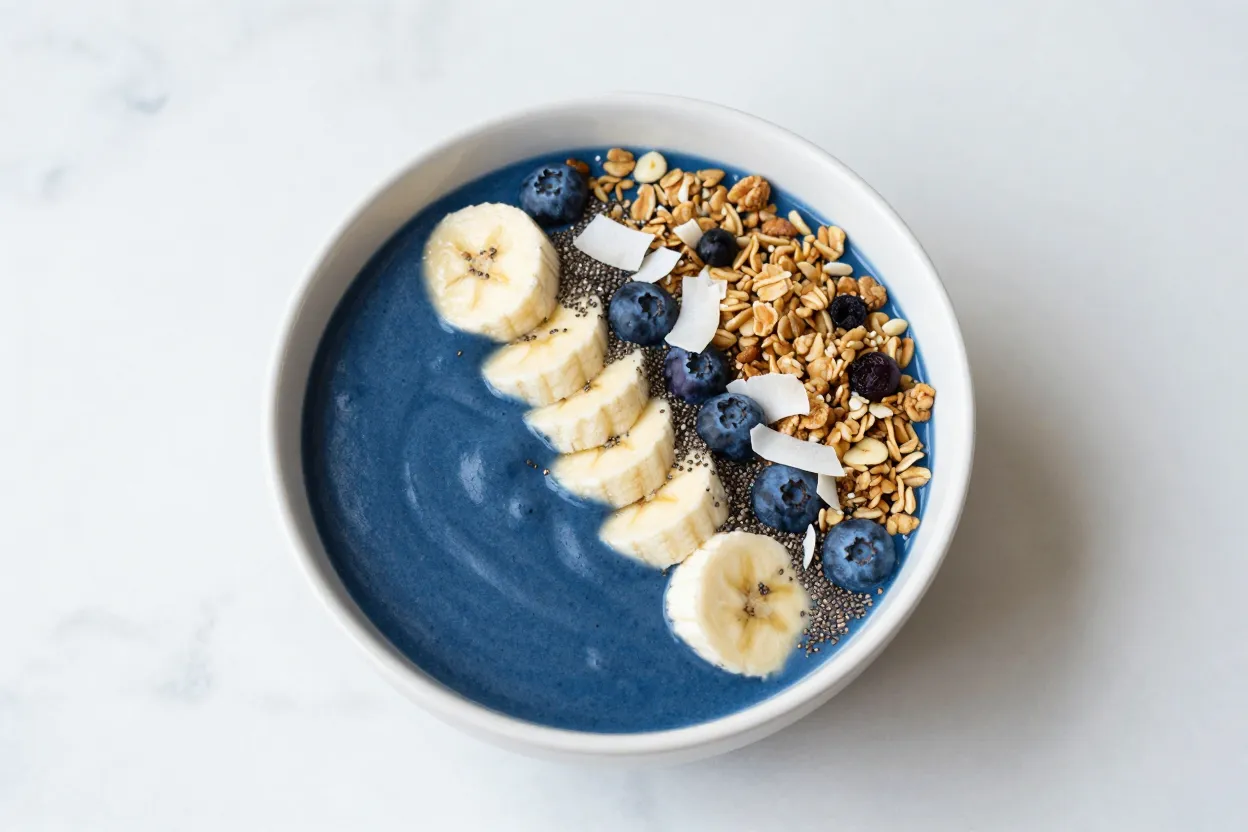
The ultimate superfood bowl combining the antioxidant power of acai with the vibrant blue of phycocyanin. The result is a stunning galaxy-purple-blue bowl that tastes as extraordinary as it looks.
Ingredients:
- 1 frozen acai packet (100g)
- 1 frozen banana
- 1/4 cup frozen blueberries
- 1/4 cup coconut milk
- 1/4 tsp blue spirulina extract
- Toppings: granola, sliced banana, kiwi, hemp seeds, drizzle of honey
Instructions:
- Blend the acai packet, frozen banana, blueberries, and coconut milk until thick and smooth.
- Add blue spirulina extract and pulse briefly to mix throughout.
- Pour into a bowl and arrange toppings artfully.
- Serve immediately before the bowl begins to melt.
11. Blue Tropical Mango Smoothie
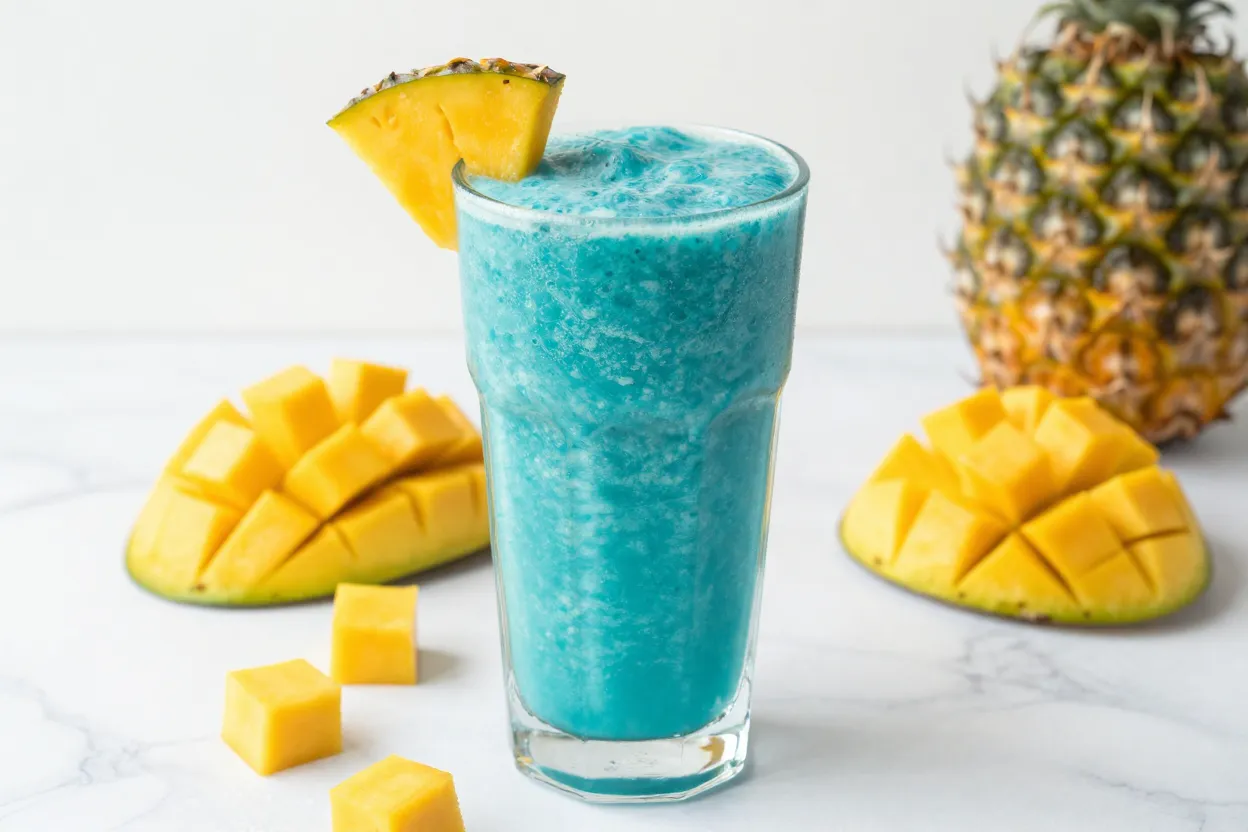
A tropical paradise in a glass — sweet mango and tangy pineapple meet the antioxidant power of blue spirulina. The combination creates a stunning turquoise color that tastes as good as it looks.
Prep time: 5 minutes | Servings: 1
Ingredients:
- 1 cup frozen mango chunks
- 1/2 cup frozen pineapple chunks
- 1 cup coconut milk
- 1/2 teaspoon blue spirulina extract (phycocyanin)
- 1 tablespoon honey or agave
- 1/2 cup ice
Instructions:
- Add coconut milk and blue spirulina to blender and blend briefly until the powder is fully dissolved and the liquid is a uniform blue.
- Add frozen mango, pineapple, sweetener, and ice.
- Blend until thick and smooth.
- Pour into a tall glass and garnish with a mango slice.
12. Blue Spirulina Blueberry Protein Smoothie
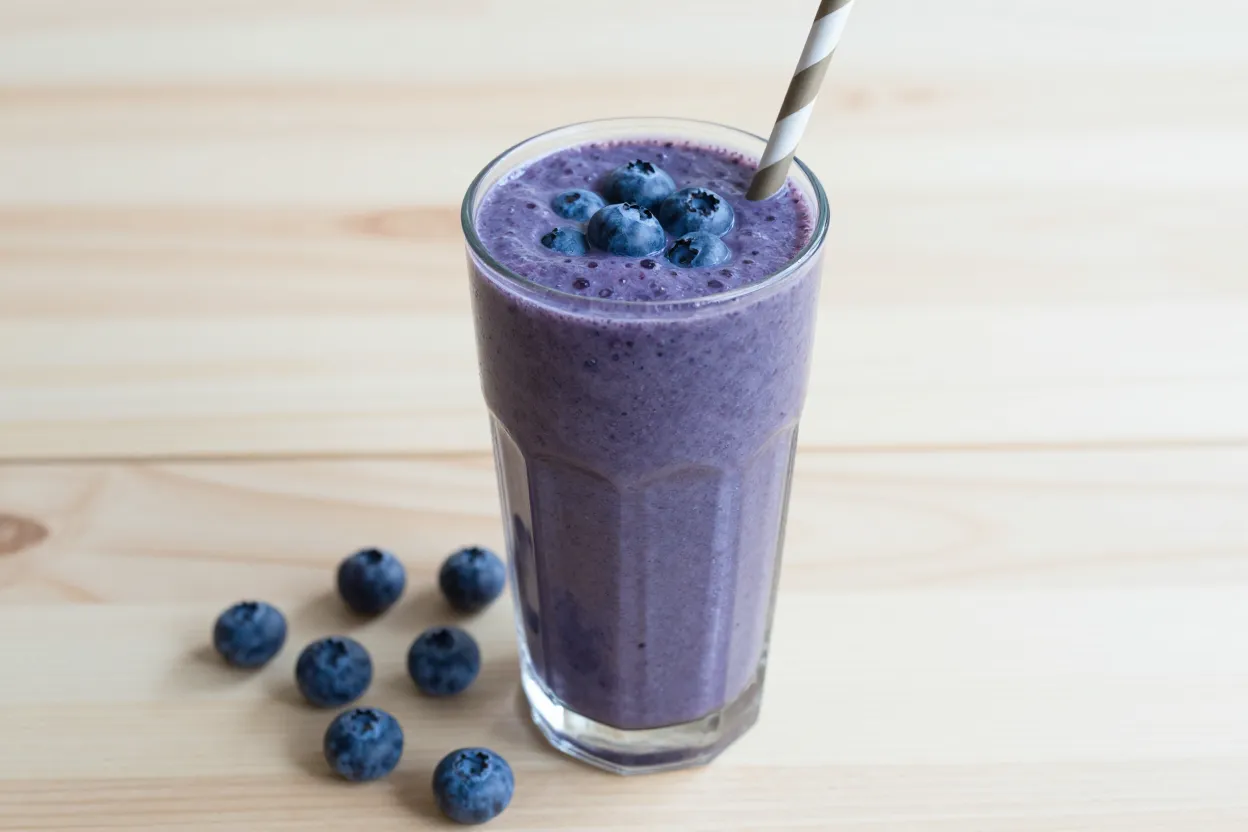
The ultimate post-workout refuel — packed with plant protein, antioxidant-rich blueberries, and the anti-inflammatory benefits of phycocyanin. This smoothie delivers over 25g of protein per serving.
Prep time: 5 minutes | Servings: 1
Ingredients:
- 1 cup frozen blueberries
- 1 frozen banana
- 1 scoop vanilla plant protein powder
- 1 cup almond milk
- 1/2 teaspoon blue spirulina extract (phycocyanin)
- 1 tablespoon almond butter
- 1 tablespoon chia seeds
Instructions:
- Combine almond milk, protein powder, and blue spirulina in blender and blend until smooth.
- Add frozen blueberries, banana, almond butter, and chia seeds.
- Blend until thick and creamy.
- Pour and top with a few fresh blueberries.
13. Blue Piña Colada Smoothie
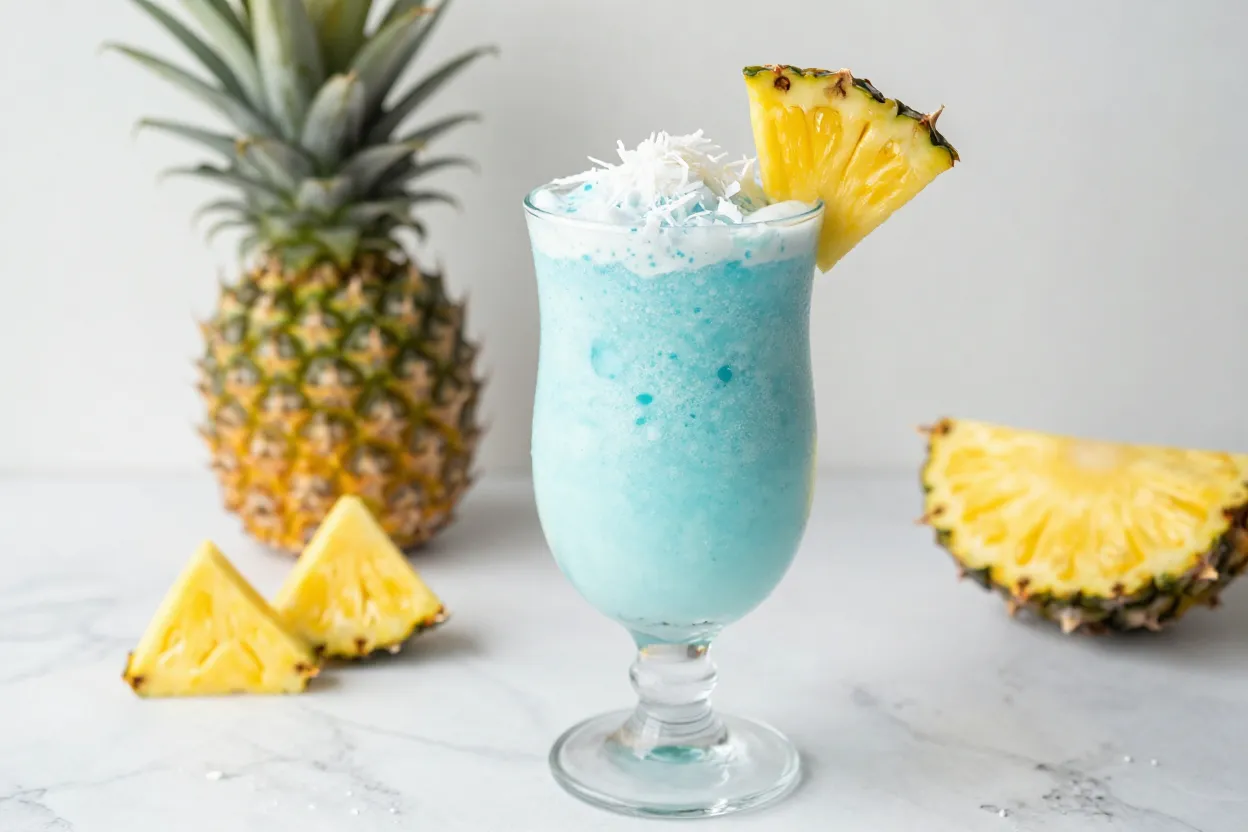
A healthy twist on the classic tropical cocktail — creamy coconut and sweet pineapple blended with blue spirulina for a show-stopping color. This alcohol-free version delivers all the vacation vibes with a superfood boost.
Prep time: 5 minutes | Servings: 1
Ingredients:
- 1 cup frozen pineapple chunks
- 1/4 cup coconut cream
- 3/4 cup coconut water
- 1/2 teaspoon blue spirulina extract (phycocyanin)
- 1 tablespoon maple syrup
- 2 tablespoons shredded coconut (plus extra for garnish)
- 1/2 cup ice
Instructions:
- Blend coconut water, coconut cream, and blue spirulina until combined and uniformly blue.
- Add frozen pineapple, maple syrup, shredded coconut, and ice.
- Blend until smooth and creamy.
- Pour into a glass and garnish with a pineapple wedge and shredded coconut.
14. Blue Spirulina Peach Vanilla Smoothie
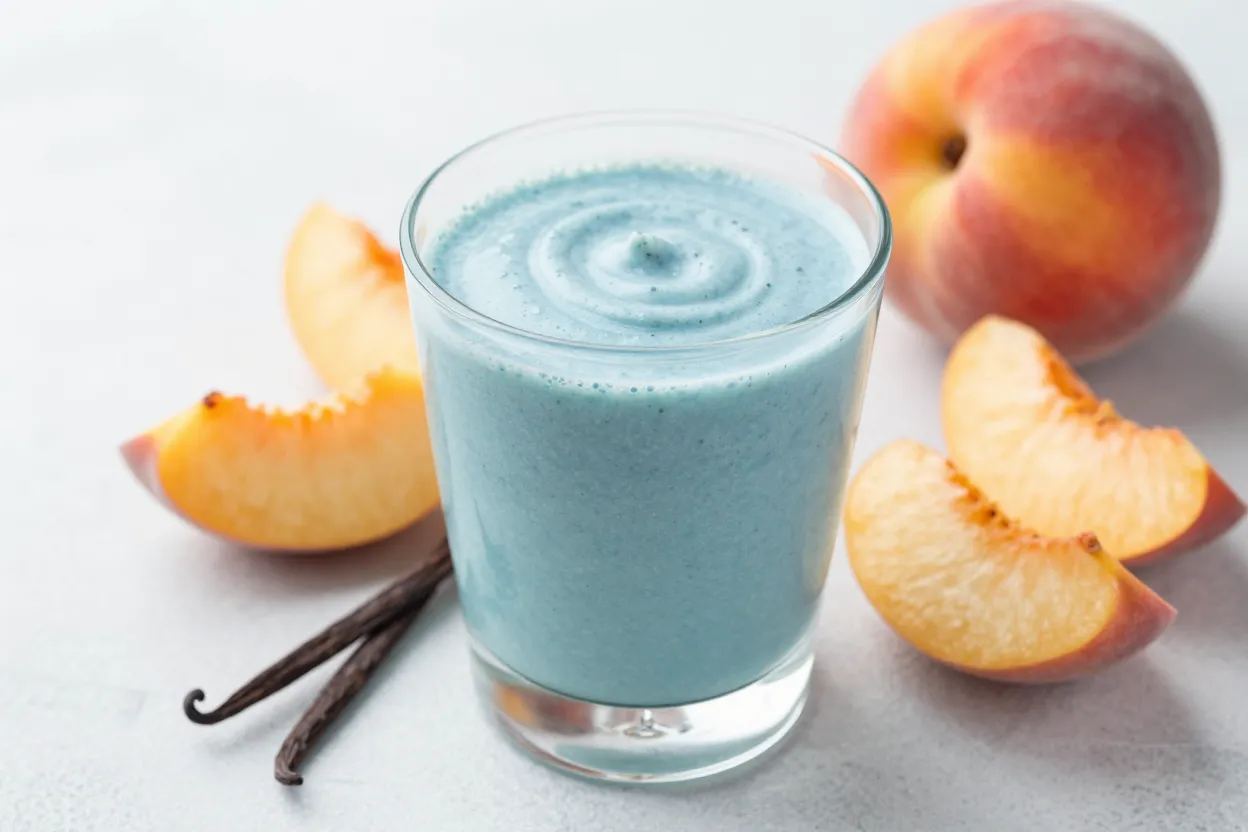
A delicate and creamy smoothie that combines the sweet flavor of ripe peaches with real vanilla and the subtle oceanic hue of blue spirulina. Light, refreshing, and naturally sweet — perfect for a summer morning.
Prep time: 5 minutes | Servings: 1
Ingredients:
- 1 1/2 cups frozen peach slices
- 1 cup vanilla almond milk
- 1/2 teaspoon blue spirulina extract (phycocyanin)
- 1/2 teaspoon pure vanilla extract
- 1 tablespoon honey
- 2 tablespoons Greek yogurt (optional for creaminess)
Instructions:
- Add almond milk, blue spirulina, and vanilla extract to the blender and blend briefly until the extract is fully dissolved.
- Add frozen peaches, honey, and Greek yogurt if using.
- Blend until silky smooth.
- Pour and enjoy immediately.
Why Use Royal Spirulina’s Blue Extract?
Not all blue spirulina extracts are created equal. The extraction and drying method used to produce phycocyanin powder has a significant impact on its color potency, bioactivity, and stability in recipes. Royal Spirulina uses a freeze-drying process that preserves the maximum amount of phycocyanin compared to spray-dried alternatives, which expose the delicate protein to high temperatures during processing.
Research by Zhang et al. (2025) investigated the stability of phycocyanin in food applications and demonstrated that processing methods directly influence the pigment’s performance as a colorant and its retention of bioactive properties (PMID 41245108). Freeze-dried phycocyanin retains more of its native protein structure, which translates to more vibrant color per serving and greater antioxidant capacity.
Royal Spirulina’s blue extract contains no fillers, no additives, and no artificial ingredients — just pure phycocyanin extract. The higher phycocyanin concentration means you need less powder per recipe to achieve vivid, eye-catching blue color. For a detailed comparison of drying methods and their impact on spirulina quality, see our guide on freeze-dried vs. spray-dried spirulina.
Royal Spirulina also offers Phycocyanin with Trehalose — an enhanced formula that combines pure phycocyanin extract with trehalose, a naturally occurring sugar with proven neuroprotective and protein-stabilizing properties. Trehalose acts as a molecular chaperone that helps preserve phycocyanin’s delicate protein structure, and research published in Neuroscience International (2024) has documented trehalose’s ability to activate autophagy, prevent protein aggregation, and reduce neuroinflammation (Halbe and Bhatt, 2024; PMC11503274). When combined with phycocyanin’s antioxidant and anti-inflammatory power, the result is a formula that supports both vibrant color in your recipes and enhanced health benefits — particularly for brain health. Learn more about this formula in our guide on blue spirulina and phycocyanin benefits.
Frequently Asked Questions
Does blue spirulina taste like regular spirulina?
No. Blue spirulina extract (phycocyanin) is tasteless and odorless, completely different from regular green spirulina powder which has an earthy, marine flavor. The extraction process isolates only the blue pigment, leaving behind the compounds responsible for spirulina’s characteristic taste. This makes it perfect for recipes where you want vibrant color without any flavor interference. For more on spirulina’s flavor profile, see our guide on what does spirulina taste like.
Is blue spirulina safe to eat?
Yes. Phycocyanin (blue spirulina extract) has been approved by the FDA as a natural color additive for food and beverages. It has been extensively studied for safety and is classified as non-toxic and non-carcinogenic. Beyond safety, phycocyanin is one of the most potent natural antioxidants and anti-inflammatory compounds found in nature. See our full guide on blue spirulina benefits.
Can you heat blue spirulina?
Blue spirulina is heat-sensitive. Research shows phycocyanin maintains stability below 45°C (113°F) but begins to degrade at higher temperatures, losing both its color and bioactive properties. For hot recipes like lattes, warm the milk gently and keep it below this threshold. For baked goods, add blue spirulina to frostings or toppings rather than batter that will be baked.
How much blue spirulina do you use per recipe?
Most recipes use 1/4 to 1/2 teaspoon of blue spirulina extract per serving. Start with 1/4 teaspoon for a soft pastel blue, and add more for deeper, more vibrant color. Unlike regular spirulina, you do not need to worry about taste — adding more simply intensifies the blue color.
Why did my blue spirulina turn green or purple?
pH affects phycocyanin’s color. Acidic ingredients (lemon, lime, vinegar, some fruits) can shift the color toward purple or teal. Very alkaline conditions can cause greenish tints. This is a natural property of the pigment and does not affect its safety or nutritional value. To maintain a true blue, keep your recipe close to neutral pH (5.5–6.0).
Can I use blue spirulina in baking?
Phycocyanin degrades at oven temperatures, so adding it to batters before baking will result in color loss. Instead, use blue spirulina in no-bake recipes (energy balls, nice cream, chia pudding) or add it to frostings, glazes, and toppings after baking. Raw and cold preparations produce the most vibrant results.
How do I store blue spirulina extract?
Store blue spirulina powder in an airtight container away from light, heat, and moisture. A cool, dark pantry or refrigerator is ideal. Properly stored, it maintains its color potency for 12–18 months. Freeze-dried blue spirulina extract retains significantly more phycocyanin than spray-dried alternatives.
Is blue spirulina the same as butterfly pea flower?
No. Blue spirulina extract comes from Arthrospira platensis (spirulina) and contains phycocyanin, a protein-pigment complex with significant antioxidant and anti-inflammatory benefits. Butterfly pea flower (Clitoria ternatea) contains anthocyanins and produces a similar blue color but has different nutritional properties. Blue spirulina provides the additional health benefits of phycocyanin, including Nrf2 pathway activation.
Scientific References
- Yu J, Yan H, Wu Y, et al. Spirulina platensis C-phycocyanin: a comprehensive review of its structure, properties, applications, and advances. Food Chem. 2024;456:139957. PMID: 38729724
- Mao G, Li S, Orfila C, et al. C-phycocyanin from Spirulina: production, extraction, purification, stability, and biological activities. Crit Rev Food Sci Nutr. 2024;64(30):11263-11285. PMID: 39307501
- Pez Jaeschke D, Rocha Teixeira I, Damasceno Ferreira Marczak L, et al. Phycocyanin from Spirulina: a review of extraction methods and stability. Food Res Int. 2021;143:110314. PMID: 33992333
- Zhang Y, Sun J, Li H, et al. Protective effects on color stability of phycocyanin in food applications. Food Chem. 2025;472:142889. PMID: 41245108
- Lemos PVF, Opretzka LCF, Almeida JO, et al. Encapsulation of C-phycocyanin: techniques, characterization, and applications. Food Chem. 2025;476:143230. PMID: 41411966
- Chini Zittelli G, Lauceri R, Faraloni C, et al. Valuable pigments from microalgae: phycocyanin, primary carotenoids, and fucoxanthin. Photochem Photobiol Sci. 2023;22(8):1733-1789. PMID: 37036620
- Halbe L, Bhatt LK. Trehalose: Neuroprotective Effects and Mechanisms — An Updated Review. Neurosci Int. 2024;5(4):32. doi:10.3390/neurosci5040032. PMC11503274
Related Reading
Explore more about spirulina, phycocyanin, and how to get the most from this powerful superfood:
Blue Spirulina & Phycocyanin Benefits — A comprehensive look at the science behind phycocyanin’s antioxidant, anti-inflammatory, and neuroprotective properties.
Complete Guide to Spirulina Benefits — Everything you need to know about the full spectrum of spirulina’s health benefits backed by scientific research.
What Does Spirulina Taste Like? — An honest breakdown of spirulina’s flavor profile and tips for making it taste great in your daily routine.
Spirulina Powder vs Tablets vs Capsules — Compare the different forms of spirulina supplements to find the best option for your needs.
Freeze-Dried vs Spray-Dried Spirulina — Learn why the drying method matters and how it affects nutrient retention and phycocyanin content.
What Happens If You Take Spirulina Every Day — Discover the cumulative benefits and what to expect when you make spirulina a daily habit.
How Long Does Spirulina Take to Work? — A realistic timeline for when you can expect to notice the effects of regular spirulina supplementation.
Spirulina Dosage Guide — Evidence-based dosage recommendations for different health goals and conditions.