How Spirulina Supports Thyroid Health
Your thyroid is a small butterfly-shaped gland at the base of your neck, but its impact on your health is enormous. It regulates metabolism, energy production, body temperature, mood, and even heart function. When your thyroid isn’t working properly, you feel it everywhere — from unexplained weight gain and fatigue to brain fog and hair loss.
While no single food can cure thyroid disease, spirulina stands out as one of the most thyroid-supportive superfoods available. Its unique combination of trace minerals, potent antioxidants, and anti-inflammatory compounds makes it exceptionally well-suited for supporting thyroid function — something few other supplements can claim.
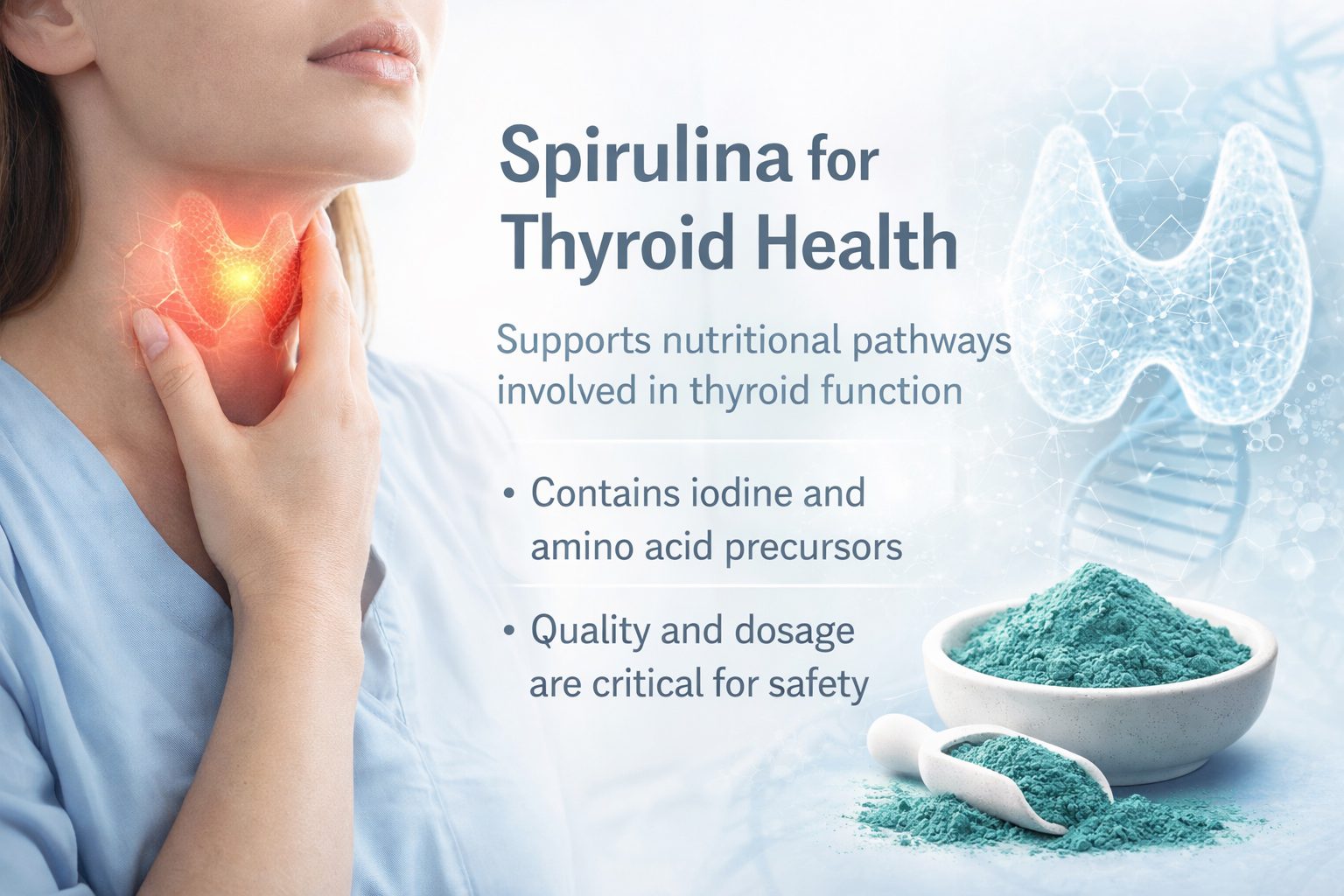
Why Spirulina Is Uniquely Beneficial for the Thyroid
1. Rich in Selenium — The Thyroid’s Most Critical Mineral
Selenium is arguably the single most important mineral for thyroid health. The thyroid gland contains the highest concentration of selenium per gram of tissue of any organ in the body. Selenium is required for the conversion of T4 (inactive thyroid hormone) into T3 (active thyroid hormone), and it protects thyroid cells from oxidative damage during hormone production.
Spirulina is a naturally rich source of bioavailable selenium, making it far superior to synthetic selenium supplements that may be poorly absorbed. A daily serving of high-quality spirulina contributes meaningful amounts of this essential mineral in a form your body can readily use.
2. Iodine in Balanced Amounts
Iodine is essential for thyroid hormone production — your thyroid literally cannot make T3 or T4 without it. However, both too little and too much iodine can cause thyroid problems, making dosage critical.
Spirulina contains moderate, naturally occurring iodine levels — enough to support healthy thyroid function without the risk of overdose that comes with concentrated iodine supplements like kelp or iodine drops. This makes spirulina a safer choice for ongoing thyroid support compared to high-iodine seaweed supplements that can actually worsen thyroid conditions when overused.
3. Phycocyanin: Unmatched Anti-Inflammatory Protection
Thyroid inflammation is a hallmark of the most common thyroid disorders, including Hashimoto’s thyroiditis and Graves’ disease. Spirulina’s phycocyanin — its signature blue antioxidant pigment — is one of the most powerful natural anti-inflammatory compounds ever studied. For a deep dive into how phycocyanin fights inflammation throughout the body, see our guide on spirulina for inflammation and joint pain.
Research has shown phycocyanin inhibits COX-2 and NF-κB pathways, the same inflammatory cascades that drive autoimmune thyroid damage. No other algae, green superfood, or common supplement contains phycocyanin — it’s unique to spirulina and represents a significant advantage over alternatives like chlorella, wheatgrass, or standard multivitamins. For a full comparison, see our spirulina vs chlorella breakdown.
4. Antioxidant Defense for Thyroid Cells
Thyroid hormone production naturally generates hydrogen peroxide, a reactive oxygen species that can damage thyroid cells over time. This oxidative stress is a key driver of thyroid decline with age.
Spirulina provides an extraordinary arsenal of antioxidants — phycocyanin, beta-carotene, superoxide dismutase (SOD), vitamin E, and zeaxanthin — that work together to neutralize these damaging free radicals. This comprehensive antioxidant protection is something you simply cannot get from a single-nutrient supplement. Explore all of spirulina’s science-backed health benefits.
5. Iron for Thyroid Hormone Production
Iron deficiency is both a cause and consequence of hypothyroidism. Your thyroid needs iron to produce thyroid hormones, and low thyroid function impairs iron absorption — creating a vicious cycle.
Spirulina is one of the most iron-dense foods on the planet, with approximately 28.5 mg per 100g — far exceeding beef (2.6 mg/100g) and spinach (2.7 mg/100g). Unlike iron supplements that commonly cause constipation and nausea, spirulina’s naturally chelated iron is gentle on the stomach and highly bioavailable. Read our comprehensive guide on spirulina for iron deficiency.
6. B Vitamins for Thyroid Metabolism
B vitamins — particularly B1, B2, B3, and B6 — are essential cofactors in thyroid hormone synthesis and metabolism. People with thyroid conditions frequently have B vitamin deficiencies. Spirulina is naturally rich in these B vitamins, providing them in a whole-food matrix that enhances absorption compared to synthetic B-complex supplements.
Spirulina vs Other Thyroid Supplements
Many people turn to supplements like kelp, ashwagandha, or selenium pills for thyroid support. Here’s how spirulina compares:
Spirulina vs Kelp: Kelp provides extremely high iodine levels that can actually trigger or worsen thyroid problems (particularly Hashimoto’s). Spirulina provides moderate, safe iodine levels plus selenium, iron, phycocyanin, and comprehensive nutrients that kelp lacks. Spirulina is the safer, more complete choice.
Spirulina vs Selenium Supplements: Isolated selenium supplements provide one mineral. Spirulina provides selenium alongside iron, iodine, B vitamins, phycocyanin, GLA, and dozens of other nutrients that work synergistically. The whole is greater than the sum of its parts.
Spirulina vs Standard Multivitamins: Multivitamins contain synthetic nutrients in isolated forms with questionable bioavailability. Spirulina delivers naturally occurring nutrients in a whole-food matrix with superior absorption — plus unique compounds like phycocyanin and GLA that multivitamins simply don’t contain.
How to Use Spirulina for Thyroid Support
Recommended Dosage
For thyroid support, take 3–5 grams of spirulina daily. Start with 1–2 grams and increase gradually over 2 weeks. Consistency is essential — thyroid benefits build over time with daily use.
When to Take It
Take spirulina at least 30 minutes apart from thyroid medication (like levothyroxine) to avoid any potential interaction with absorption. Morning is ideal for most people, as spirulina provides natural energy without stimulants.
Best Forms
Spirulina powder mixed into smoothies or water is the most bioavailable form. For guidance, check out our how to use spirulina powder guide and delicious spirulina recipes.
Why Freeze-Dried Spirulina Is the Best Choice for Thyroid Health
Processing matters enormously when it comes to spirulina’s thyroid benefits. Freeze-dried spirulina preserves significantly more phycocyanin, active enzymes, and heat-sensitive nutrients compared to spray-dried versions that are exposed to high temperatures during processing.
Since phycocyanin is the primary anti-inflammatory compound that protects thyroid tissue, and since heat-sensitive selenium and B vitamins are critical for thyroid function, freeze-dried spirulina like Royal Spirulina delivers measurably superior thyroid support compared to cheaper spray-dried alternatives.
Important Precautions
While spirulina is generally safe and beneficial for thyroid health, there are important considerations:
Autoimmune thyroid conditions: Spirulina can modulate immune function. If you have Hashimoto’s or Graves’ disease, consult your endocrinologist before starting spirulina supplementation. Many patients with autoimmune thyroid conditions benefit from spirulina’s anti-inflammatory effects, but medical supervision is advisable.
Medication timing: Always separate spirulina from thyroid medications by at least 30 minutes to ensure proper medication absorption.
Quality and purity: Contaminated spirulina can contain heavy metals or microcystins that are harmful to the thyroid. Always choose spirulina from a trusted source that provides third-party testing. Learn why sourcing matters in our best spirulina powder review.
Related Spirulina Guides
- Spirulina for Inflammation and Joint Pain — how phycocyanin fights the inflammation behind thyroid disorders
- Spirulina for Skin, Hair, and Anti-Aging — addressing thyroid-related hair loss and skin changes
- Spirulina for Athletes and Workout Recovery — boosting energy and metabolism for active lifestyles
- Spirulina During Pregnancy — thyroid health is especially critical during pregnancy
Frequently Asked Questions
Can spirulina cure thyroid disease?
No supplement can cure thyroid disease. However, spirulina can meaningfully support thyroid function through its selenium, iron, iodine, anti-inflammatory phycocyanin, and comprehensive nutrient profile. It works best alongside proper medical treatment, not as a replacement.
Is spirulina safe for Hashimoto’s thyroiditis?
Spirulina’s anti-inflammatory properties may benefit Hashimoto’s patients by reducing thyroid inflammation. However, because spirulina can stimulate immune activity, people with autoimmune conditions should consult their doctor before starting it.
Does spirulina contain enough iodine for thyroid health?
Spirulina contains moderate iodine levels that contribute to thyroid support without the overdose risk of high-iodine supplements like kelp. For people with mild iodine insufficiency, spirulina can help. Those with severe deficiency may need additional supplementation under medical guidance.
Can spirulina help with thyroid-related weight gain?
Yes. Spirulina supports healthy metabolism through thyroid support and has independently been shown to aid weight loss through appetite suppression, increased fat oxidation, and blood sugar regulation.
Is spirulina better than ashwagandha for thyroid support?
They work through different mechanisms and can complement each other. Spirulina provides the actual minerals and nutrients your thyroid needs to function (selenium, iron, iodine, B vitamins) plus anti-inflammatory protection. Ashwagandha primarily works through stress reduction and may help normalize TSH levels. Spirulina offers broader nutritional support and more direct thyroid benefits.