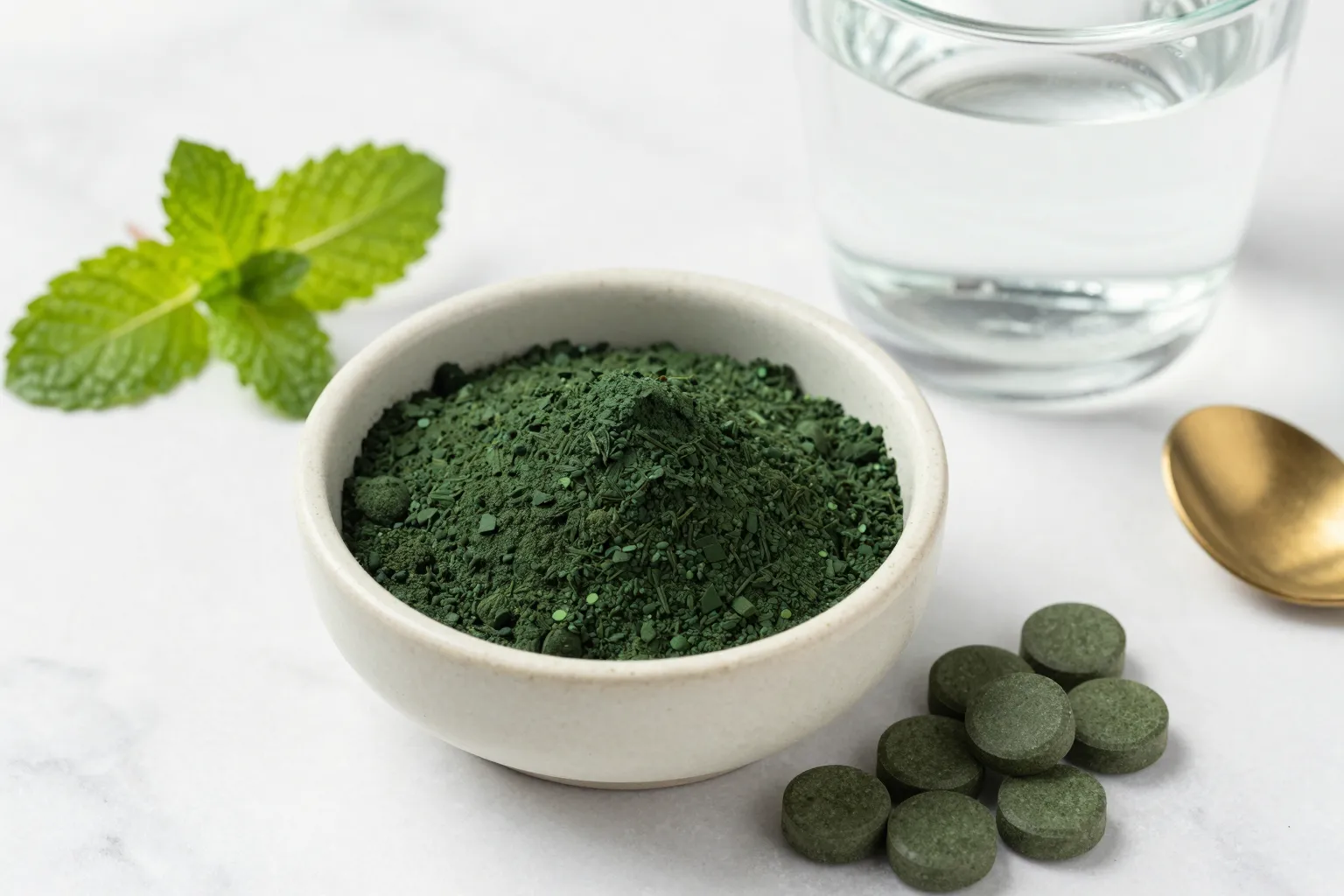
Spirulina side effects are one of the most-searched health questions on Google — and for good reason. Before adding a new supplement to a daily routine, it’s worth understanding what the research actually shows. The short version: clinical studies consistently find that pure, properly sourced spirulina is one of the safest supplements available. The more useful version: most reported “side effects” fall into three very different categories, and telling them apart changes everything.
This guide walks through every documented spirulina side effect in the peer-reviewed literature, who should talk to their doctor before starting, known drug interactions, and — most importantly — why the majority of complaints online have more to do with supplement quality than with spirulina itself.
Medical disclaimer: This article is for informational purposes only and is not a substitute for medical advice. Spirulina can interact with certain medications and conditions (autoimmune disorders, phenylketonuria, blood thinners, immunosuppressants). If you are pregnant, breastfeeding, taking prescription medication, or managing a chronic condition, consult your doctor before adding spirulina to your routine.
TL;DR: Spirulina Side Effects at a Glance
- Pure spirulina is generally safe. Multiple clinical trials with doses up to 10 g/day have found no serious adverse effects.
- Mild side effects are normal in the first 1–2 weeks: green stools, mild bloating, slight headache, light nausea, or temporary fatigue as the body adjusts.
- Specific groups should consult a doctor first: people with autoimmune conditions, PKU, iron overload (hemochromatosis), bleeding disorders, or those taking blood thinners, immunosuppressants, or diabetes medications.
- Most “dangerous spirulina” stories online trace back to contamination — heavy metals, microcystins, or bacterial contaminants in low-quality, poorly-sourced spirulina — not spirulina itself.
- Pregnancy, breastfeeding, and young children: evidence is limited; medical guidance is recommended.
Is Spirulina Safe? The Direct Answer
Yes — for most healthy adults, pure spirulina is safe at the clinically studied doses of 1 to 10 grams per day. Human clinical trials, including the landmark 1995 Kerala trial on oral leukoplakia and dozens of subsequent studies on weight loss, cholesterol, blood sugar, athletic performance, and cancer, have found no serious adverse effects at standard dosages.
The FDA classifies spirulina as GRAS (“Generally Recognized As Safe”), and the World Health Organization has endorsed it as nutritional support in populations where food insecurity is common.
That said, “safe” is a statistical statement, not a guarantee. A small percentage of people experience mild side effects, certain groups have specific contraindications, and — the part most articles miss — the supplement market is unevenly regulated. The same word on a label can mean two very different products.
The Three Categories of Spirulina Side Effects
Every reported spirulina side effect fits into one of three buckets. Understanding the difference matters because the solutions are completely different.
| Category | What It Is | Who It Affects |
|---|---|---|
| 1. Mild & Temporary | Normal physiological responses as the body adjusts to a nutrient-dense food | Many first-time users in weeks 1–2 |
| 2. Genuine Contraindications | Real interactions with specific health conditions or medications | A minority of users with known medical conditions |
| 3. Quality-Related | Issues caused by contaminated spirulina — not spirulina itself | Anyone taking low-quality or untested product |
The rest of this article breaks each category down in detail.
Category 1: Mild & Temporary Side Effects
For most people starting spirulina, early side effects are mild, predictable, and temporary. They tend to appear in the first few days and fade within 1–2 weeks as the body adjusts.
Green stools
The most common — and the most alarming if nobody warned you. Spirulina is dense in chlorophyll and phycocyanin, two intensely pigmented compounds. What doesn’t get absorbed passes through, producing a deep green or even slightly blue-green color. This is harmless and simply reflects the density of plant pigments in each serving.
Mild digestive changes
Some people experience slight bloating, gas, or mild nausea in the first week. This is usually the result of three things happening at once: a sudden increase in plant protein, a new source of fiber-like compounds, and the stimulating effect of B-vitamins on digestion. Starting with a lower dose (about 1 gram per day) and building up gradually over 7–10 days virtually eliminates this. See our Spirulina Dosage Guide for a ramp-up schedule.
Headache or light-headedness
Reported occasionally during the first few days. The most common cause is mild dehydration — spirulina is highly concentrated, and absorption is easier when paired with adequate water. An extra glass or two of water at dosing time usually resolves this.
“Detox” symptoms
Some people report fatigue, mild brain fog, or a slight headache in the first week and label it a detox response. This is less well-defined scientifically, but two plausible mechanisms exist: spirulina’s ability to bind and transport heavy metals (see our Spirulina for Heavy Metal Detox article) and its stimulation of immune cells. If symptoms are disruptive, reducing the dose by half for a few days typically resolves them.
Feeling energized — sometimes uncomfortably so
Spirulina is rich in B-vitamins and iron, and many people report a noticeable boost in energy. Occasionally, that shows up as mild jitteriness or trouble sleeping if taken too late in the day. Taking spirulina in the morning or with lunch — rather than after 4 p.m. — solves this for most people.

When “mild and temporary” should not be ignored
If side effects persist beyond 2 weeks, worsen rather than improve, or include severe abdominal pain, vomiting, persistent headache, or jaundice (yellowing of the skin or eyes), stop taking spirulina and consult a doctor. These are not typical side effects of pure spirulina and may suggest either contamination (see Category 3) or an interaction that needs medical attention.
Category 2: Genuine Contraindications — Who Should Not Take Spirulina
These are the groups where real research supports caution. This is not an exhaustive list of every possible sensitivity — it’s the list that clinicians, pharmacists, and the published research consistently agree on.
People with autoimmune conditions
Spirulina is a powerful immunomodulator. Research shows it increases the activity of natural killer cells, T-cells, and certain cytokine pathways. For most people, this is a benefit. For someone with an autoimmune condition — lupus, rheumatoid arthritis, multiple sclerosis, Hashimoto’s, psoriasis, Crohn’s — stimulating an already-overactive immune system is the last thing you want.
This contraindication is widely cited by integrative medicine physicians and by major medical sources including the Memorial Sloan Kettering Cancer Center herb database. If you have an autoimmune condition, talk to your doctor before starting spirulina.
People with PKU (Phenylketonuria)
Spirulina contains phenylalanine — in fact, as a complete protein, it contains all nine essential amino acids, including this one. People with PKU cannot properly metabolize phenylalanine, and it can accumulate to toxic levels. Spirulina is contraindicated in PKU.
People with iron overload (hemochromatosis)
Spirulina is one of the most iron-dense plant foods on Earth. For people with iron deficiency or anemia, this is exactly what you want (see our Spirulina for Iron Deficiency & Anemia post). For people with hereditary hemochromatosis or iron overload, additional iron is a problem. Speak to your physician.
Pregnancy and breastfeeding
The research on spirulina in pregnancy is mixed. Some studies — particularly in sub-Saharan Africa — have used spirulina as a nutritional intervention for undernourished pregnant women with positive results. However, the safety of spirulina supplementation in pregnancy and breastfeeding has not been definitively established through large-scale trials, and quality concerns amplify risk during this period. Most medical bodies recommend avoiding spirulina unless advised by a qualified healthcare provider. Our full post on Spirulina During Pregnancy covers the evidence in depth.
Young children
Children can be more sensitive to any contaminants present in a supplement because of their smaller body weight. Research generally supports spirulina for kids at appropriate doses, but only if the source is third-party tested and verified clean. See our Spirulina for Kids guide for dosage and safety guidance.
People scheduled for surgery
Because spirulina has mild blood-thinning properties (see “Drug Interactions” below), most surgeons recommend stopping any supplement with anticoagulant activity at least 2 weeks before a scheduled procedure.
Category 3: Quality-Related Problems Misattributed to Spirulina
This is the category that gets ignored in most “spirulina side effects” articles — and it is the most important. The majority of serious adverse events associated with spirulina in the medical literature trace back to contamination, not to spirulina itself.
Spirulina is grown in open ponds or controlled photobioreactors, harvested, and dried. Each stage is an opportunity for contamination if the supplier doesn’t control their process rigorously.
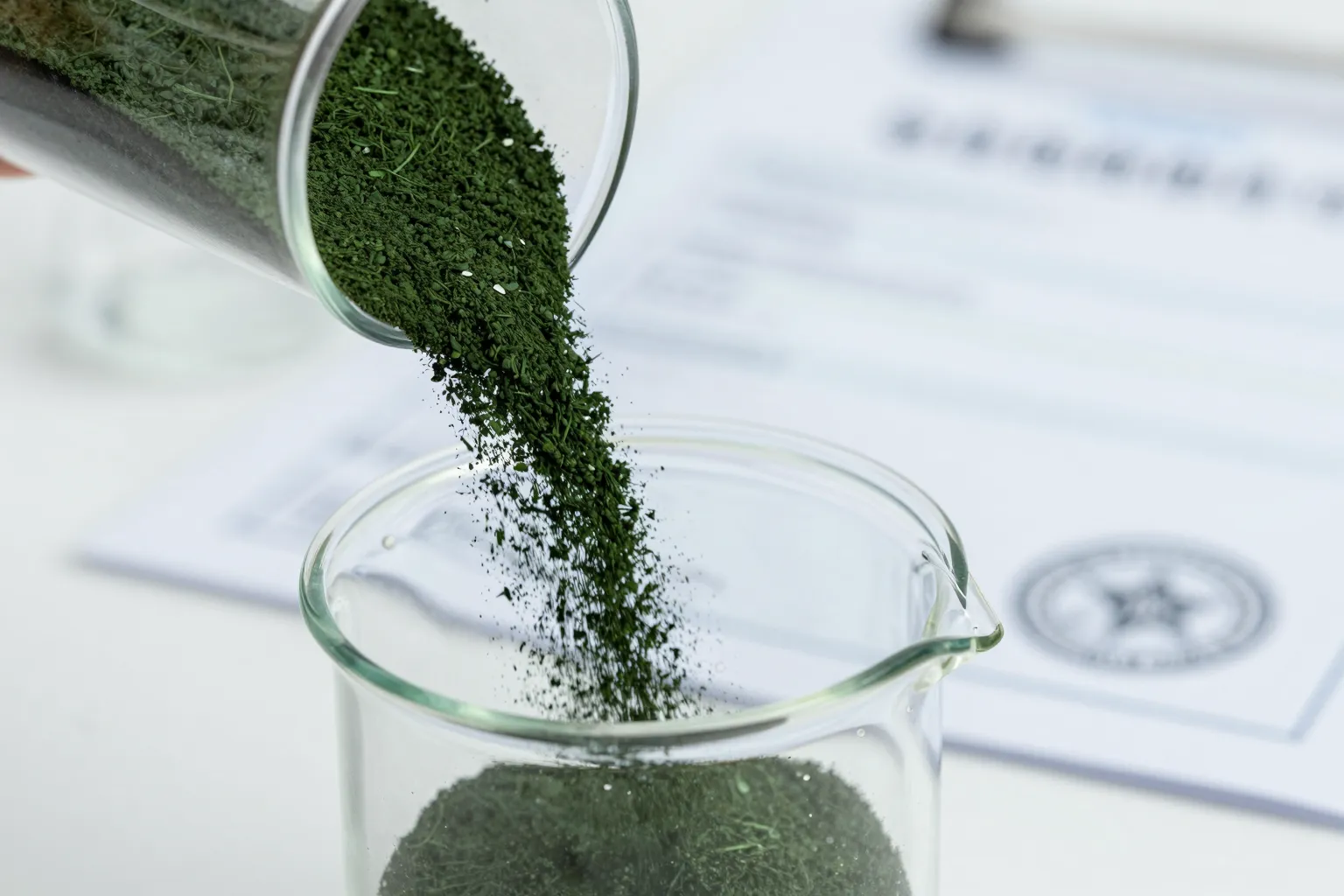
Heavy metals
Spirulina — like many aquatic organisms — will absorb heavy metals from its growing environment. If the water source is contaminated with lead, mercury, arsenic, or cadmium, the spirulina will concentrate them. Testing by independent labs has found concerning heavy metal levels in some imported, low-cost spirulina products, particularly from unregulated or industrial-adjacent water sources.
The fix is not to avoid spirulina. It is to buy spirulina with a verified Certificate of Analysis that shows heavy metal testing below safety thresholds. Our own certificates of analysis are published for exactly this reason.
Microcystins
Spirulina itself (Arthrospira) does not produce microcystins. However, other cyanobacteria — particularly Microcystis — do, and they can contaminate spirulina cultures in open-pond growing environments that lack strict controls. Microcystins are hepatotoxins and can cause liver damage. Every reputable spirulina supplier tests for microcystins and publishes results below the WHO safety threshold of 1 μg/g.
Bacterial contamination
Improper drying or storage can allow bacterial contamination. Pharmaceutical-grade, freeze-dried spirulina processed at low temperatures in controlled environments avoids this. Spray-dried spirulina — particularly from facilities that cut corners — is more vulnerable. See our Freeze-Dried vs Spray-Dried comparison for the full breakdown.
The “organic” trap
Counterintuitively, spirulina labeled “organic” is not always safer — and can sometimes be less so. USDA organic standards were designed for soil-based agriculture and require fertilization with compost tea or manure, which introduces contamination risks that do not exist in sterile, controlled growing environments. Our in-depth analysis of the organic label issue explains why several of the largest U.S. producers dropped the label.
The practical takeaway: most “spirulina made me sick” stories are “contaminated spirulina made me sick” stories. Clean spirulina, from a transparent source, produces almost none of these issues.
Spirulina Drug Interactions
Spirulina has a mild effect on several physiological systems. Most interactions are minor, but three warrant specific attention.
Blood thinners and antiplatelet drugs
Spirulina has mild antiplatelet and anticoagulant activity, likely through its GLA content and omega-3 pathway. On its own, this is a minor effect. Combined with pharmaceutical blood thinners, it could theoretically increase bleeding risk. If you take warfarin, Eliquis, Xarelto, Pradaxa, clopidogrel, or daily aspirin for cardiovascular protection, speak to your prescribing physician before starting spirulina.
Immunosuppressants
Because spirulina stimulates immune function, it may theoretically oppose the action of immunosuppressants like cyclosporine, tacrolimus, or methotrexate. Transplant recipients and anyone on prescribed immunosuppressive therapy should not start spirulina without medical guidance.
Diabetes medications
Spirulina lowers fasting blood glucose in multiple clinical trials (see our Spirulina and Diabetes and Spirulina and Type 2 Diabetes clinical studies articles). If you take insulin, metformin, sulfonylureas, or GLP-1 receptor agonists like Ozempic, combining spirulina could lower blood sugar more than intended. This is not a reason to avoid it — in fact, our Can You Take Spirulina With Ozempic post explains why the combination may be helpful — but it is a reason to monitor blood glucose more closely in the first few weeks and discuss dosing with your physician.
Other medications
Spirulina does not have significant known interactions with most common medications (antihypertensives, statins, antidepressants, thyroid replacement). As with any supplement, mentioning spirulina to your pharmacist is a 30-second conversation that provides meaningful peace of mind.
For a comprehensive guide to all drug interactions, food and drink timing, supplement conflicts, and medical conditions that require caution, see What to Avoid When Taking Spirulina (and What Not to Mix It With).
Allergic Reactions
True allergic reactions to spirulina are rare but possible. Reported symptoms include itching, hives, mild swelling, and — in isolated case reports — respiratory symptoms.
People with existing allergies to seafood, algae, or other cyanobacteria may have a slightly higher risk of cross-reactivity. If you experience any rapid-onset allergic symptoms after taking spirulina — particularly swelling of the face, lips, or throat, difficulty breathing, or widespread rash — stop taking it immediately and seek medical care.
What to Do If You Experience Side Effects
A practical decision framework for anyone starting out:
Mild symptoms in the first 1–2 weeks (green stools, mild bloating, light nausea, slight headache): continue, but reduce to half your intended dose and drink more water. If symptoms persist beyond 2 weeks, stop and reassess.
New or worsening symptoms: stop immediately. Review Category 2 contraindications. If none apply, the most likely cause is product quality — review the brand’s third-party testing, Certificate of Analysis, and processing method.
Severe symptoms (vomiting, severe abdominal pain, jaundice, allergic response, persistent headache, fever): stop immediately and consult a doctor. Bring the product and its label with you.
How Much Spirulina Is Too Much?
Most clinical research uses doses between 1 and 10 grams per day. Doses above 10 grams daily do not consistently show additional benefit and may increase the likelihood of mild digestive side effects. For the vast majority of people, 3–5 grams per day is the sweet spot for general health — enough to deliver clinical benefit without pushing into diminishing returns. See our full Spirulina Dosage Guide.
How to Avoid Quality-Related Side Effects
The single most effective way to avoid spirulina side effects is to start with a clean product. Five things to look for:
- Published Certificate of Analysis showing heavy metal testing (lead, mercury, arsenic, cadmium) below USP and California Proposition 65 limits.
- Microcystin testing below the WHO safety threshold of 1 μg/g.
- Processing method — freeze-dried at low temperature preserves active compounds and avoids high-heat bacterial risk. See our processing comparison.
- Transparent sourcing — a real farm name, location, and growing method, not a white-label import from a generic supplier.
- Single-ingredient product — pure spirulina, not a proprietary blend that hides the amount or source.
If a brand cannot provide these five things on request, they are not the brand to trust with daily intake.
Spirulina Side Effects: FAQ
Is spirulina safe to take every day?
Yes. Clinical studies have used daily doses of spirulina for periods of 3 to 12 months with no serious adverse effects in healthy adults. The typical long-term daily dose range is 3–5 grams.
Can spirulina cause liver damage?
Pure spirulina has not been shown to damage the liver. Spirulina contaminated with microcystins — toxins produced by other cyanobacteria, not by spirulina itself — is hepatotoxic. Third-party-tested spirulina addresses this risk.
Can spirulina cause weight gain?
No. In multiple clinical trials, spirulina is associated with weight loss and reduced BMI, not weight gain. See our review of 12 clinical studies in Spirulina for Weight Loss: The 4 Mechanisms.
Why is my poop green after taking spirulina?
Spirulina is dense in chlorophyll and phycocyanin, two intensely pigmented compounds. Unabsorbed portions pass through, producing a green or slightly blue-green stool color. This is harmless and normal.
Can I take spirulina on an empty stomach?
Most people tolerate it well on an empty stomach, though some experience mild nausea. Taking it with food or in a smoothie eliminates this for almost everyone.
Does spirulina interact with caffeine?
Not directly, but spirulina is naturally energizing due to its B-vitamin and iron content. Combined with caffeine, sensitive individuals may feel jittery. If you are caffeine-sensitive, consider taking spirulina and coffee several hours apart.
Is spirulina safe during pregnancy?
Evidence is mixed and incomplete. Most medical bodies recommend avoiding it during pregnancy unless directed by a qualified provider. Quality is especially critical during pregnancy. See Spirulina During Pregnancy.
Can you overdose on spirulina?
Acute toxicity from pure spirulina has not been reported at reasonable intake levels. Extremely high doses (20 grams or more per day) may cause digestive distress but are not considered dangerous in the short term. There is no benefit to exceeding 10 grams per day.
Does spirulina expire?
Yes. Properly stored spirulina (cool, dry, sealed) has a shelf life of about 2 years. Past that, phycocyanin and other active compounds degrade, and the risk of bacterial contamination increases. Do not use spirulina that smells off, has changed color, or is past its date.
Can children take spirulina?
Yes, at age-appropriate dosages, and only if the product is third-party tested for purity. See our full Spirulina for Kids guide.
What does it mean if I feel tired after starting spirulina?
This occasionally happens in the first week, often attributed to a “detox response” as the body adjusts. It typically resolves within 5–7 days. If fatigue persists beyond 2 weeks, stop and reassess — this is not a typical response to pure spirulina.
The Bottom Line
Spirulina, as studied in clinical trials and consumed by millions of people daily, is one of the safest supplements available. The side effects that do occur are overwhelmingly mild, temporary, and manageable with a gradual ramp-up and adequate hydration. Genuine contraindications — autoimmune disease, PKU, iron overload, pregnancy, certain medications — apply to a minority of users and are straightforward to discuss with a physician.
What the label-free version of this article would say, and what the research supports: the biggest real risk of spirulina is not spirulina. It’s buying the wrong spirulina. Every “spirulina made me sick” story that has been traced to a specific cause has pointed to contamination — heavy metals, microcystins, or bacterial contaminants — in low-quality, poorly-sourced product. Pure, freeze-dried, third-party-tested spirulina does not produce those outcomes.
For anyone about to start: ramp up slowly, drink plenty of water, stay within 3–5 grams per day to begin, and buy from a source that will show you its testing. Do those four things and spirulina’s side effect profile is, in practice, almost non-existent.
These statements have not been evaluated by the Food and Drug Administration. This product is not intended to diagnose, treat, cure, or prevent any disease. Always consult your healthcare provider before starting any supplement regimen, especially if you are taking medications or have existing health conditions.
About the Author
The Royal Spirulina research team reviews peer-reviewed literature on microalgae nutrition, safety, and clinical applications. Every article on royalspirulina.com is sourced from PubMed-indexed studies and checked against the most recent published evidence. We update posts when significant new research is released. If you spot an error or have a question about a cited study, contact us — we read every message.
Last medically reviewed: April 2026. Next scheduled review: October 2026.
Related Reading
What to Avoid When Taking Spirulina — Drug interactions, food timing, and contraindications in detail.
Spirulina for Heart Health: Cholesterol & Blood Pressure — How spirulina lowers LDL cholesterol, triglycerides, and blood pressure based on multiple meta-analyses.
Spirulina Benefits: The Complete Guide — Comprehensive overview of all spirulina health benefits.
Spirulina and Chlorella Together: What Science Says — Can you take spirulina and chlorella together? Learn the complementary benefits and research-backed dosages for this powerful superfood combination.
Best Time to Take Spirulina: Morning or Night? — Science-backed guidance on when to take spirulina for maximum absorption, energy, and sleep benefits.
Does Spirulina Break a Fast? What the Science Says — Find out whether spirulina breaks your fast — and why it might actually enhance your fasting results.
Spirulina for Liver Health: NAFLD, Fatty Liver & Detox — How spirulina protects against fatty liver disease through antioxidant, anti-inflammatory, and metabolic pathways.
Sea Moss vs Spirulina: Which Superfood Is Better? — Comprehensive comparison of nutrition, health benefits, safety, and scientific evidence between these two popular supplements.