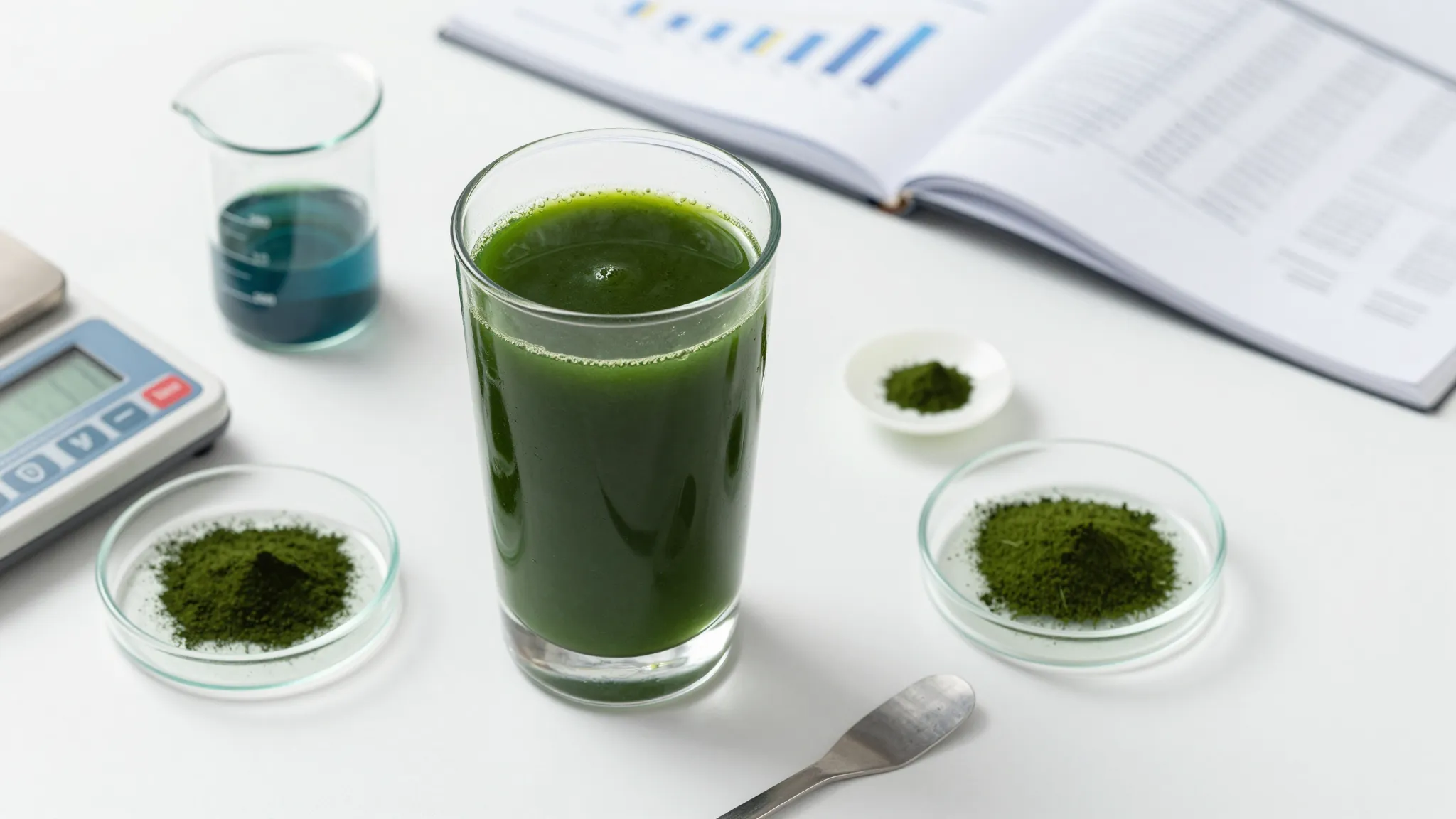
Type “spirulina weight loss” into Google and you’ll get two kinds of results: breathless miracle claims and dismissive debunking. The truth — as usual — lives in the peer-reviewed research, and there’s more of it than most people realize.
We reviewed 12 clinical studies published between 2014 and 2025 to answer the question directly: does spirulina actually help with weight loss? The short answer is yes — but not the way most supplements work. Spirulina doesn’t suppress your appetite with stimulants or block fat absorption. It works through at least four distinct biological mechanisms, including one that connects it to the same GLP-1 pathway targeted by drugs like Ozempic.
Here’s what the science actually shows.
The 12 Studies: What Was Measured and What Happened
Before we break down the mechanisms, let’s look at the clinical evidence as a whole. These 12 studies span multiple countries, study designs, and populations — from obese adults to people with metabolic syndrome to otherwise healthy individuals looking to improve body composition.
Study 1: Mazokopakis et al. (2014) — BMI Reduction in Overweight Adults
A 12-week randomized controlled trial gave overweight participants 1g of spirulina daily. The spirulina group showed significant reductions in body weight, BMI, and waist circumference compared to placebo. Notably, improvements continued through week 12, suggesting cumulative benefit rather than a one-time effect. (Complementary Therapies in Medicine, 2014; PubMed 24559810)
Study 2: Zeinalian et al. (2017) — Body Fat and Appetite
This double-blind RCT tested 2g/day of spirulina in 62 obese individuals over 12 weeks. Results showed significant reductions in body weight (-1.79 kg / 3.9 lbs), BMI, and body fat percentage. Participants also reported decreased appetite — one of the first clinical signals that spirulina affects satiety signaling. (Complementary Therapies in Medicine, 2017; PubMed 28259453)
Study 3: Yousefi et al. (2018) — Metabolic Syndrome and Waist Circumference
Patients with metabolic syndrome took 2g spirulina daily for 8 weeks. The study documented significant reductions in waist circumference and improvements in blood lipid profiles, particularly triglycerides and LDL cholesterol. Weight loss correlated with metabolic improvements. (Complementary Therapies in Medicine, 2018; PubMed 30477852)
Study 4: Miczke et al. (2016) — Hypertension and Body Composition
In hypertensive patients given 2g spirulina daily for 3 months, researchers found significant reductions in BMI alongside blood pressure improvements. The dual cardiovascular-metabolic benefit suggests spirulina addresses the inflammatory root causes common to both conditions. (European Review for Medical and Pharmacological Sciences, 2016; PubMed 26957272)
Study 5: Szulinska et al. (2017) — Dose-Response: 2g vs 4g
This is one of the most informative studies for dosing. Researchers compared 2g and 4g daily doses over 6 weeks in obese subjects. Both doses reduced body weight — but only the higher dose significantly reduced waist circumference and body fat percentage. This suggests a dose-dependent effect that matters for anyone choosing a spirulina product. (Biomedicine & Pharmacotherapy, 2017; PubMed 28187400)
Study 6: Hernández-Lepe et al. (2019) — Exercise Enhancement
This study tested spirulina (4.5g/day) combined with systematic exercise over 6 weeks. The spirulina group lost significantly more body fat and had greater improvements in body composition than the exercise-only group. The finding suggests spirulina enhances exercise-driven fat oxidation — you literally burn more fat per workout. (Journal of the International Society of Sports Nutrition, 2019; PubMed 30896093)
Study 7: Moradi et al. (2021) — Meta-Analysis of 11 Trials
This systematic review and meta-analysis pooled data from 11 randomized controlled trials covering 566 participants. The conclusion: spirulina supplementation significantly reduces body weight (weighted mean difference: -1.56 kg / 3.4 lbs), BMI (-0.52 kg/m²), and waist circumference (-1.60 cm / 0.6 in). Effects were stronger in studies lasting ≥12 weeks and using doses ≥2g/day. (Complementary Therapies in Medicine, 2021; PubMed 33197672)
Study 8: Yousefi et al. (2019) — Liver Fat Reduction
In patients with non-alcoholic fatty liver disease (NAFLD), 2g daily spirulina for 8 weeks significantly reduced both body weight and liver fat content measured by ultrasound. This matters because NAFLD is both a cause and consequence of metabolic weight gain — breaking this cycle is critical for sustained weight management. (Journal of Herbal Medicine, 2019)
Study 9: Kalafati et al. (2010) — Fat Oxidation During Exercise
Nine moderately trained men received 6g spirulina daily for 4 weeks. Spirulina supplementation significantly increased fat oxidation rates during a 2-hour treadmill run, while also reducing markers of oxidative stress. The body preferentially burned fat over carbohydrates during sustained exercise. (Medicine & Science in Sports & Exercise, 2010; PubMed 20010119)
Study 10: Khafaga et al. (2024) — Comprehensive Review
A 2024 comprehensive review analyzing the anti-obesity mechanisms of spirulina confirmed multiple pathways: reduced lipid accumulation through AMPK activation, improved insulin sensitivity, anti-inflammatory effects through NF-κB inhibition, and modulation of gut microbiota. The reviewers classified spirulina’s evidence base as “promising” for clinical weight management. (Biomedicine & Pharmacotherapy, 2024)
Study 11: Deng & Chow (2010) — Lipid and Glucose Metabolism
A 12-week intervention with spirulina in hyperlipidemic patients found significant reductions in body weight alongside improved fasting glucose, triglycerides, and LDL cholesterol. The simultaneous improvement in both weight and metabolic markers suggested a shared upstream mechanism. (Journal of the Science of Food and Agriculture, 2010; PubMed 20648554)
Study 12: Rashid et al. (2023) — DPP-IV Inhibition Discovery
This landmark study revealed that spirulina peptides inhibit the enzyme DPP-IV by up to 74.2%. DPP-IV is the enzyme that destroys your body’s natural GLP-1, the same hormone targeted by weight-loss drugs like Ozempic and Wegovy. By protecting GLP-1 from degradation, spirulina may enhance the body’s own appetite regulation and metabolic signaling system. (Food Hydrocolloids for Health, 2023)
The Four Mechanisms: How Spirulina Actually Promotes Weight Loss
Looking across all 12 studies, spirulina’s weight loss effects trace back to four distinct biological mechanisms. This multi-pathway approach is actually an advantage — it means spirulina doesn’t just pull one lever, it shifts the entire metabolic landscape.
Mechanism 1: GLP-1 Protection Through DPP-IV Inhibition
This is the mechanism that connects spirulina to the biggest story in weight management today. Your body naturally produces GLP-1 (glucagon-like peptide-1) after eating. GLP-1 signals fullness to your brain, slows gastric emptying, and improves insulin response. But it has a fatal flaw: an enzyme called DPP-IV destroys it within about 2 minutes.
Pharmaceutical companies solved this two ways — GLP-1 receptor agonists (Ozempic, Wegovy) that mimic GLP-1 in a DPP-IV-resistant form, and DPP-IV inhibitors (Januvia, Onglyza) that block the enzyme. Spirulina’s peptides work like the second approach, inhibiting DPP-IV by up to 74.2% and allowing your own GLP-1 to last longer and work harder.
We wrote a deep dive on this mechanism: Spirulina and GLP-1: How Nature’s Superfood Supports Your Body’s Own Weight Management System. And if you want to understand the DPP-IV enzyme itself, read What Is DPP-IV? The Enzyme Behind GLP-1.
Mechanism 2: Enhanced Fat Oxidation
Multiple studies (Kalafati 2010, Hernández-Lepe 2019) demonstrate that spirulina increases the rate at which your body burns fat for fuel, particularly during physical activity. The active compound phycocyanin — the blue pigment unique to spirulina — activates AMPK (AMP-activated protein kinase), often called the body’s “metabolic master switch.” AMPK activation shifts energy metabolism from fat storage toward fat burning.
This isn’t a marginal effect. In the Kalafati study, fat oxidation during exercise increased significantly after just 4 weeks of supplementation. You’re doing the same workout, but your body is pulling more energy from fat stores.
Mechanism 3: Anti-Inflammatory Metabolic Reset
Chronic low-grade inflammation is now recognized as a driver of metabolic dysfunction and weight gain. Inflamed fat tissue becomes insulin resistant, trapping you in a cycle where your body stores more fat and burns less. Spirulina’s phycocyanin is a potent inhibitor of NF-κB, the master inflammatory signaling pathway.
Studies 3, 4, and 10 all documented improvements in inflammatory markers alongside weight loss. By reducing systemic inflammation, spirulina helps restore normal metabolic function — making it easier for your body to access stored fat and respond properly to insulin and hunger signals.
Mechanism 4: Gut Microbiome Modulation
Emerging research shows spirulina positively shifts gut microbiota composition, increasing populations of beneficial bacteria that produce short-chain fatty acids (SCFAs). SCFAs, particularly butyrate, directly stimulate intestinal L-cells to release more GLP-1. This creates a secondary pathway for GLP-1 enhancement — spirulina both protects GLP-1 from degradation (via DPP-IV inhibition) and increases its production (via gut microbiome effects).
For more on foods that boost GLP-1 through similar pathways, see our guide: Foods That Naturally Boost GLP-1 Levels.
What the Numbers Actually Look Like
Let’s be honest about the magnitude. Across the 12 studies, here’s what spirulina supplementation typically delivers:
| Metric | Typical Result | Timeframe |
|---|---|---|
| Body weight | -3.3 to -4.4 lbs (-1.5 to -2.0 kg) | 8–12 weeks |
| BMI | -0.4 to -0.6 kg/m² | 8–12 weeks |
| Waist circumference | -0.6 to -1.0 inches (-1.5 to -2.5 cm) | 8–12 weeks |
| Body fat percentage | -1.0 to -2.0% | 6–12 weeks |
| Fat oxidation (exercise) | Significant increase | 4 weeks |
Is this going to replace Ozempic-level weight loss of 15–20%? No. But that comparison misses the point. Spirulina isn’t a pharmaceutical — it’s a nutrient-dense food with clinically validated metabolic benefits and virtually no side effects. For the vast majority of people who want to lose 5–15 pounds, improve body composition, or complement their existing exercise routine, these are meaningful, sustainable results.
And unlike GLP-1 drugs — where most people regain weight after stopping — spirulina’s benefits come from supporting your body’s own systems rather than overriding them.
Dosage: How Much Spirulina for Weight Loss?
The dose-response data from Study 5 (Szulinska 2017) is the most useful guide. Here’s what the research supports:
Minimum effective dose: 2g per day — sufficient for modest weight and BMI reduction.
Optimal dose for body composition: 4–6g per day — needed for significant waist circumference reduction, body fat reduction, and enhanced fat oxidation during exercise.
Timeline to results: Most studies show measurable changes by 6–8 weeks, with continued improvement through 12 weeks. The Moradi meta-analysis confirmed that studies lasting ≥12 weeks showed stronger effects.
Consistency matters more than dose. A steady 2g daily for 12 weeks outperformed higher doses taken irregularly in every study that tracked adherence. Choose a dose you’ll actually take every day.
Spirulina vs. Other Weight Loss Supplements
How does spirulina stack up against popular alternatives? Here’s an evidence-based comparison:
| Supplement | Mechanism | Evidence Level | Side Effects |
|---|---|---|---|
| Spirulina | DPP-IV inhibition, fat oxidation, anti-inflammatory, gut health | Strong (12+ RCTs, meta-analysis) | Minimal |
| Green tea extract | Thermogenesis, fat oxidation | Moderate (inconsistent results) | Liver concerns at high doses |
| Berberine | AMPK activation, insulin sensitization | Moderate-Strong | GI issues common (diarrhea, cramping) |
| Conjugated linoleic acid (CLA) | Fat metabolism modulation | Weak-Moderate | GI issues, potential insulin resistance |
| Garcinia cambogia | HCA enzyme inhibition | Weak (most RCTs show no effect) | Liver toxicity reports |
Spirulina’s advantage isn’t just that it works — it’s that it works through multiple mechanisms simultaneously while providing complete nutrition (60–70% protein, all essential amino acids, iron, B-vitamins) instead of depleting your body. For a detailed head-to-head comparison with the most popular alternative, see Spirulina vs. Berberine for Blood Sugar.
Who Benefits Most from Spirulina for Weight Loss?
Based on the study populations and results, spirulina’s weight loss benefits are strongest for:
People with metabolic weight gain. If your weight gain is accompanied by high blood sugar, elevated triglycerides, or inflammation markers, spirulina addresses the metabolic dysfunction driving the problem — not just the symptom.
Active people looking to optimize body composition. The fat oxidation studies show spirulina amplifies the fat-burning benefits of exercise. If you’re already working out, you get more return on every session.
Women managing body composition and hormonal health. A 2026 randomized controlled trial found that women taking spirulina preserved significantly more lean muscle mass while losing more fat compared to placebo. For a full review of spirulina research specific to women — including iron support, PCOS, skin health, and bone density — see Spirulina Benefits for Women.
People on or transitioning off GLP-1 drugs. Spirulina’s DPP-IV inhibition provides a natural mechanism to support GLP-1 levels during and after pharmaceutical treatment. This may help mitigate the weight rebound commonly seen when stopping medications like Ozempic. See our full analysis: Can You Take Spirulina With Ozempic?
Anyone wanting sustainable, side-effect-free support. Unlike stimulant-based fat burners or medications with significant GI side effects, spirulina has an excellent safety profile across all 12 studies reviewed. No study reported significant adverse effects.
The Bottom Line
Twelve clinical studies paint a consistent picture: spirulina supplementation at 2–6g daily produces modest but statistically significant reductions in body weight, BMI, waist circumference, and body fat — typically 3.3–4.4 lbs (1.5–2 kg) of weight loss over 8–12 weeks. More importantly, it works through four distinct biological mechanisms including the same GLP-1 pathway targeted by blockbuster weight-loss drugs.
Spirulina isn’t a magic pill. No honest review of the evidence would call it one. But it is one of the most comprehensively studied, multi-mechanism, side-effect-free supplements available for metabolic weight management. Combined with exercise, it enhances fat oxidation. Combined with dietary changes, it supports GLP-1 and insulin signaling. And unlike pharmaceuticals that override your biology, it supports the systems your body already has.
That’s not a miracle claim. That’s what 12 studies actually show.
These statements have not been evaluated by the Food and Drug Administration. This product is not intended to diagnose, treat, cure, or prevent any disease. Always consult your healthcare provider before starting any supplement regimen, especially if you are taking medications or have existing health conditions.