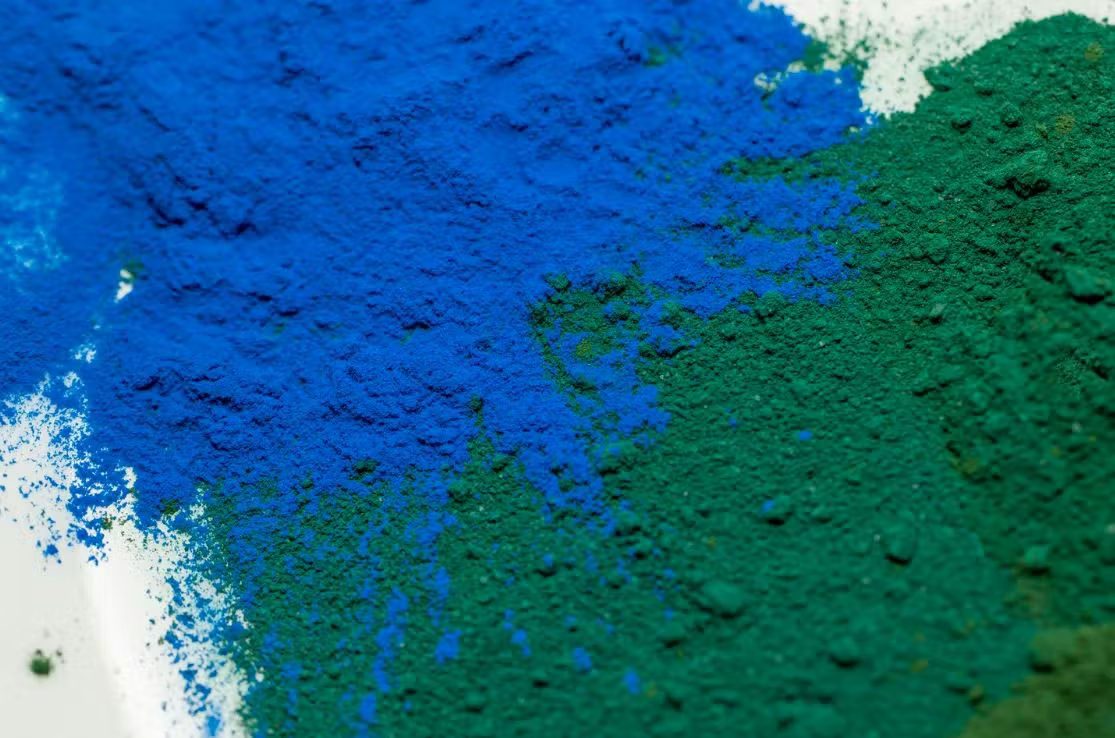
When it comes to blue spirulina vs green spirulina, the differences go far beyond color. They’re both called “spirulina.” They’re both superfoods. But one is a brilliant electric blue, the other is a deep earthy green — and they work very differently in your body and your kitchen. If you’ve been wondering whether blue spirulina is just green spirulina with a color filter, the answer might surprise you.
And if you haven’t heard about the latest advancement in blue spirulina science — phycocyanin combined with trehalose for enhanced neuroprotection — you’ll want to keep reading.
Let’s break it all down.
What Is Green Spirulina?
Green spirulina is the original — a whole-food superfood made from the dried, powdered biomass of Arthrospira platensis, a spiral-shaped cyanobacterium (blue-green algae) that has been consumed for centuries. When you buy a tub of spirulina powder at the health food store, this is almost certainly what you’re getting.
It’s loaded with:
- Protein — up to 60–70% protein by dry weight, with a complete amino acid profile
- Chlorophyll — the green pigment that supports detoxification and liver health
- Phycocyanin — the blue pigment naturally present in the algae
- B vitamins — B1, B2, B3, and B12 precursors
- Iron, calcium, magnesium, and zinc
- Gamma-linolenic acid (GLA) — a beneficial omega fatty acid
The color? That deep forest green comes from chlorophyll, which masks the blue pigment underneath.
What Is Blue Spirulina?
Here’s where most people get confused: blue spirulina is not a different species of algae. It comes from the exact same Arthrospira platensis plant as green spirulina — but it’s processed very differently. Understanding this distinction is key to the whole blue spirulina vs green spirulina question.
Blue spirulina is an extract — specifically, it’s phycocyanin, the blue pigment isolated from spirulina through an additional filtration and purification process. During extraction, the chlorophyll and most other whole-food components are removed, leaving behind a concentrated, intensely blue powder containing primarily phycocyanin.
Think of it this way: green spirulina is the whole orange. Blue spirulina is vitamin C extracted from the orange. Same source, very different product.
The latest evolution of blue spirulina takes this a step further: phycocyanin combined with trehalose. Trehalose is a naturally occurring disaccharide found in mushrooms, honey, and certain plants that both stabilizes the phycocyanin extract and adds its own powerful neuroprotective benefits. Royal Spirulina’s Royal Blue formula uses this advanced combination.
Blue Spirulina vs Green Spirulina: Side-by-Side Comparison
| Feature | Green Spirulina | Blue Spirulina (Royal Blue) |
|---|---|---|
| What it is | Whole dried algae | Phycocyanin + trehalose extract |
| Color | Deep green | Vivid blue/cyan |
| Taste | Rich, earthy chlorophyll flavor | Mild, almost neutral |
| Smell | Fresh, natural chlorophyll scent | Little to no smell |
| Protein content | Very high (~60–70%) | Low (mostly pigment) |
| Chlorophyll | Yes | No |
| Phycocyanin | Yes (alongside other nutrients) | Yes (concentrated) |
| Trehalose | No | Yes — stabilizes phycocyanin and adds neuroprotection |
| Vitamins & minerals | Rich — B vitamins, iron, magnesium | Minimal |
| Antioxidant focus | Broad spectrum | Phycocyanin-specific |
| Neuroprotection | Limited (via phycocyanin only) | Multi-pathway (phycocyanin + trehalose synergy) |
| Best use | Daily nutrition supplement | Brain health, smoothie bowls, lattes |
| Price | Affordable | Premium (extraction + trehalose formulation) |
Nutrition: Which One Wins?
For overall nutrition, green spirulina wins — and it’s not particularly close. As a whole food, it delivers a much broader spectrum of nutrients: protein, B vitamins, iron, antioxidants, and chlorophyll all working together synergistically.
Blue spirulina concentrates phycocyanin specifically, which does have impressive antioxidant and anti-inflammatory properties backed by peer-reviewed research. But it lacks the complete nutritional profile that makes green spirulina such a powerhouse supplement.
However, when it comes to targeted neuroprotection, the equation flips. Blue spirulina — especially in a phycocyanin + trehalose formula — delivers benefits that green spirulina simply cannot match: autophagy activation, protein aggregation prevention, and direct membrane stabilization. These are mechanisms driven primarily by trehalose, which is absent from green spirulina entirely.
If you’re adding spirulina to your diet because you want nutrition, go green. If you’re adding it because you want the specific benefits of phycocyanin — especially the enhanced neuroprotective benefits unlocked by trehalose — go blue.
Health Benefits: Where Each One Shines
When evaluating blue spirulina vs green for health benefits specifically, it helps to look at what each one does best.
Green Spirulina Benefits
- Protein and amino acids — Supports muscle recovery, satiety, and overall nutrition
- Detoxification — Chlorophyll binds to toxins and supports liver function
- Energy — Iron content helps combat fatigue, especially in plant-based diets
- Immune support — Phycocyanin and antioxidants support immune function
- Blood sugar balance — Some research suggests it may help stabilize blood sugar
- Cholesterol support — Studies show it may lower LDL and triglycerides
Blue Spirulina Benefits (Phycocyanin + Trehalose)
- Potent antioxidant — Phycocyanin is a powerful free-radical scavenger, neutralizing reactive oxygen species that damage brain cells
- Anti-inflammatory — Phycocyanin suppresses NO, TNF-α, NF-κB, IL-1β, and COX-2 — broader inflammatory pathway coverage than most natural compounds
- Autophagy activation — Trehalose activates cellular self-cleaning through mTOR-independent pathways (AMPK, TFEB, ULK1), helping cells clear damaged proteins and organelles. This is a mechanism phycocyanin alone does not provide.
- Protein aggregation prevention — Trehalose prevents the clumping of misfolded proteins like amyloid-beta and alpha-synuclein — the hallmarks of Alzheimer’s and Parkinson’s disease
- Membrane stabilization — Trehalose directly protects phospholipid bilayers under stress, while phycocyanin alone offers only indirect membrane protection via antioxidant activity
- Gut-brain axis support — Trehalose has prebiotic effects that support the gut-brain connection, an emerging frontier in neuroscience
- Skin health — Antioxidant activity supports a clearer, more even complexion
- Storage stability — Trehalose prevents thermal degradation of phycocyanin, so the formula retains its potency longer than phycocyanin alone
- Digestive tolerance — Ideal for those who prefer a completely neutral-tasting supplement
Phycocyanin + Trehalose: The Next Evolution of Blue Spirulina
This is where blue spirulina gets truly exciting. While phycocyanin alone is a well-documented antioxidant and anti-inflammatory, peer-reviewed research has revealed that combining it with trehalose unlocks an entirely new level of neuroprotective capability.
Trehalose is a naturally occurring disaccharide found in mushrooms, honey, shrimp, and certain desert-adapted plants. It’s been studied extensively for its ability to protect cells under extreme stress — and the research on its neuroprotective properties is compelling.
Six Pathways of Protection: Phycocyanin + Trehalose
Together, phycocyanin and trehalose deliver multi-pathway neuroprotection backed by six peer-reviewed studies:
- Antioxidant defense — Phycocyanin scavenges reactive oxygen species (ROS), protecting neurons from oxidative damage
- Anti-inflammatory action — Phycocyanin suppresses multiple inflammatory mediators (TNF-α, NF-κB, IL-1β, COX-2), not just one or two
- Autophagy activation — Trehalose triggers cellular self-cleaning through mTOR inhibition, AMPK activation, and TFEB nuclear translocation — pathways phycocyanin does not activate
- Protein aggregation prevention — Trehalose acts as a chemical chaperone, preventing the misfolding and clumping of amyloid-beta and alpha-synuclein proteins
- Membrane stabilization — Trehalose directly stabilizes phospholipid bilayers, replacing water molecules during cellular stress to maintain membrane integrity
- Gut-brain axis support — Trehalose’s prebiotic properties support beneficial gut bacteria that communicate with the brain through the vagus nerve and immune signaling
The critical insight is that pathways 3 through 6 are driven primarily or exclusively by trehalose. Phycocyanin alone does not activate autophagy, does not prevent protein aggregation, provides only indirect membrane protection, and has limited gut-brain effects. The trehalose component is what transforms blue spirulina from a single-mechanism antioxidant into a multi-pathway neuroprotective formula.
Why Trehalose Also Improves Product Quality
Beyond its biological benefits, trehalose serves a practical purpose that matters for anyone buying blue spirulina: it acts as a natural stabilizer for phycocyanin extract during storage. Phycocyanin is sensitive to heat, light, and time — it can degrade and lose potency on the shelf. Trehalose prevents this thermal degradation by forming a protective glass matrix around the phycocyanin molecules, preserving bioactivity far longer than phycocyanin stored alone.
This means that a phycocyanin + trehalose formula like Royal Blue isn’t just more effective — it’s also more stable and reliable over time.
For the full scientific deep dive, see: Phycocyanin with Trehalose: The Science Behind Enhanced Neuroprotection.
Taste: The Biggest Practical Difference
Taste is often the first thing people notice when comparing blue spirulina vs green spirulina side by side.
Green spirulina has a bold, earthy flavor driven by its rich chlorophyll content — the same natural compound found in leafy greens and wheatgrass that signals a truly whole-food supplement. Many people enjoy blending it with fruits like pineapple, mango, or banana to complement its vibrant green character. It’s a flavor that health-conscious people have come to associate with dense, real nutrition.
Blue spirulina is nearly flavorless. A subtle earthiness, maybe a light hint of freshness — but nothing that competes with the other ingredients in your recipe. It blends seamlessly into smoothies, lattes, and chia puddings without changing the taste at all. The addition of trehalose in our Royal Blue formula adds a very slight natural sweetness — trehalose has about 45% the sweetness of table sugar — which if anything makes it even more pleasant to use.
If you prefer a completely neutral supplement you can add to anything, blue spirulina fits that need. If you enjoy the taste of whole-food greens and want the full nutritional package that comes with them, green spirulina is the clear winner.
Culinary Uses: Where to Use Each One
Green Spirulina Works Best In:
- Green smoothies and protein shakes
- Energy balls and protein bars
- Savory dishes — pasta, pesto, or hummus
- Capsule supplements (completely tasteless in this form)
- Morning health shots
Blue Spirulina (Royal Blue) Works Best In:
- Smoothie bowls — creates that stunning ocean-blue color
- Blue lattes and moon milk — the “blue latte” trend runs entirely on phycocyanin
- Overnight oats and chia pudding — beautiful lavender-blue hue
- Baked goods — natural blue food coloring for cookies, frosting, and cakes
- Lemonade — turns a vivid turquoise, especially with lemon juice
- Daily neuroprotective supplement — mix into any drink for brain health benefits from both phycocyanin and trehalose
- Butterfly pea flower alternative — similar visual effect with added health benefits
Price: What to Expect
Price is another major factor in the blue spirulina vs green decision. At Royal Spirulina, our freeze-dried green spirulina starts at $29.95 for 100g (about 14 servings), with our popular 1-LBS bag (450g, 64 servings) priced at $139.75 — one of the best values you’ll find for premium, US-grown freeze-dried spirulina.
Our Royal Blue (phycocyanin + trehalose formula) is priced at $49.95 for 50g (50 servings), with a 1-LBS bulk option available at $229.00 for 450 servings. The additional extraction process required to isolate pure phycocyanin, combined with the trehalose formulation for enhanced neuroprotection and stability, is what drives the higher price — but because you use it in smaller quantities, it goes further than it looks.
For most people, green spirulina delivers more nutrition per dollar. Royal Blue is worth the premium if you’re after targeted neuroprotection from the phycocyanin + trehalose combination, the milder taste, or the concentrated antioxidant benefits.
Which One Is Right for You?
Choose green spirulina if you want:
- A whole-food daily supplement with the full spectrum of nutrients
- Maximum nutritional value for your money
- Protein, iron, and B vitamins
- Detox and energy support from real chlorophyll
- A complete superfood you’ll feel working
Choose Royal Blue (phycocyanin + trehalose) if you want:
- Multi-pathway neuroprotection from the phycocyanin + trehalose synergy
- Autophagy activation and protein aggregation prevention (trehalose-driven benefits unavailable in green spirulina)
- Concentrated phycocyanin antioxidants with enhanced stability
- A tasteless, odorless supplement you can add to anything
- Gorgeous food coloring for smoothie bowls, lattes, and baked goods
- A formula backed by six peer-reviewed studies
Choose both for the best of all worlds — green spirulina daily for full-spectrum nutrition, Royal Blue for targeted brain health and the occasional stunning bowl or latte.
Frequently Asked Questions
Is blue spirulina as healthy as green spirulina?
In terms of complete nutrition, green spirulina offers far more vitamins, minerals, and protein. But blue spirulina — particularly in a phycocyanin + trehalose formula — delivers neuroprotective benefits that green spirulina cannot: autophagy activation, protein aggregation prevention, and direct membrane stabilization. The “healthier” choice depends on your goals.
Does blue spirulina have the same protein as green spirulina?
No. Because blue spirulina is an extract (not the whole algae), most of the protein has been removed. If protein is your goal, stick with green spirulina.
Can I mix blue and green spirulina together?
Yes — the combination gives you phycocyanin in higher concentration plus the full nutritional spectrum. It’s a great way to get both the visual appeal of blue and the complete nutrition of green.
What is trehalose and why is it in Royal Blue?
Trehalose is a naturally occurring sugar found in mushrooms, honey, and shrimp. In Royal Blue, it serves two purposes: it activates neuroprotective pathways that phycocyanin alone cannot reach (autophagy, protein aggregation prevention, membrane stabilization), and it physically stabilizes the phycocyanin extract during storage so it retains potency longer. It’s not a filler — it’s a functional ingredient backed by peer-reviewed research.
What is phycocyanin with trehalose?
Phycocyanin with trehalose is an advanced formula that combines blue spirulina’s primary active compound (phycocyanin) with trehalose to deliver multi-pathway neuroprotection across six mechanisms: antioxidant defense, anti-inflammatory action, autophagy activation, protein aggregation prevention, membrane stabilization, and gut-brain axis support. Neither compound achieves this breadth alone. Learn more about the science.
Does trehalose have side effects?
Trehalose has GRAS (Generally Recognized As Safe) status and has been used in food products globally for decades. It is a naturally occurring compound in many foods you already eat. At the concentrations used in Royal Blue, no adverse effects have been reported in the scientific literature.
Why does blue spirulina turn purple or green in some recipes?
Phycocyanin is pH-sensitive. Acidic ingredients like lemon juice, berries, or vinegar will shift the blue toward purple or pink. Neutral or alkaline bases keep it the truest blue.
Is blue spirulina safe?
Yes, for most people. Both forms of spirulina are generally recognized as safe. Those with phenylketonuria (PKU), autoimmune conditions, or blood-thinning medications should consult a doctor before use.
Which is better for skin?
Blue spirulina’s concentrated phycocyanin has strong antioxidant and anti-inflammatory properties that support skin health. Green spirulina’s complete nutrient profile — including chlorophyll, vitamin E, B vitamins, and iron — also nourishes skin deeply from the inside out.
The Bottom Line
So which wins the blue spirulina vs green spirulina debate? They come from the same source, but they serve genuinely different purposes. Green spirulina is the nutrition powerhouse — whole-food, full-spectrum, and rich in chlorophyll, protein, and essential minerals. Blue spirulina is the phycocyanin concentrate — mild, visually stunning, and ideal for those who want targeted antioxidant benefits in a completely neutral form.
What’s changed the equation is trehalose. The addition of trehalose to phycocyanin extract transforms blue spirulina from a single-mechanism antioxidant into a multi-pathway neuroprotective formula — activating autophagy, preventing protein aggregation, stabilizing cell membranes, and supporting the gut-brain axis. These are benefits that green spirulina does not provide and that phycocyanin alone cannot deliver.
For daily whole-food nutrition, choose green spirulina. For targeted brain health and neuroprotection backed by six peer-reviewed studies, choose Royal Blue — our freeze-dried phycocyanin + trehalose formula. Or choose both, and cover all your bases.