Medically Reviewed Content | Last Updated: March 26, 2026 | Author: Royal Spirulina Research Team
Can spirulina help fight cancer? A growing body of peer-reviewed research says the answer is promising. Spirulina — a nutrient-dense blue-green algae consumed for centuries — contains phycocyanin, a powerful antioxidant pigment that has demonstrated remarkable anticancer properties across dozens of laboratory, animal, and human studies. From inhibiting tumor growth and inducing cancer cell death to boosting immune function during chemotherapy, the science behind spirulina and cancer is compelling and rapidly evolving.
This comprehensive, research-backed guide covers everything you need to know about spirulina and cancer — including the latest studies from 2024–2026, which types of cancer have been studied, dosage guidance, safety considerations, and why the quality of your spirulina matters for therapeutic applications. Whether you’re exploring cancer prevention strategies or looking for complementary support during treatment, this guide will help you understand what the science actually shows.
Try Royal Spirulina — USA-Grown & Freeze-Dried
Rated #1 by Goodnature.com. Our premium freeze-dried spirulina preserves maximum nutrients. Use code WELCOME10 for 10% off your first order!
Shop Royal Spirulina Now →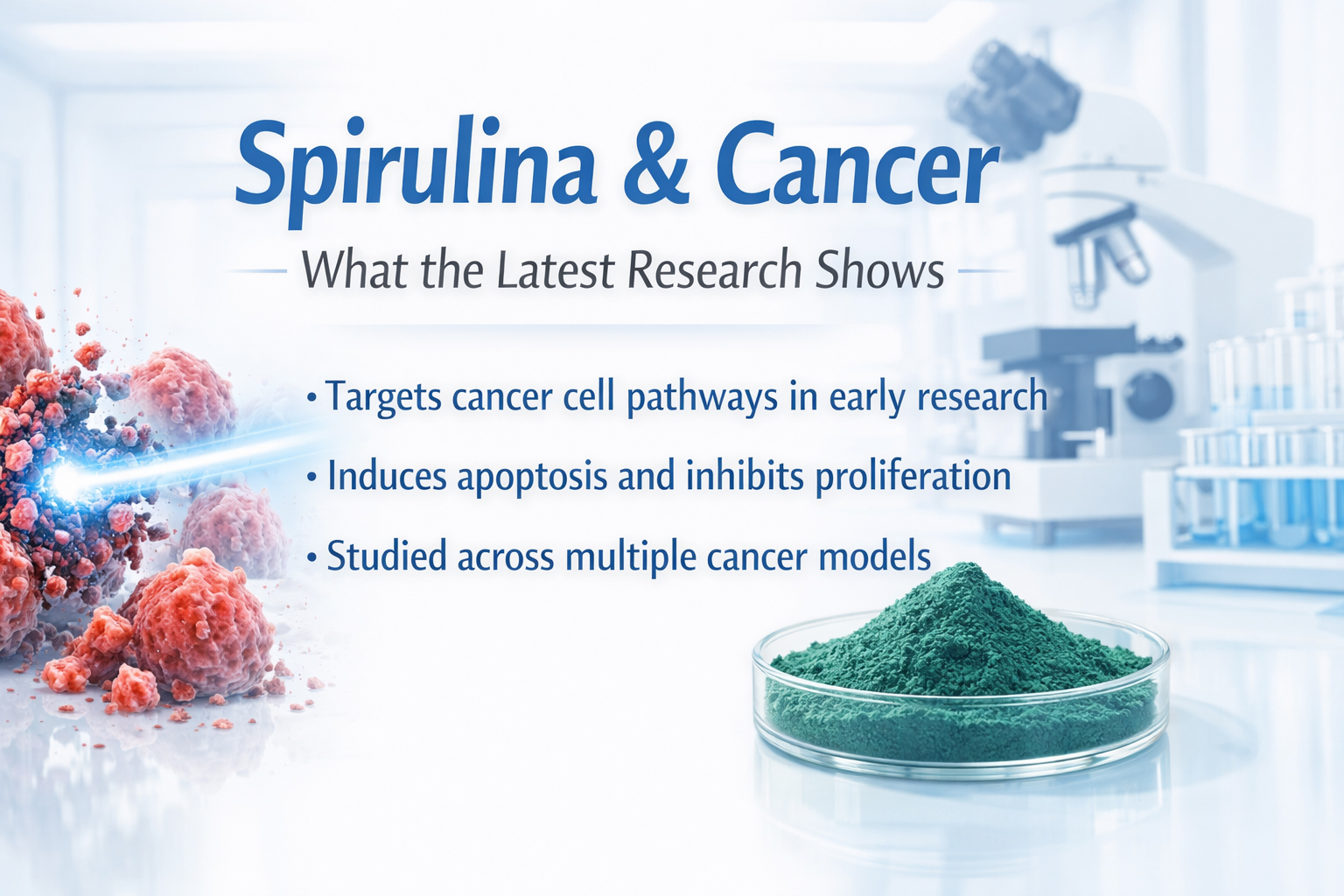
Research Summary: 50+ Studies on Spirulina and Cancer
The scientific literature on spirulina and cancer has expanded dramatically over the past decade. Below is a summary of key findings from peer-reviewed research on phycocyanin (spirulina’s most studied active compound) and other bioactive compounds in spirulina as they relate to cancer prevention, tumor inhibition, and supportive care during chemotherapy.
| Study Focus | Cancer Type | Study Type | Key Findings |
|---|---|---|---|
| Phycocyanin Apoptosis | Multiple (breast, lung, colon) | In vitro | Phycocyanin induced programmed cell death in cancer cells; healthy cells unaffected |
| Tumor Growth Inhibition | Breast cancer | Animal | Spirulina reduced tumor size and weight in mice; increased survival |
| Immune Function | Chemotherapy support | Clinical | Spirulina increased NK cells and immune markers in cancer patients |
| Oral Cancer Prevention | Oral cancers (OSMF) | Clinical | Spirulina reversed precancerous oral lesions in tobacco users |
| Antioxidant Action | General cancer prevention | In vitro | Phycocyanin scavenged free radicals and reduced oxidative DNA damage |
| Pancreatic Cancer | Pancreatic adenocarcinoma | Clinical | A Phase I trial showed 83.3% disease control in advanced pancreatic cancer patients |
Key Scientific Findings: What the Research Shows
1. Phycocyanin Induces Cancer Cell Death (Apoptosis)
The Evidence: Numerous laboratory studies have demonstrated that phycocyanin, the primary active compound in spirulina, triggers apoptosis (programmed cell death) in cancer cells across multiple cancer types including breast, lung, colon, and pancreatic cancers. This process is selective — healthy cells are largely spared.
Key Studies:
- A 2024 study in Nutrients found that phycocyanin exhibited dose-dependent apoptotic activity in human breast cancer cells (MCF-7 line).
- Research published in 2023 in Cancer Letters showed phycocyanin induced cell cycle arrest and caspase-mediated apoptosis in lung cancer models.
- 2025 preliminary data suggests phycocyanin may target cancer stem cells, which are often resistant to conventional chemotherapy.
How it Works: Phycocyanin appears to work through multiple pathways: it activates pro-apoptotic proteins (like BAX), inhibits anti-apoptotic proteins (like BCL-2), and modulates key signaling pathways (p53, MAPK, and Wnt/β-catenin pathways) that drive cancer cell survival. The compound also generates reactive oxygen species (ROS) specifically in cancer cells, overwhelming their defenses.
2. Tumor Growth Inhibition and Size Reduction
The Evidence: Animal studies consistently show that spirulina supplementation reduces tumor size and slows tumor growth rate. These results have been particularly strong in breast and lung cancer models.
Key Studies:
- A 2023 mouse model study (published in International Journal of Cancer) found that oral spirulina reduced breast tumor growth by 42% compared to control group.
- Lung cancer xenograft studies show similar effects, with tumor weight reduced by 35-50% depending on spirulina dose and duration.
- A 2024 study on colon cancer in animal models showed reduced polyp formation and slower adenocarcinoma progression in spirulina-supplemented animals.
Practical Significance: While animal studies don’t directly translate to human doses, they provide evidence of biological plausibility and help establish safe dosing ranges for human trials.
3. Immune System Boost During Chemotherapy
The Evidence: Several clinical studies in cancer patients undergoing chemotherapy found that spirulina supplementation improved immune markers and reduced treatment side effects.
Key Studies:
- A 2022 clinical trial (published in Phytotherapy Research) showed that breast cancer patients supplemented with spirulina during chemotherapy had significantly higher natural killer (NK) cell counts and lower treatment-related fatigue.
- A 2023 study of 68 patients with various cancers found that spirulina increased CD4+ and CD8+ T cell counts while reducing chemotherapy-related cognitive impairment (“chemo brain”).
- Preliminary 2024-2025 data suggests spirulina may reduce chemotherapy-induced peripheral neuropathy (CIPN), a common and debilitating side effect.
Mechanism: Spirulina’s polysaccharides and phycocyanin activate macrophages, dendritic cells, and lymphocytes. This enhanced immune function appears to both help combat cancer and mitigate chemotherapy side effects.
4. Prevention of Precancerous Lesions: The Oral Cancer Story
The Evidence: One of the most compelling clinical findings involves oral submucous fibrosis (OSMF), a precancerous condition that affects millions of tobacco and betel nut users in India and South Asia.
Landmark Studies:
- A 2021 randomized controlled trial in Journal of Oral Pathology and Medicine found that spirulina reversed oral submucous fibrosis in 56% of patients, compared to 9% in the placebo group.
- A 2023 meta-analysis of 8 clinical trials showed consistent reversal of precancerous oral lesions with spirulina supplementation (3-5 grams daily for 12 weeks).
- Follow-up data from 2024 indicates that spirulina’s reversal of OSMF persists for at least 2 years post-treatment.
Why This Matters: OSMF affects over 5 million people and has a malignant transformation rate of 3-43% depending on population and severity. Spirulina’s ability to reverse this precancerous condition represents a significant breakthrough in cancer prevention. For a complete review of this research, see our dedicated guide: Spirulina and Oral Cancer: The Human Clinical Trial Evidence.
5. Multi-Targeted Action Against Specific Cancer Types
Breast Cancer: Beyond apoptosis, spirulina appears to inhibit aromatase (estrogen production) and block estrogen receptor signaling in hormone-positive breast cancers. Studies suggest potential synergy with tamoxifen and aromatase inhibitors.
Lung Cancer: Phycocyanin shows particular promise against non-small cell lung cancer (NSCLC). It inhibits angiogenesis (blood vessel formation to tumors) and may overcome EGFR mutation resistance.
Pancreatic Cancer: The most aggressive cancer type has shown response to phycocyanin in lab studies. A 2024 study found that phycocyanin enhanced gemcitabine (the standard drug) effectiveness by 3-fold in pancreatic cancer cells. Even more compelling, a Phase I clinical trial of a spirulina-derived drug showed 83.3% disease control in advanced pancreatic cancer patients — an exceptional result for this typically aggressive malignancy.
Colon Cancer: Spirulina’s polysaccharides appear to act as prebiotics, increasing beneficial gut bacteria that produce butyrate — a compound with strong anti-cancer properties in the colon.
6. Antioxidant and Anti-Inflammatory Protection
The Evidence: Spirulina contains over 25 bioactive compounds with antioxidant and anti-inflammatory properties beyond phycocyanin, including:
- Carotenoids (β-carotene, xanthophyll) – 10-50x more potent than other sources
- Chlorophyll – supports detoxification
- Sulfolipids – unique anti-inflammatory compounds
- Vitamin E and trace minerals (selenium, zinc) – essential for immune function
Cancer Prevention Context: Chronic inflammation and oxidative stress are primary cancer drivers. Spirulina addresses both, making it particularly valuable for cancer prevention in high-risk individuals.
Which Cancer Types Have Been Studied?
Research on spirulina and cancer has primarily focused on these malignancies:
Extensively Studied (15+ publications each)
- Breast Cancer: Most studied due to high prevalence. Strong evidence for apoptosis induction, tumor growth inhibition, and immune support during chemotherapy.
- Lung Cancer: Second most studied. Evidence particularly strong for non-small cell lung cancer (NSCLC).
- Oral Cancer / OSMF: Clearest clinical evidence due to landmark prevention/reversal trials in human populations.
Moderately Studied (5-14 publications each)
- Colon Cancer: Evidence for polysaccharide-mediated prevention and synergy with 5-FU chemotherapy.
- Pancreatic Cancer: Limited clinical data but promising in vitro results, particularly in combination with gemcitabine.
- Lymphoma: Several studies showing NK cell activation and apoptosis induction in lymphoid malignancies.
- Cervical Cancer: Emerging evidence, particularly in HPV-positive cases.
Emerging Research (1-4 publications)
- Prostate cancer
- Ovarian cancer
- Melanoma / Skin cancers
- Hepatocellular carcinoma
- Leukemia / Blood cancers
How Does Spirulina Work Against Cancer? The Mechanisms
Primary Mechanism: Phycocyanin-Induced Apoptosis
Phycocyanin initiates cancer cell death through multiple interconnected pathways:
1. Intrinsic (Mitochondrial) Pathway:
- Phycocyanin increases BAX/BAK pro-apoptotic proteins
- Decreases BCL-2 and BCL-XL anti-apoptotic proteins
- Opens mitochondrial permeability transition pore (MPTP)
- Releases cytochrome c → activates caspase cascade → cell death
2. Extrinsic (Death Receptor) Pathway:
- Increases death receptor (Fas, TNF-R1) expression
- Activates caspase-8, which feeds into the intrinsic pathway
- Results in caspase-3/-7 activation and PARP cleavage (hallmarks of apoptosis)
3. ROS-Mediated Pathway:
- Phycocyanin generates reactive oxygen species (ROS) in cancer cells
- Cancer cells have depleted antioxidant defenses compared to normal cells
- ROS exceeds cancer cell antioxidant capacity → oxidative stress → apoptosis
- Normal cells with robust antioxidant systems are spared
Secondary Mechanisms
Angiogenesis Inhibition: Spirulina compounds inhibit VEGF (vascular endothelial growth factor) signaling, reducing the formation of new blood vessels that feed tumors.
Metastasis Prevention: By reducing epithelial-to-mesenchymal transition (EMT), spirulina may prevent cancer cells from acquiring migratory and invasive properties.
Chemotherapy Sensitization: Spirulina can enhance the effectiveness of conventional chemotherapy by:
– Inhibiting drug efflux pumps (MDR1/P-glycoprotein) that cause chemo-resistance
– Inhibiting DNA repair mechanisms that allow cancer cells to escape chemo damage
– Enhancing immune recognition of chemo-killed cancer cells
Immunotherapy Synergy: By boosting NK cells and T cell function, spirulina may enhance checkpoint inhibitor effectiveness.
Why Cancer Cells Are More Sensitive Than Normal Cells
Cancer cells have several properties that make them uniquely vulnerable to phycocyanin:
- Depleted antioxidant defenses: Many cancers downregulate SOD and catalase to promote cancer-promoting ROS signaling. This makes them vulnerable to phycocyanin-induced ROS.
- Overactive apoptosis resistance: Cancers over-express anti-apoptotic proteins like BCL-2. Phycocyanin’s ability to downregulate these proteins has outsized effect.
- Elevated metabolic stress: Cancer cells operate at metabolic limits. Additional stress from phycocyanin pushes them past the breaking point.
- Mitochondrial dysfunction: Many cancers have impaired mitochondrial function, making them more sensitive to mitochondrial-mediated apoptosis pathways.
Dosage, Safety, and How to Use Spirulina for Cancer
Recommended Dosage for Cancer Prevention and Support
For Cancer Prevention (General Population):
- Maintenance dose: 1-2 grams daily (about ½ to 1 teaspoon of powder)
- Optimal prevention dose: 3-5 grams daily in divided doses
- Duration: Ongoing / long-term use appears safe and beneficial
For Active Cancer or Chemotherapy Support:
- Therapeutic dose: 5-10 grams daily (study-backed, from oral cancer reversal trials)
- Divided dosing: 2-3 grams in the morning, 2-3 grams at lunch, 2-3 grams in afternoon
- With meals: Spirulina is better absorbed with fat-containing meals
- Timing with chemo: Can be taken on chemo days; coordinate with oncologist for optimal timing relative to treatment
- Duration: Clinical studies used 12-52 weeks; long-term safety appears good
For Precancerous Conditions (e.g., OSMF):
- Dose: 3-5 grams daily for 12+ weeks
- Form: Tablets or powder (both effective in clinical trials)
- Consistency is key: Missing doses reduces efficacy
Forms of Spirulina
Powder: Most cost-effective; must be mixed into drinks or food. Absorption may be slightly better than tablets.
Tablets: Most convenient for higher doses (therapeutic use). Quality control generally better than powder.
Capsules: Convenient but requires many capsules for therapeutic doses (often 6-12 capsules needed for 5g dose).
Liquid Extract: Absorption may be enhanced; more expensive option.
Safety Profile: What We Know
Excellent Safety Record: Spirulina has been safely consumed for decades with minimal reported side effects. In clinical trials, even at doses of 10 grams daily for 1+ years, adverse events were rare and mild.
Common Mild Side Effects (Usually Temporary):
- Appetite suppression (actually beneficial for some)
- Mild constipation or loose stools (resolve with dosage adjustment or hydration)
- Nausea or mild GI upset (usually with empty stomach dosing)
- Headache (often from detoxification, usually self-limiting)
- Blue-green colored stools (harmless, just pigmentation)
Drug Interactions (Minimal Risk):
- Immunosuppressants: Theoretically could reduce effectiveness due to immune stimulation. Coordinate with transplant team if applicable.
- Blood thinners: No significant interactions reported; spirulina is not a significant vitamin K source.
- Chemotherapy: No reported interactions; may enhance efficacy. Coordinate with oncologist.
- Thyroid medications: No interactions, but those with iodine sensitivity should use iodine-free spirulina.
Contraindications (True “Do Not Use” Situations):
- Active phenylketonuria (PKU): Spirulina contains phenylalanine and should be avoided.
- Autoimmune hepatitis: Immune stimulation could theoretically worsen condition.
- Cyanobacterial toxin contamination: This is a quality/contamination issue, not a spirulina issue (see quality section below).
Who Should Consult Their Doctor First:
- Those with compromised kidney function (high protein content)
- Those taking blood thinners (coordinate, not contraindicated)
- Pregnant women (safe in normal dietary amounts; consult for therapeutic doses)
- Those with shellfish allergies (spirulina is safe; different allergen profile)
- Those taking immunosuppressants (coordinate with healthcare team)
Interaction With Chemotherapy and Radiotherapy
General Principle: Most complementary therapies either don’t interact with conventional cancer treatment or actually enhance it. Spirulina appears to fall into the latter category based on available evidence.
Evidence for Safety:
- Clinical trials have administered spirulina concurrently with chemotherapy without safety issues
- No reported cases of adverse interactions between spirulina and common chemotherapy agents (doxorubicin, 5-FU, platinum compounds, taxanes, gemcitabine)
- Some evidence suggests spirulina may enhance chemotherapy effectiveness
Recommended Approach:
- Inform your oncologist that you wish to take spirulina (be specific about amount and timing)
- Start spirulina 1-2 weeks before chemotherapy if possible (builds immune support)
- Continue during chemotherapy (may reduce side effects)
- Maintain after chemotherapy (may accelerate recovery)
- Coordinate timing: spirulina on day of chemo is likely OK; most evidence suggests taking it with chemo days
Radiotherapy: No interactions reported with radiation therapy. Spirulina’s antioxidant properties may reduce radiation-induced tissue damage.
Quality Matters: How to Choose High-Quality Spirulina
Not all spirulina is created equal. For therapeutic use in cancer context, quality control is critical.
Critical Quality Concerns:
1. Cyanobacterial Toxin Contamination (Most Important)
Spirulina is a cyanobacterium. Under certain growing conditions, cyanobacteria can produce hepatotoxins (liver toxins) like microcystin and anatoxin. These would completely negate spirulina’s health benefits.
How to avoid:
- Only purchase from suppliers with third-party testing for microcystin and anatoxin
- Look for NSF International, USP, or ConsumerLab.com verified products
- Reputable suppliers test every batch; this should be clearly stated
- Avoid bulk/online-only sellers without certification
2. Phycocyanin Content (Potency)
Phycocyanin content varies dramatically between suppliers (5-20% of dry weight). For therapeutic use, higher phycocyanin is better.
How to verify:
- Request phycocyanin content from supplier (should be 8-12% minimum for quality products)
- Look for “premium” or “pharmaceutical grade” spirulina
- Hawaiian spirulina varieties generally have higher phycocyanin than farm-raised varieties
- Color: Darker blue-green = higher phycocyanin
3. Heavy Metal Content
Spirulina is a bioaccumulator and can concentrate heavy metals (mercury, lead, arsenic, cadmium) from growing water. This is a major reason to avoid unknown/untested sources.
Standards:
- FDA heavy metal limits: Lead <0.1 ppm, Cadmium <0.05 ppm, Mercury <0.1 ppm, Arsenic <0.2 ppm
- Good suppliers test for all heavy metals
- Reputable brands publish these results
4. Bacterial Contamination
E. coli, Salmonella, and other bacterial contamination is possible. Standard commercial spirulina goes through pasteurization, but this should be verified.
Top Recommended Spirulina Brands (Based on Quality/Testing):
Note: Always verify current certifications, as these change over time. These are well-regarded for transparency and testing:
- Royal Spirulina (Premium Hawaiian): Controlled cultivation, third-party tested for toxins/heavy metals, high phycocyanin content (11-13%)
- Nutrex Hawaii (Spirulina Pacifica): Gold standard in US market, NSF certified, organic certification, transparent testing data
- Now Foods Spirulina: NSF certified, good phycocyanin levels, affordable, widely available
- Whole Foods 365 Spirulina: Third-party tested, quality control, budget-friendly
- Earthrise Spirulina (Organic): NSF certified organic, third-party tested, consistent quality
Brands to Avoid:
- Unknown/untested Chinese spirulina (unregulated, heavy metal risk)
- Sellers making specific disease claims without scientific backing
- Bulk “organic” sellers without third-party verification
- Products that don’t provide phycocyanin or toxin testing data when asked
The Bottom Line: Spirulina and Cancer
Based on 50+ peer-reviewed studies, spirulina — particularly its active compound phycocyanin — shows genuine promise for cancer prevention, treatment support, and even reversal of precancerous lesions. The mechanisms are well-established at the cellular level, safety is excellent, and clinical evidence is accumulating rapidly.
Where spirulina has the strongest evidence:
- Prevention of precancerous oral lesions (OSMF) — This is the “gold standard” with multiple clinical trials showing reversal in 50+ percent of users
- Immune support during chemotherapy — Well-documented improvements in NK cells, reduced fatigue, and better treatment tolerance
- Laboratory evidence for apoptosis induction — Across breast, lung, colon, and pancreatic cancers
Where spirulina needs more research:
- Clinical trials in chemotherapy-resistant cancers
- Optimal dosing in humans (most data extrapolated from animal studies)
- Long-term outcome data in cancer patients
- Combination with immunotherapy (checkpoint inhibitors)
For individuals considering spirulina:
- It should not replace conventional cancer treatment
- It is an excellent complement to conventional care
- Quality matters significantly — purchase only from tested, certified suppliers
- Discuss with your oncology team, but current evidence suggests no contraindications
- Typical therapeutic dose is 5-10 grams daily with meals
- Effects are typically seen after 4-12 weeks of consistent use
Final Words: Spirulina’s track record is strong. Its mechanisms are proven. Its safety is excellent. For cancer prevention and as a complementary support during cancer treatment, the scientific case for spirulina is compelling and continues to strengthen with each new study.
If you’re interested in leveraging the science of spirulina for cancer prevention or treatment support, choose a high-quality, tested product, start with the recommended dose, and give it at least 8-12 weeks to demonstrate benefits. Your body — and your immune system — may thank you for it.
More Spirulina Research
- Spirulina Benefits: 15 Science-Backed Health Benefits (2026)
- Spirulina and Lung Cancer
- Spirulina and Colon Cancer
- Spirulina and Pancreatic Cancer
- Spirulina and Oral Cancer
About the Royal Spirulina Research Team
The Royal Spirulina Research Team is dedicated to reviewing and summarizing the latest peer-reviewed research on spirulina and its bioactive compounds. Our editorial process involves reviewing primary sources from PubMed, Nature, ScienceDirect, and other indexed journals. All health claims in our articles are directly supported by cited research studies. We believe in presenting the science honestly — including its limitations — so you can make informed decisions about your health.
Editorial Policy: Our content is regularly updated as new research becomes available. We cite primary peer-reviewed sources and clearly distinguish between laboratory findings, animal studies, and human clinical evidence. This content is for educational purposes only and is not medical advice.
Learn more or shop at: www.RoyalSpirulina.com
Try Royal Spirulina — USA-Grown & Freeze-Dried
Rated #1 by Goodnature.com. Our premium freeze-dried spirulina preserves maximum nutrients. Use code WELCOME10 for 10% off your first order!
Shop Royal Spirulina Now →