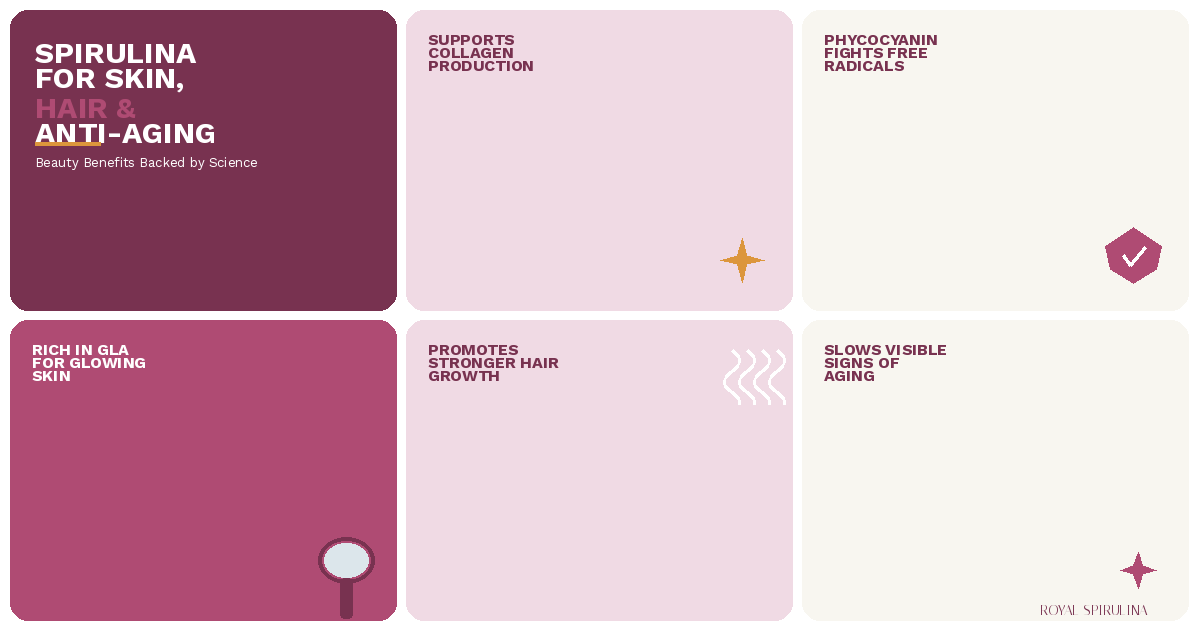
Why Spirulina Is a Powerhouse for Skin, Hair, and Anti-Aging
Your skin, hair, and nails are often the first places where nutrient deficiencies — or nutritional abundance — become visible. That’s why spirulina, one of the most nutrient-dense foods on Earth, has become increasingly popular in the beauty and anti-aging world.
But unlike many beauty supplements backed only by marketing claims, spirulina’s benefits for skin and hair are supported by actual research. From its unique antioxidant phycocyanin to its rare GLA fatty acids, spirulina offers a science-backed approach to looking and feeling younger from the inside out.
Spirulina Benefits for Skin
1. Powerful Antioxidant Protection Against Aging
Skin aging is largely driven by oxidative stress — damage caused by free radicals from UV exposure, pollution, and metabolic processes. Spirulina contains an extraordinary range of antioxidants that combat this damage at the cellular level.
Phycocyanin, spirulina’s signature blue pigment, is one of the most potent natural antioxidants ever studied. Research published in Biochemical Pharmacology shows phycocyanin scavenges free radicals at rates comparable to or exceeding many synthetic antioxidants. It also inhibits NADPH oxidase, an enzyme that generates harmful reactive oxygen species in skin cells.
Spirulina also provides beta-carotene, vitamin E, superoxide dismutase (SOD), and zeaxanthin — all of which work synergistically to protect skin from premature aging. Discover more about these compounds in our complete spirulina health benefits guide.
2. UV Protection and Sun Damage Repair
Studies have shown that spirulina extracts can protect skin cells against UV-induced damage. A 2020 study in the Journal of Cosmetic Dermatology found that topical and oral spirulina supplementation helped reduce UV-induced skin inflammation and DNA damage in skin cells. While spirulina is not a substitute for sunscreen, it may provide an additional layer of photoprotection from within.
3. Reduced Wrinkles and Improved Skin Elasticity
A clinical trial published in Clinical Pharmacology: Advances and Applications found that women who took spirulina supplements for 12 weeks showed measurable improvements in skin elasticity and a reduction in the appearance of fine lines. The researchers attributed this to spirulina’s combination of amino acids (essential building blocks for collagen), antioxidants, and anti-inflammatory compounds.
4. Anti-Inflammatory Benefits for Acne and Skin Conditions
Chronic inflammation is at the root of many skin conditions including acne, eczema, psoriasis, and rosacea. Spirulina’s phycocyanin has been shown to inhibit COX-2 enzyme activity — the same inflammatory pathway targeted by drugs like ibuprofen — without the side effects. For a comprehensive look at spirulina’s anti-inflammatory power, see our guide on spirulina for inflammation and joint pain.
Additionally, spirulina’s GLA (gamma-linolenic acid) is particularly relevant for skin health. GLA deficiency has been linked to dry skin, eczema, and increased skin sensitivity. Supplementing with GLA-rich foods like spirulina can help restore skin barrier function and reduce inflammatory skin conditions.
5. Detoxification for Clearer Skin
Toxins and heavy metals that accumulate in the body can manifest as dull, breakout-prone skin. Spirulina has demonstrated the ability to bind to and help eliminate heavy metals including arsenic, lead, and mercury. This natural detoxification can contribute to clearer, more radiant skin over time. Learn more about spirulina for heavy metal detox.
Spirulina Benefits for Hair
1. Rich in Hair-Building Nutrients
Healthy hair requires a steady supply of specific nutrients, and spirulina delivers many of them in concentrated form:
Protein: Hair is made primarily of keratin, a protein. Spirulina’s 60–70% protein content provides abundant amino acids — including cysteine, methionine, and lysine — that are essential for keratin production. Compare this to other protein sources in our spirulina protein vs meat comparison.
Iron: Iron deficiency is one of the most common causes of hair loss, particularly in women. Spirulina is one of the richest plant sources of bioavailable iron, with approximately 28.5 mg per 100g. Our guide on spirulina for iron deficiency explores this in depth.
B vitamins: Spirulina contains B1, B2, B3, and B6 — all of which support hair growth and prevent hair thinning.
Zinc and selenium: Both minerals play crucial roles in hair follicle health and preventing hair loss. Selenium is also critical for thyroid function, and thyroid disorders are a leading cause of hair loss. Learn about the connection in our guide on spirulina for thyroid health.
2. Supports Hair Growth and Reduces Hair Loss
While large-scale clinical trials specifically on spirulina and hair growth are limited, the nutritional profile of spirulina addresses many of the known causes of hair loss. Iron deficiency, protein deficiency, oxidative stress, and chronic inflammation can all contribute to thinning hair — and spirulina helps address every one of these factors simultaneously.
Anecdotal reports from dermatologists frequently mention improvement in hair thickness and growth rate in patients who add spirulina to their diets, particularly those with pre-existing nutrient deficiencies.
3. Scalp Health
A healthy scalp is the foundation for healthy hair growth. Spirulina’s anti-inflammatory and antimicrobial properties can help maintain a balanced scalp environment. Its antioxidants protect hair follicles from oxidative damage, while its nutrient density supports the rapid cell division that occurs in hair follicles.
Spirulina for Anti-Aging: Beyond Skin Deep
Cellular Protection and Longevity
Aging occurs at the cellular level, and spirulina’s benefits extend beyond visible skin improvements. Research has shown that spirulina’s antioxidants can protect telomeres (the protective caps on chromosomes that shorten with age), reduce cellular senescence markers, and improve mitochondrial function — all key factors in the biological aging process.
Brain Health and Cognitive Aging
Cognitive decline is one of the most feared aspects of aging. Spirulina’s phycocyanin has demonstrated neuroprotective effects that may help preserve brain function as we age. Studies show it reduces neuroinflammation, protects neurons from oxidative damage, and may even help prevent the formation of amyloid plaques associated with Alzheimer’s disease.
Cardiovascular Anti-Aging
Heart health declines with age, but spirulina has been shown to reduce LDL cholesterol, lower blood pressure, and improve arterial function — all of which contribute to cardiovascular “youth.” These benefits work alongside spirulina’s support for healthy blood sugar levels.
Weight Management and Anti-Aging
Maintaining a healthy weight is one of the most impactful things you can do to slow aging. Excess weight accelerates cellular aging, increases inflammation, and puts strain on every organ system. Spirulina supports healthy weight management through appetite control, enhanced fat oxidation, and blood sugar regulation.
How to Use Spirulina for Skin and Hair Benefits
Internal Use (Supplements)
For skin and hair benefits, take 3–5 grams of spirulina daily. Higher doses (up to 10g) may be beneficial for more pronounced anti-aging effects, but start low and increase gradually. Consistency is key — most studies showing skin improvements used spirulina for at least 8–12 weeks.
For tips on incorporating it into your daily routine, see our guide on how to use spirulina powder and our spirulina recipes.
Topical Use (Face Masks)
Spirulina can also be applied directly to the skin as a face mask. A simple recipe: mix 1 teaspoon of spirulina powder with 1 tablespoon of honey and a few drops of water to form a paste. Apply to clean skin, leave for 15–20 minutes, and rinse. The antioxidants and amino acids in spirulina can provide direct benefits when applied topically.
Quality Matters: Why Freeze-Dried Spirulina Is Best
For maximum skin and hair benefits, the quality of your spirulina matters enormously. Freeze-dried spirulina retains significantly more phycocyanin, active enzymes, and intact proteins compared to spray-dried alternatives. Since phycocyanin is the primary driver of spirulina’s antioxidant and anti-inflammatory benefits for skin, choosing freeze-dried spirulina like Royal Spirulina can make a meaningful difference in your results.
Related Spirulina Guides
- Spirulina for Inflammation and Joint Pain — how reducing inflammation improves skin conditions
- Spirulina for Thyroid Health — thyroid disorders are a leading cause of hair loss
- Spirulina for Weight Loss — maintaining healthy weight slows aging
- Spirulina During Pregnancy — supporting skin health during pregnancy changes
Frequently Asked Questions
How long does it take to see skin benefits from spirulina?
Most people notice improvements in skin clarity and radiance within 4–6 weeks of daily use. More significant anti-aging benefits like improved elasticity and reduced fine lines typically become apparent after 8–12 weeks.
Can spirulina help with acne?
Yes. Spirulina’s anti-inflammatory properties (particularly phycocyanin and GLA) can help reduce the inflammation that drives acne. Its detoxification benefits may also help clear breakout-prone skin. However, results vary by individual.
Is spirulina better than collagen supplements for skin?
They work differently and can complement each other. Collagen supplements provide direct building blocks for skin structure, while spirulina provides antioxidant protection, anti-inflammatory benefits, and the nutrients needed for your body to produce its own collagen.
Can spirulina reverse gray hair?
There’s no clinical evidence that spirulina can reverse gray hair. However, by addressing nutrient deficiencies (particularly iron and B vitamins) that can contribute to premature graying, spirulina may help slow the process in some individuals.
Can I use spirulina on my face every day?
A spirulina face mask 2–3 times per week is generally recommended rather than daily, as some people may experience mild sensitivity with daily topical use. For internal supplementation, daily use is both safe and recommended.
Does the type of spirulina matter for beauty benefits?
Yes. Freeze-dried spirulina retains up to 40% more phycocyanin (the key antioxidant for skin benefits) compared to spray-dried spirulina. Higher phycocyanin content means stronger antioxidant protection for your skin and hair.
