Spirulina vs Chlorella: The Complete Breakdown
Spirulina and chlorella are two of the most popular green superfoods on the market — and they’re often confused with each other. Both are microscopic algae packed with nutrients, but they differ significantly in their composition, health benefits, and ideal use cases.
If you’ve been wondering which one to take — or whether you need both — this comprehensive comparison will help you make an informed decision based on science, not marketing hype.
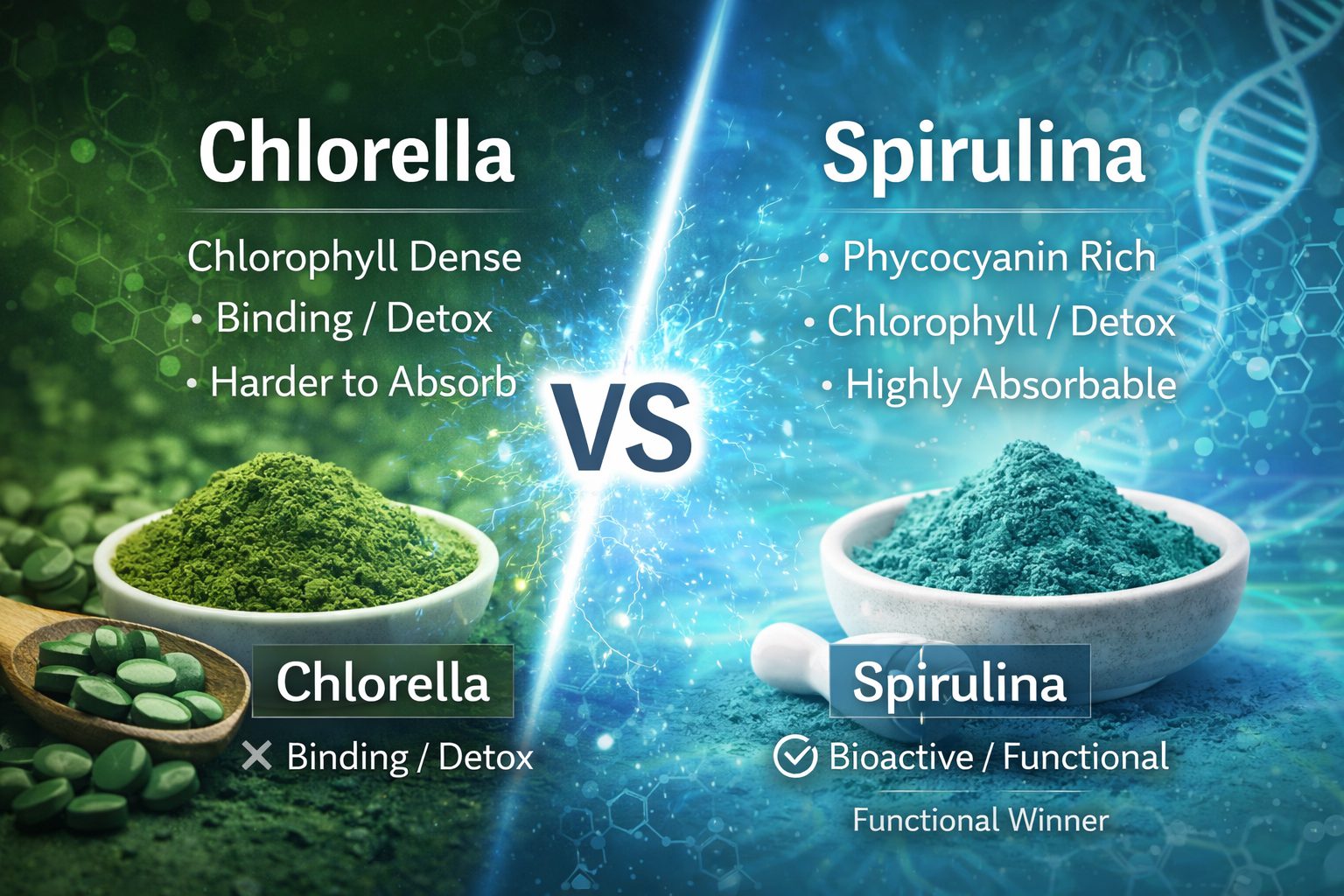
What Are Spirulina and Chlorella?
Spirulina
Spirulina (Arthrospira platensis) is a blue-green cyanobacterium — technically not a true “algae” but a photosynthetic bacterium. It has been consumed by humans for over 600 years, dating back to the Aztec civilization. Its distinctive blue-green color comes from phycocyanin, a powerful antioxidant pigment unique to spirulina. Learn more about its rich past in our article on the history of spirulina.
Chlorella
Chlorella (Chlorella vulgaris or Chlorella pyrenoidosa) is a single-celled green freshwater algae. It’s one of the oldest known organisms on Earth, dating back approximately 2 billion years. Its deep green color comes from its exceptionally high chlorophyll content — the highest of any known plant.
Nutritional Comparison: Head to Head
Protein Content
Spirulina wins. Spirulina contains 60–70% protein by dry weight, compared to chlorella’s 40–55%. Spirulina also has a more complete amino acid profile and higher bioavailability, meaning your body can absorb and use more of its protein. For a deeper dive into spirulina’s protein prowess, see our comparison of spirulina protein vs meat.
Iron Content
Spirulina wins. Spirulina provides approximately 28.5 mg of iron per 100g, while chlorella provides about 6–8 mg per 100g. For anyone dealing with iron deficiency, spirulina is the clear choice. Read our full guide on spirulina for iron deficiency and anemia.
Chlorophyll Content
Chlorella wins. Chlorella contains 3–5% chlorophyll by weight — the highest concentration of any known plant. Spirulina contains about 1% chlorophyll. Chlorophyll is valued for its potential detoxification and blood-building properties.
Unique Antioxidants
Spirulina wins. Spirulina contains phycocyanin, a powerful blue pigment antioxidant that is not found in chlorella. Research has shown phycocyanin has anti-inflammatory, neuroprotective, and potential anti-cancer properties. Chlorella contains its own unique compound — Chlorella Growth Factor (CGF) — which may support cellular repair and immune function.
GLA (Gamma-Linolenic Acid)
Spirulina wins. Spirulina is one of the few foods that naturally contains GLA, a rare anti-inflammatory omega-6 fatty acid. Chlorella contains negligible amounts of GLA. Learn about spirulina’s GLA benefits.
Vitamin B12
Both — with caveats. Both spirulina and chlorella contain forms of B12. Recent research shows spirulina contains both true vitamin B12 and pseudovitamin B12, and that the pseudovitamin form does not block absorption of real B12. Chlorella contains a slightly higher proportion of bioactive B12. However, neither provides enough B12 to meet daily requirements on its own.
Digestibility
Spirulina wins. Spirulina has no cellulose cell wall, making it approximately 85–95% digestible without any processing. Chlorella has a tough cellulose cell wall that must be mechanically “cracked” before it becomes digestible. “Broken cell wall” chlorella is more bioavailable, but even then, digestibility typically reaches only 70–80%.
Health Benefits Comparison
Detoxification and Heavy Metal Removal
Both algae have detoxification properties, but they work differently. Chlorella’s unique cell wall structure allows it to bind to heavy metals in the gut, potentially preventing their absorption. Spirulina, meanwhile, has been clinically shown to reduce arsenic levels in people with chronic arsenic exposure — a 2006 study in Bangladesh found that spirulina plus zinc reduced arsenic levels by 47%. For more on this, see our article on spirulina for heavy metal detox.
Verdict: Both are effective detoxifiers, but they work through different mechanisms and may complement each other.
Immune System Support
Spirulina has more robust clinical evidence for immune modulation. Studies show it increases natural killer cell activity, boosts interferon production, and enhances both innate and adaptive immunity. Chlorella also supports immune function, particularly through its CGF content, but the research is less extensive.
Verdict: Spirulina has stronger clinical evidence for immune support.
Weight Loss
Spirulina has more clinical evidence supporting weight loss, including multiple meta-analyses showing reduced BMI and body weight. Its higher protein content also provides greater satiety. Read our complete guide on spirulina for weight loss.
Verdict: Spirulina is the better choice for weight management.
Anti-Inflammatory Properties
Spirulina’s phycocyanin is one of the most potent natural anti-inflammatory compounds studied. It inhibits COX-2 enzyme activity (similar to how ibuprofen works) and has been shown to reduce inflammatory markers like CRP and TNF-alpha in clinical trials. Chlorella has anti-inflammatory properties but lacks an equivalent to phycocyanin. For an in-depth look at spirulina’s inflammation-fighting mechanisms, see our guide on spirulina for inflammation.
Verdict: Spirulina is significantly stronger for inflammation.
Brain Health
Spirulina’s phycocyanin has demonstrated neuroprotective effects in multiple studies, including potential benefits for Alzheimer’s disease. Chlorella has also shown some neuroprotective properties, but the evidence is more limited.
Verdict: Spirulina has stronger evidence for brain health.
Taste, Texture, and Ease of Use
Spirulina has a mild, slightly seaweed-like flavor that blends easily into smoothies and recipes. Its fine powder dissolves well in liquid.
Chlorella tends to have a stronger, more “earthy” or “grassy” taste that many people find less pleasant. It can also be grittier due to its cell wall structure.
For tips on incorporating spirulina into your diet, check our spirulina recipes guide and our how to use spirulina powder article.
Price Comparison
Chlorella is typically more expensive than spirulina because of its more complex cultivation and processing requirements (including the cell wall cracking step). On a per-gram basis, quality chlorella often costs 30–50% more than comparable spirulina products.
When you factor in spirulina’s higher bioavailability and protein density, the cost-per-nutrient difference becomes even more significant in spirulina’s favor.
Can You Take Both Spirulina and Chlorella?
Yes! Many people take both algae together to get the complementary benefits. Since they work through different mechanisms, combining them can provide broader nutritional coverage. If you do combine them, a common ratio is 2:1 spirulina to chlorella (for example, 3g spirulina + 1.5g chlorella daily).
Which One Should You Choose?
Choose spirulina if you want:
- Higher protein content and better amino acid profile
- Anti-inflammatory benefits from phycocyanin
- Weight loss support
- Better iron supplementation
- Immune system modulation
- Better taste and easier digestibility
- More clinical research backing
Choose chlorella if you want:
- Maximum chlorophyll intake
- Gut-based heavy metal binding
- Chlorella Growth Factor benefits
- A slightly different nutritional profile to complement spirulina
For most people, spirulina offers a broader range of well-researched benefits at a better price point. If you’re choosing just one, spirulina — especially high-quality freeze-dried spirulina — is the stronger all-around choice. See why Royal Spirulina earned top marks in our best spirulina powder review.
Related Spirulina Guides
- Spirulina for Inflammation — how phycocyanin fights chronic inflammation at the cellular level
- Spirulina for Athletes — performance, recovery, and endurance benefits for active individuals
- Spirulina for Skin and Hair — how spirulina’s nutrients support radiant skin and stronger hair
- Spirulina for Weight Loss — clinical evidence for spirulina as a weight management aid
- Does Spirulina Have Vitamin B12? — the truth about spirulina’s B12 content, pseudovitamin B12, and what the latest research says
- Sea Moss vs Spirulina: Which Superfood Is Better? — comprehensive comparison of nutrition, health benefits, safety, and scientific evidence between these two popular supplements
Frequently Asked Questions
Is spirulina or chlorella better for detox?
Both have detox properties, but they work differently. Spirulina has stronger clinical evidence for reducing arsenic and heavy metal levels in the body, while chlorella may help bind heavy metals in the gut. Many people use both together for comprehensive detox support.
Can I replace chlorella with spirulina?
In most cases, yes. Spirulina provides similar or superior benefits in most categories including protein, iron, antioxidants, and immune support. The main exception is if you specifically want maximum chlorophyll intake or Chlorella Growth Factor.
Is chlorella safer than spirulina?
Both are generally very safe. The key safety concern with either is sourcing quality — both can absorb contaminants from their growing environment. Always choose products that are tested for heavy metals, microcystins, and other contaminants regardless of which algae you choose.
Which is better for athletes?
Spirulina, due to its higher protein content, better iron levels, and proven ability to increase fat oxidation during exercise and reduce exercise-induced oxidative damage. For a complete breakdown, see our guide on spirulina for athletes.
Do spirulina and chlorella have the same side effects?
Both may cause mild digestive symptoms when first started. Chlorella is more likely to cause digestive issues due to its cell wall. Both should be avoided by people with PKU (phenylketonuria) and used with caution by those on blood thinners or with autoimmune conditions.