If you’ve ever googled spirulina smoothie recipes and found yourself scrolling past murky green drinks promising an “acquired taste,” you’re in the right place. Every recipe below is 100% vegan, dairy-free, and engineered to hide spirulina’s earthy pond-water notes behind ripe fruit, creamy plant milks, and bright citrus. The result: eight smoothies you’ll actually want to drink — including three blueberry-forward options (one of them an electric-blue showstopper) for anyone chasing an antioxidant boost.
Spirulina is one of the most nutrient-dense foods on earth: a complete plant protein with all nine essential amino acids, iron, B vitamins, and phycocyanin — the blue-green pigment linked to antioxidant and anti-inflammatory activity. The catch has always been flavor. These eight vegan spirulina smoothie recipes — green, tropical, wild blueberry, electric blue, chocolate cacao, matcha, post-workout protein, and green goddess detox — fix that problem using nothing but plant ingredients.
Why add spirulina to a vegan smoothie?
For plant-based eaters, spirulina is a nutrient multiplier. A single teaspoon (about 3 grams) delivers 2 grams of complete protein, roughly 11% of your daily iron, and meaningful amounts of B vitamins, copper, and manganese — all without a single animal ingredient. It’s especially valuable if you’re vegan, since plant iron is harder to absorb and spirulina’s iron content is notably high. Learn more in our guide to spirulina benefits.
- Complete plant protein with all 9 essential amino acids
- Iron — especially useful on a plant-based diet
- Phycocyanin — the pigment with antioxidant activity
- B vitamins, chlorophyll, and beta-carotene
- Blends into any flavor profile with the right pairings
How much spirulina should you put in a smoothie?
Start with 1 teaspoon (about 3 grams) per smoothie if you’re new to spirulina. Most people can work up to 2 teaspoons per smoothie without flavor becoming overpowering — any more and the earthy-marine notes punch through even the strongest fruit. For a deeper look at daily intake, see our spirulina dosage guide.
Quality matters more than quantity. Freeze-dried spirulina (the kind top juice bars use) tastes dramatically milder than cheap spray-dried powder, which often carries a fishy aftertaste from oxidation during processing.
Tips for the best-tasting vegan spirulina smoothie
- Use frozen fruit — it blends thicker and colder without diluting flavor
- Pair with bold flavors — banana, mango, wild blueberry, cacao, matcha, citrus, and ginger all do the job
- Add a plant fat — almond butter, cashew, avocado, tahini, or coconut for creaminess and satiety
- Sweeten naturally — a Medjool date, frozen banana, or a splash of maple syrup beats refined sugar
- Blend liquid first, then frozen fruit, then powders — prevents the blade from gumming up
- Drink it fresh — spirulina’s color and nutrients degrade after about 20 minutes
8 easy vegan spirulina smoothie recipes
1. Classic Green Spirulina Smoothie
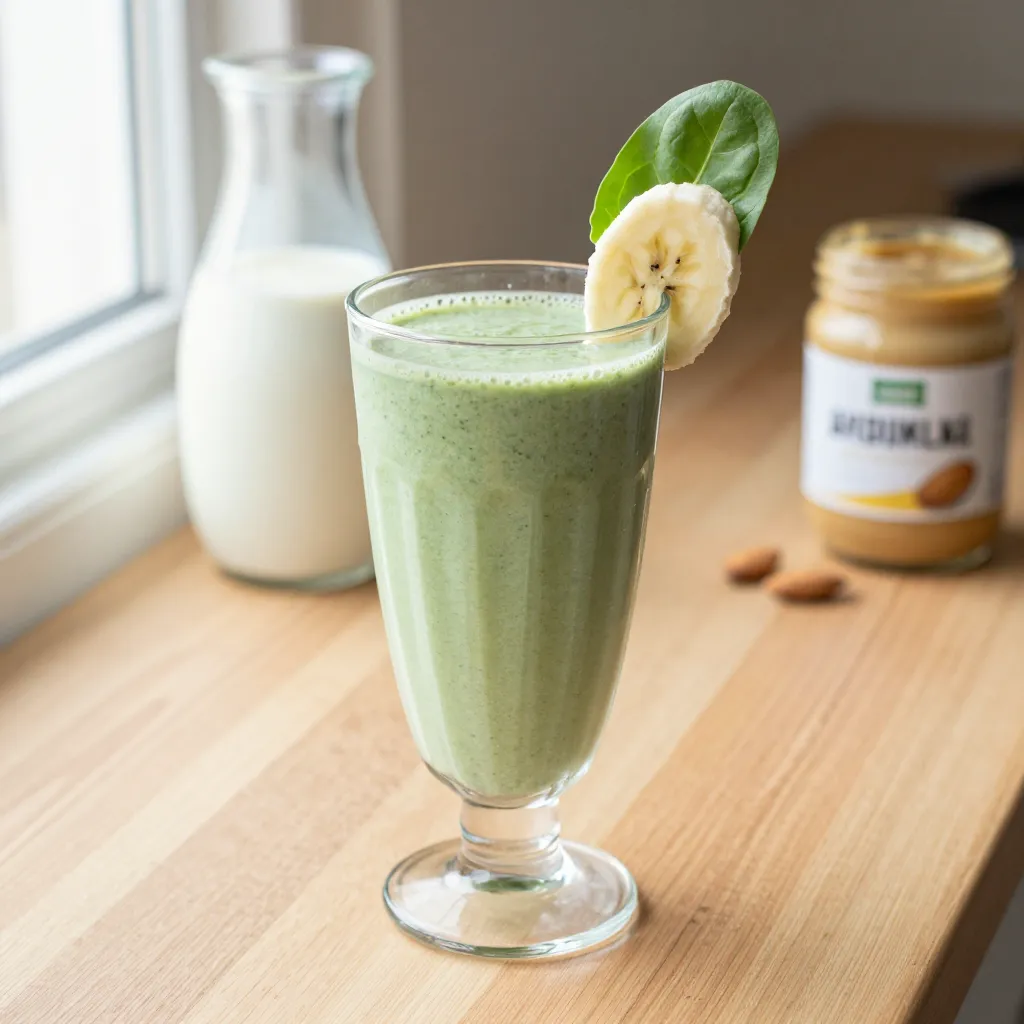
The one to start with. Creamy, gently sweet, and a great jumping-off point if you’ve never had a green spirulina smoothie. Makes 1 serving.
- 1 frozen banana
- 1 cup fresh baby spinach
- 1 cup unsweetened almond milk
- 1 tablespoon almond butter
- 1 teaspoon green spirulina powder
- 1 pitted Medjool date (optional, for extra sweetness)
Method: Add almond milk to the blender first, then everything else. Blend on high for 30–45 seconds until silky smooth. Pour and drink immediately. Great for kids if you skip the date and add an extra splash of maple syrup.
2. Tropical Mango-Pineapple Spirulina Smoothie
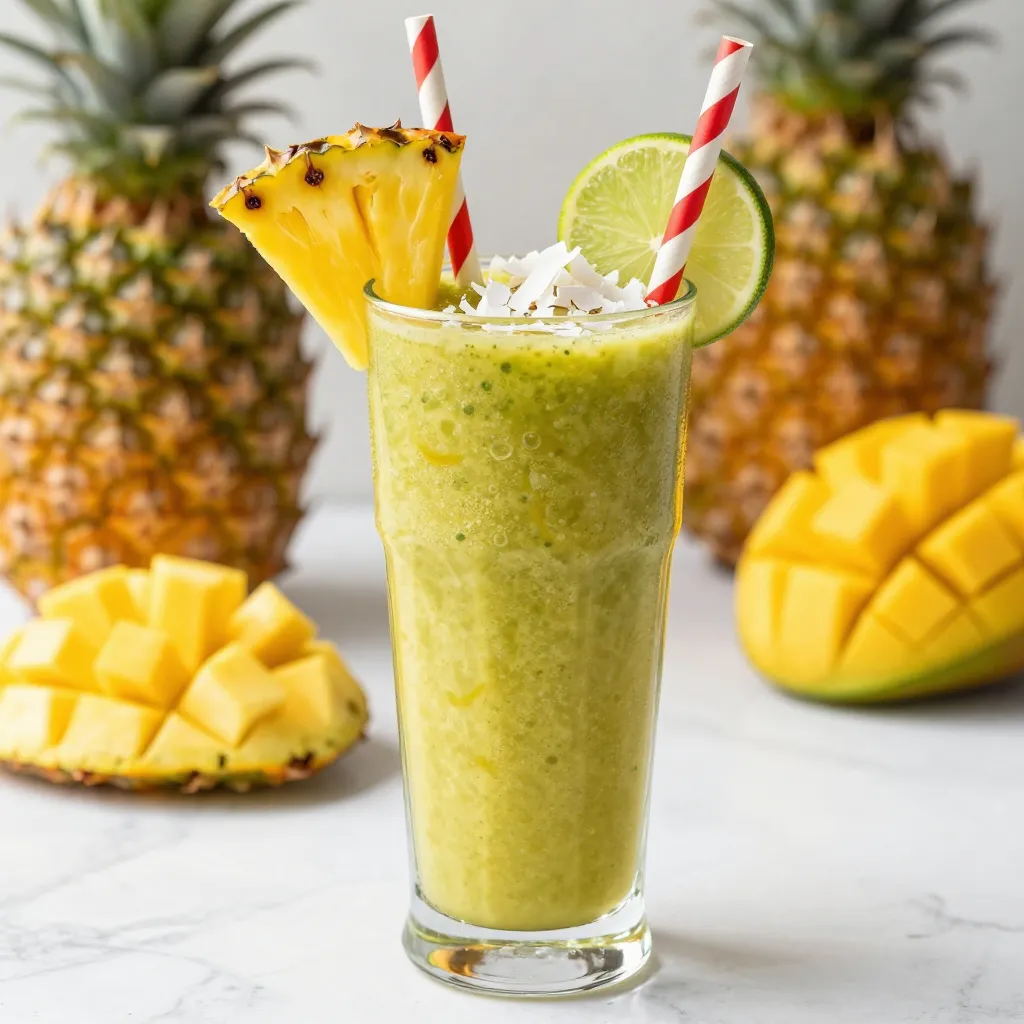
Bright, zingy, and the easiest way to convert a spirulina skeptic. The tropical fruit flavor is strong enough to completely mask the algae notes.
- 1 cup frozen pineapple chunks
- 1/2 cup frozen mango
- 1/2 frozen banana
- 3/4 cup coconut water
- 1 teaspoon green spirulina powder
- Juice of 1/2 lime
- 1 teaspoon fresh grated ginger (optional)
Method: Blend everything on high for 45 seconds. Serve right away, or pour into a bowl and top with coconut flakes and granola for a smoothie bowl.
3. Wild Blueberry Antioxidant Spirulina Smoothie
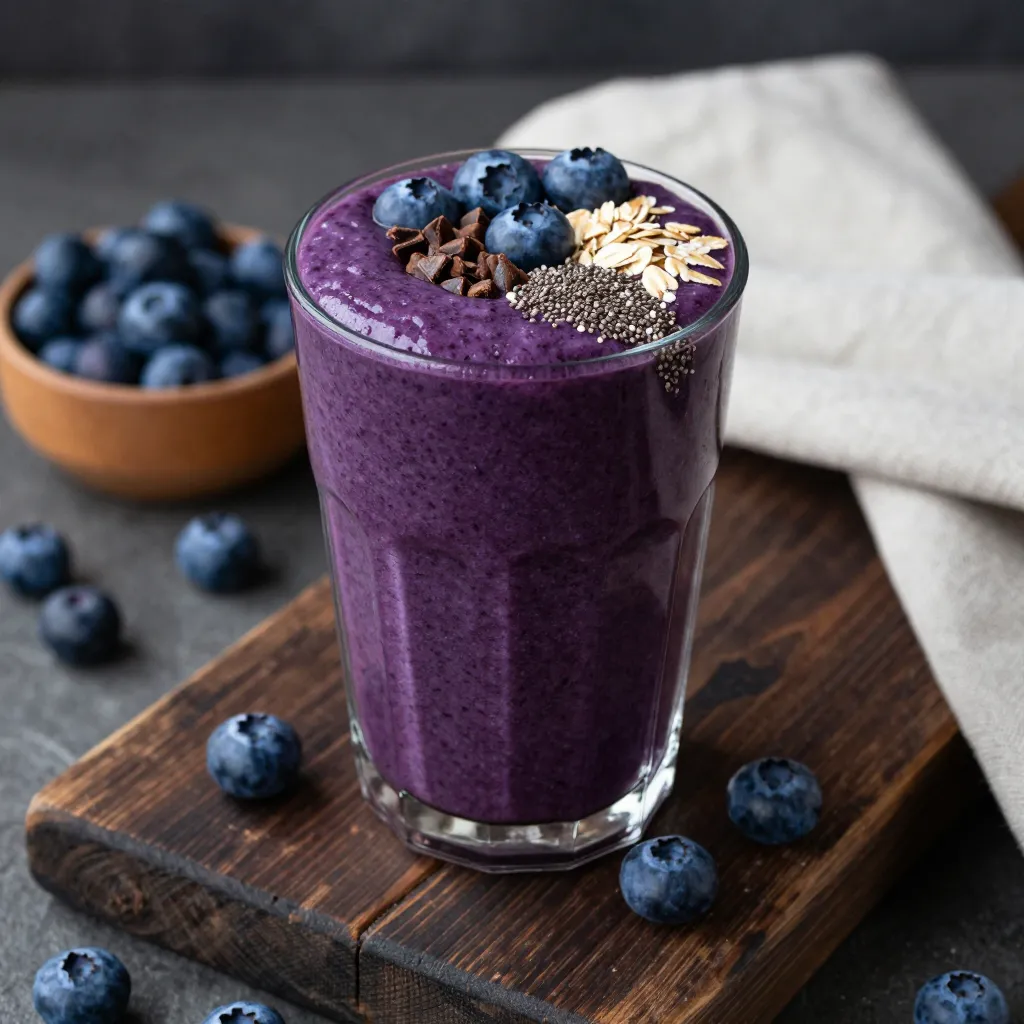
A dedicated blueberry recipe for maximum antioxidant density. Wild blueberries pack nearly twice the anthocyanins of cultivated blueberries, and they pair beautifully with green spirulina — the result is a deep purple-violet drink that tastes like blueberry pie with nothing earthy coming through. This one’s a reader favorite.
- 1 cup frozen wild blueberries
- 1/2 frozen banana
- 1/4 cup rolled oats
- 1 tablespoon chia seeds
- 1 tablespoon almond butter (or cashew butter)
- 1 teaspoon green spirulina powder
- 3/4 cup unsweetened oat milk
- 1 teaspoon maple syrup (optional)
Method: Add oat milk first, then everything else. Blend on high for 60 seconds until completely smooth and thick. If it’s too thick to pour, add another splash of oat milk and pulse to combine. Top with extra blueberries and a pinch of cacao nibs for crunch.
4. Electric Blue Spirulina & Berry Smoothie
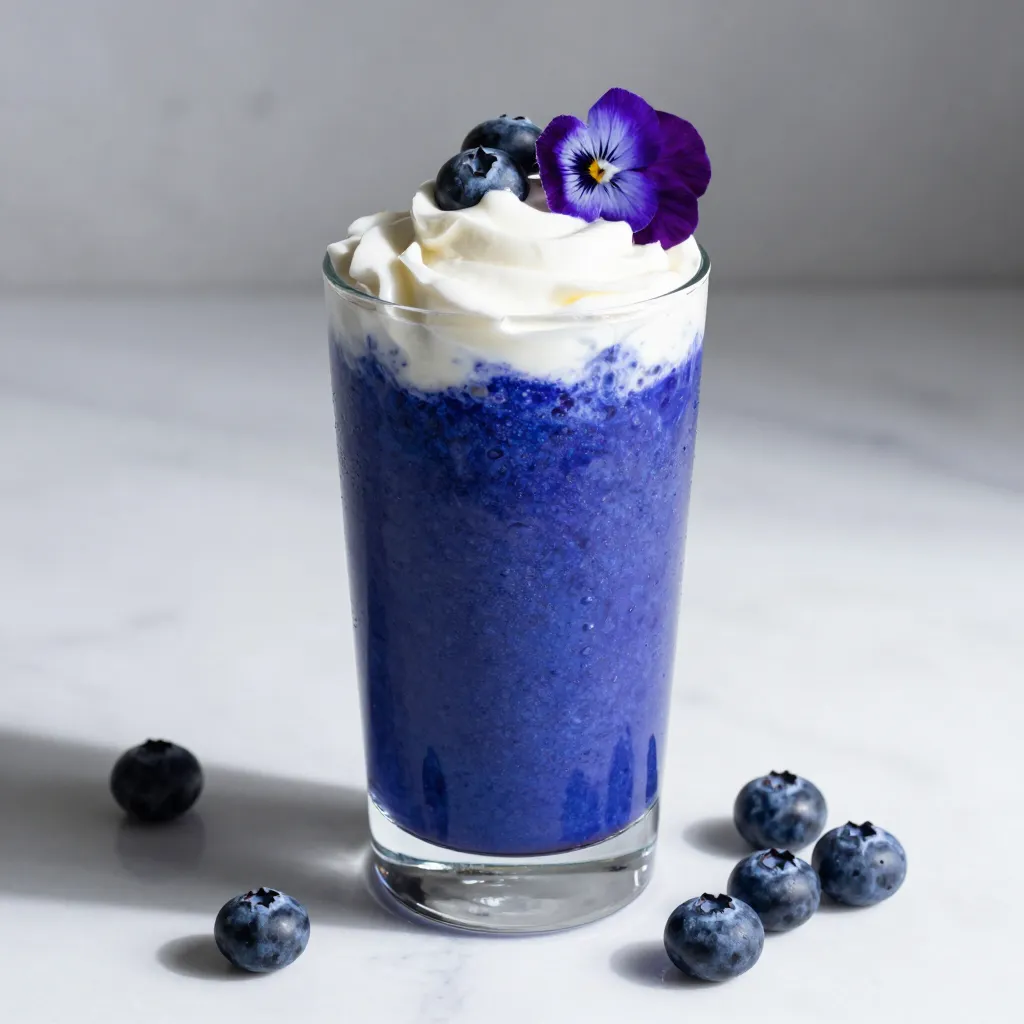
The Instagram magnet. Blue spirulina (pure phycocyanin extract) produces a vibrant electric-violet color when blended with wild blueberries — this drink is as visually striking as it is nutrient-dense. Fully vegan, made creamy with coconut yogurt. Learn more about the difference in our blue vs green spirulina guide.
- 1 cup frozen wild blueberries
- 1/2 frozen banana
- 1/2 cup unsweetened coconut yogurt (or cashew yogurt)
- 3/4 cup unsweetened almond milk
- 1 teaspoon blue spirulina powder
- 1 teaspoon maple syrup
Method: Add all ingredients to a blender and blend on high until velvety and deep violet-blue. Pour slowly into a tall glass for a layered effect. Skip the blueberries and use just blue spirulina with banana if you want the pure turquoise look instead.
5. Chocolate Cacao Spirulina Smoothie
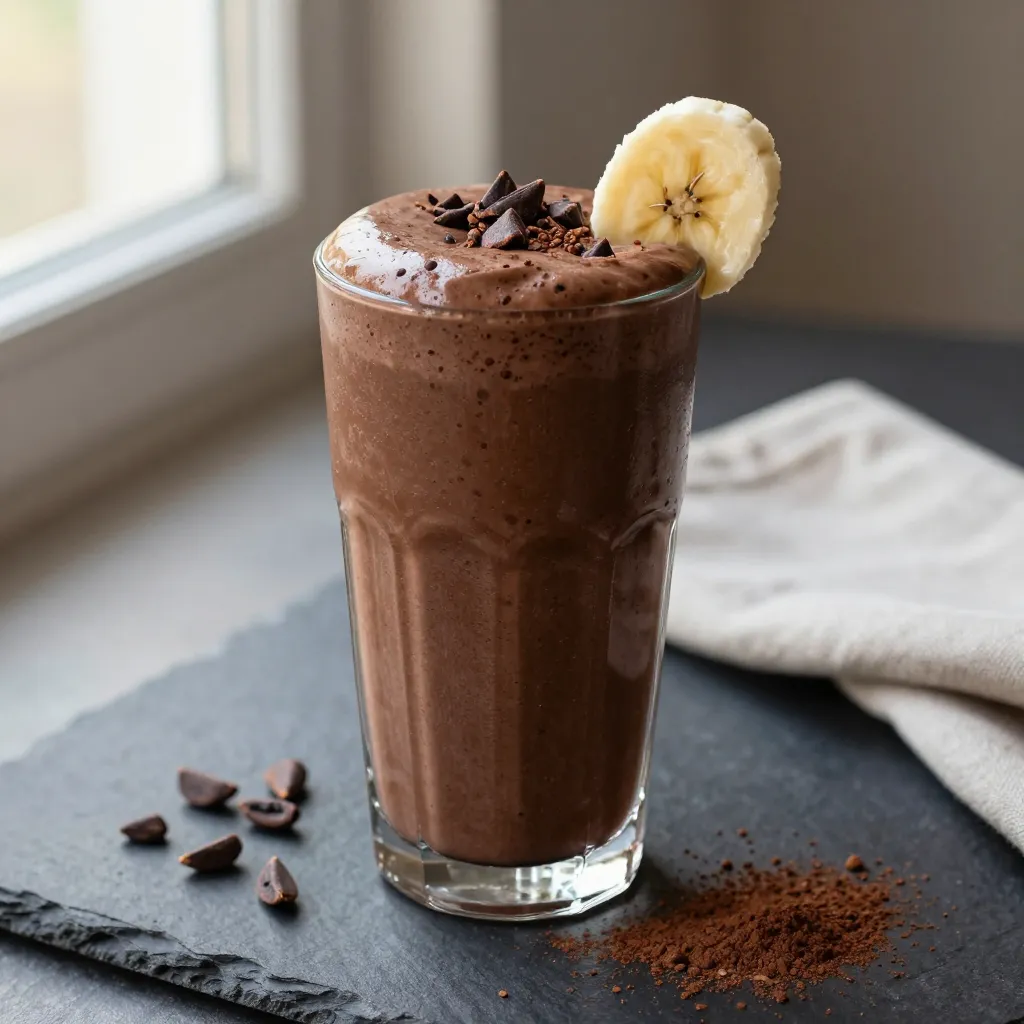
Chocolate is the single best flavor mask for spirulina — raw cacao’s bitter-sweet richness completely neutralizes any earthy notes. This one drinks like a chocolate milkshake with a nutritional upgrade, and it doubles as a dessert smoothie.
- 1 frozen banana
- 1 cup unsweetened oat milk (or almond milk)
- 2 tablespoons raw cacao powder
- 1 tablespoon natural peanut butter (or almond butter)
- 1 teaspoon green spirulina powder
- 1 pitted Medjool date
- 1 teaspoon cacao nibs (optional, for topping)
- Handful of ice
Method: Pour in the oat milk first, then add the rest. Blend on high for 60 seconds until thick and mousse-like. Top with cacao nibs. Swap peanut butter for hazelnut butter if you want a Nutella-style flavor.
6. Matcha Spirulina Green Smoothie
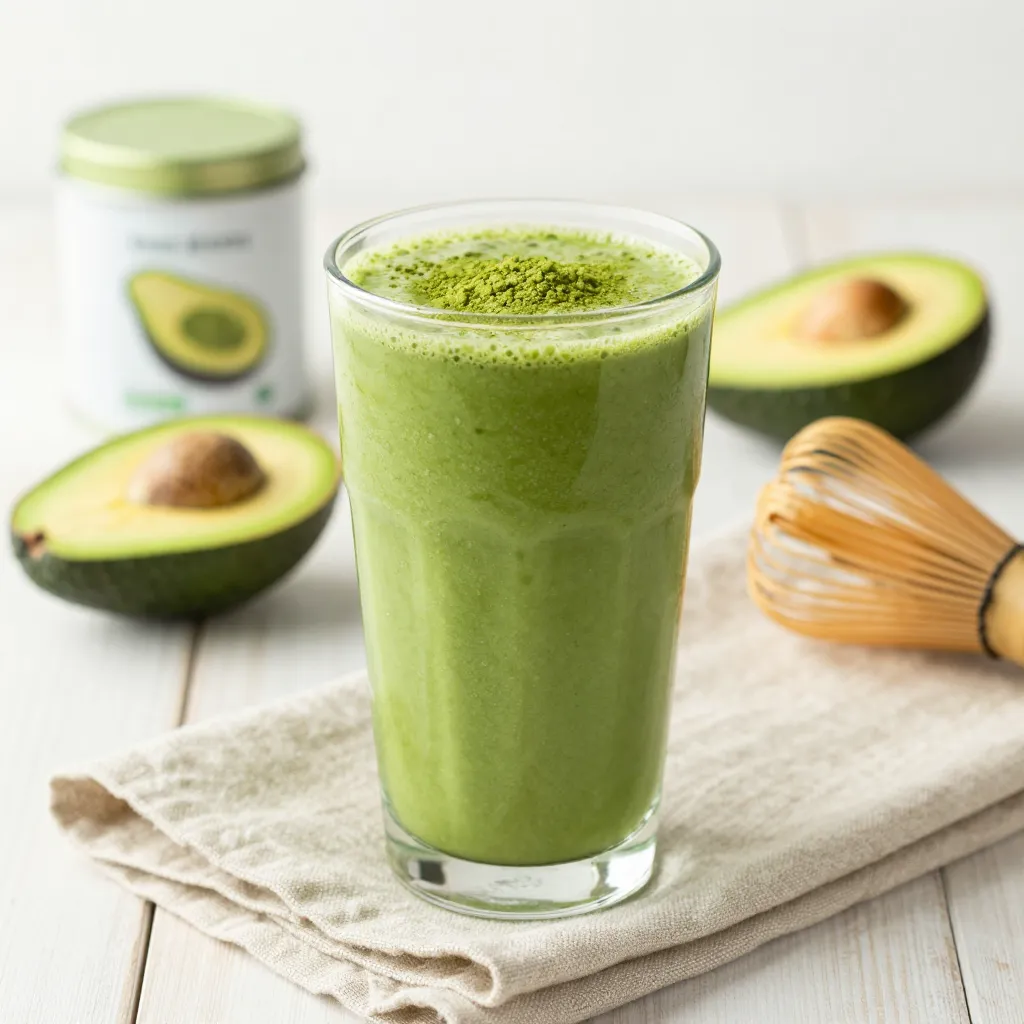
A double shot of plant energy — L-theanine and caffeine from matcha, plus spirulina’s iron and protein. Grassy, slightly sweet, and cleaner-tasting than coffee. Ideal as a morning smoothie or a pre-workout alternative to a protein shake.
- 1 cup unsweetened almond milk
- 1/2 frozen banana
- 1/2 ripe avocado
- 1 teaspoon ceremonial-grade matcha powder
- 1 teaspoon green spirulina powder
- 1 tablespoon maple syrup
- 1 teaspoon vanilla extract
- Handful of ice
Method: Sift the matcha into the blender to prevent clumps, then add everything else. Blend on high for 45 seconds. The avocado makes it creamy without any dairy. Drink within 10 minutes — matcha starts to taste bitter if it sits.
7. Post-Workout Vegan Protein Spirulina Smoothie
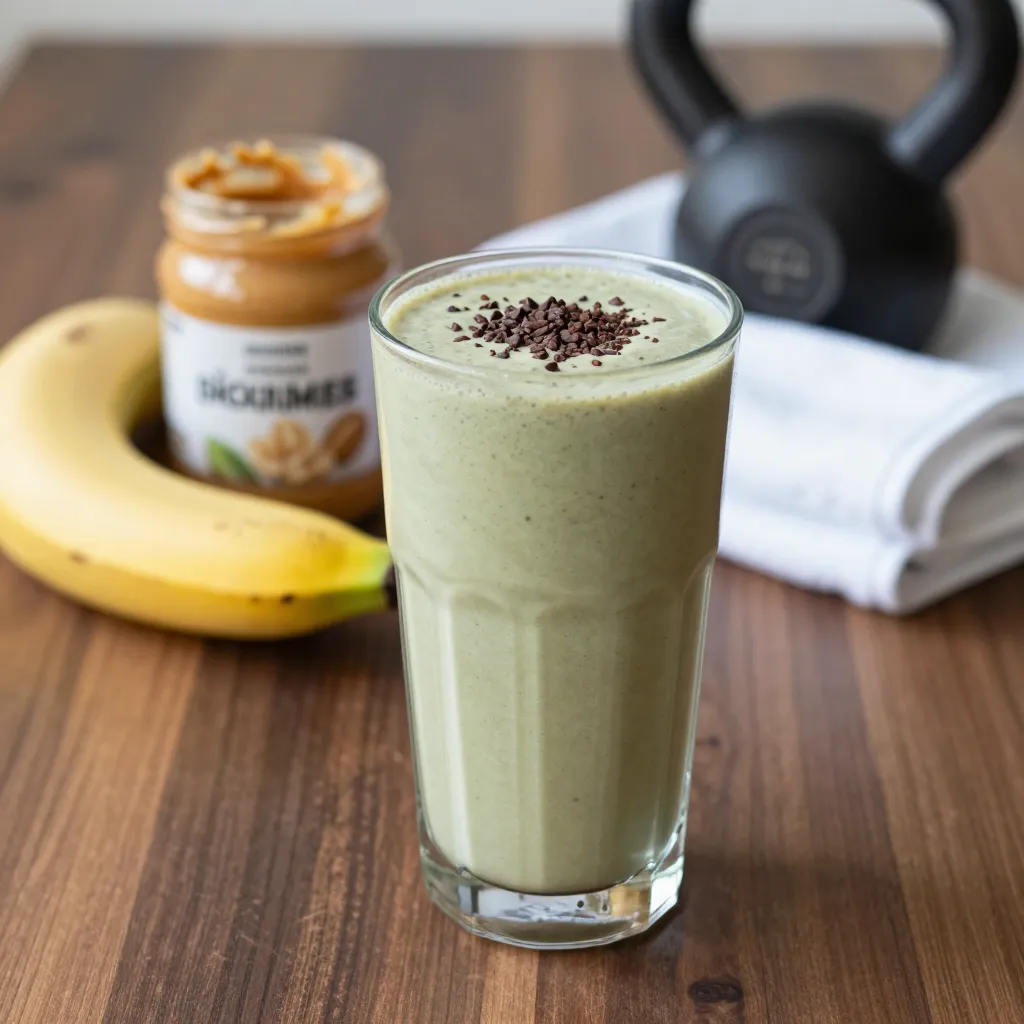
A plant-powered recovery smoothie with around 25 grams of complete protein — enough to support muscle repair after a hard session. Stacks vegan pea-rice protein with spirulina for a full amino acid profile. See our guide on spirulina for athletes for more on why it works.
- 1 frozen banana
- 1 cup oat milk (or soy milk for extra protein)
- 1 scoop vegan protein powder (pea-rice blend, vanilla)
- 1 tablespoon natural peanut butter
- 1 teaspoon green spirulina powder
- 1 teaspoon cacao nibs (optional)
- Handful of ice
Method: Add oat milk and banana first, then the rest. Blend on high for 60 seconds. Drink within 30 minutes of training for the recovery window.
8. Green Goddess Detox Spirulina Smoothie
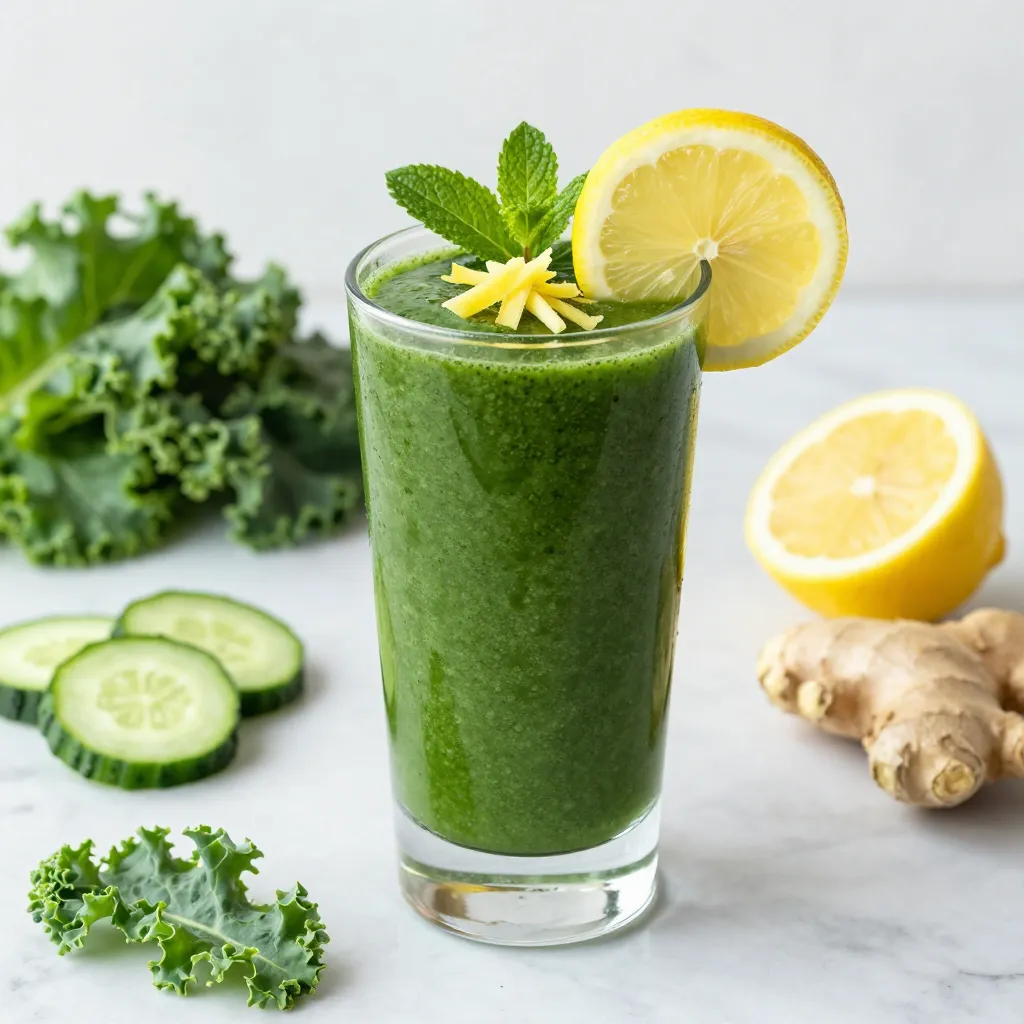
The deepest green of the bunch — and the most cleansing. Cucumber, lemon, ginger, and kale stack alongside spirulina’s chlorophyll for a hydrating, slightly zippy morning drink. Naturally vegan and low in sugar.
- 1 cup fresh kale or baby spinach
- 1/2 green apple
- 1/2 cucumber, chopped
- 1/2 avocado
- Juice of 1 lemon
- 1 inch fresh ginger
- 1 teaspoon green spirulina powder
- 1 cup cold filtered water (or coconut water)
- 4–5 ice cubes
Method: Combine all ingredients in a high-speed blender. Blend for a full minute until completely smooth. If it’s too earthy for your taste, add half a frozen banana to mellow it out.
Frequently asked questions about vegan spirulina smoothies
Is spirulina vegan?
Yes. Spirulina is a blue-green algae and is 100% plant-based — no animal products are involved in its cultivation, processing, or packaging (as long as you buy from a reputable supplier that doesn’t use gelatin capsules). Every recipe on this page is fully vegan.
Why does my spirulina smoothie taste fishy?
That “fishy” or “pond” flavor is usually a sign of low-quality or oxidized spirulina. Cheap spray-dried powders break down quickly once the bag is opened, picking up a marine aftertaste. Premium freeze-dried spirulina stays mild and slightly sweet for the life of the jar. Store it sealed, in a cool dark spot, and use within 12 months.
Can I make a spirulina smoothie the night before?
Not ideally. Spirulina’s color and some nutrients oxidize within 20–30 minutes of blending. If you need to prep ahead, freeze everything except the liquid and spirulina in a ziplock bag, then blend in the morning — it takes 60 seconds.
Which is better for smoothies — blue or green spirulina?
Green (full-spectrum) spirulina has more complete nutrition: protein, iron, B vitamins, and chlorophyll. Blue spirulina is a pure phycocyanin extract — the active antioxidant pigment — and tastes much milder, which is why it’s used in vibrant visual drinks. Both are vegan. For daily nutrition, go green. For color and flavor-masking, go blue. Full breakdown in our blue vs green spirulina guide.
Can kids drink spirulina smoothies?
Yes, in small amounts. Start with 1/4 teaspoon for children under 6 and up to 1/2 teaspoon for older kids. The Classic Green and Tropical Mango-Pineapple recipes above are the most kid-friendly. Always check with your pediatrician first. More detail in our spirulina for kids guide.
Will a spirulina smoothie replace a multivitamin?
It supplements one — it doesn’t replace one. Spirulina is exceptional for protein, iron, B vitamins, and antioxidants, but it’s not a complete source of every micronutrient (notably vitamin C, vitamin D, and true active B12). Treat it as a nutrient-dense daily food, not a full multivitamin substitute.
Final thoughts
Spirulina doesn’t have to taste like a pond. With the right plant-based pairings — wild blueberries, cacao, matcha, mango, ginger, or even just a ripe banana — you can build a vegan smoothie that’s genuinely delicious and nutritionally one of the most efficient drinks you’ll make all week. Start with the Classic Green if you’re new, graduate to the Wild Blueberry or Chocolate Cacao once you’re hooked, and pull out the Electric Blue when you want to stop a feed in its tracks.
Want to know exactly how much spirulina to add to your daily routine, or which form is cleanest? Start with our dosage guide and full benefits breakdown.