Overview
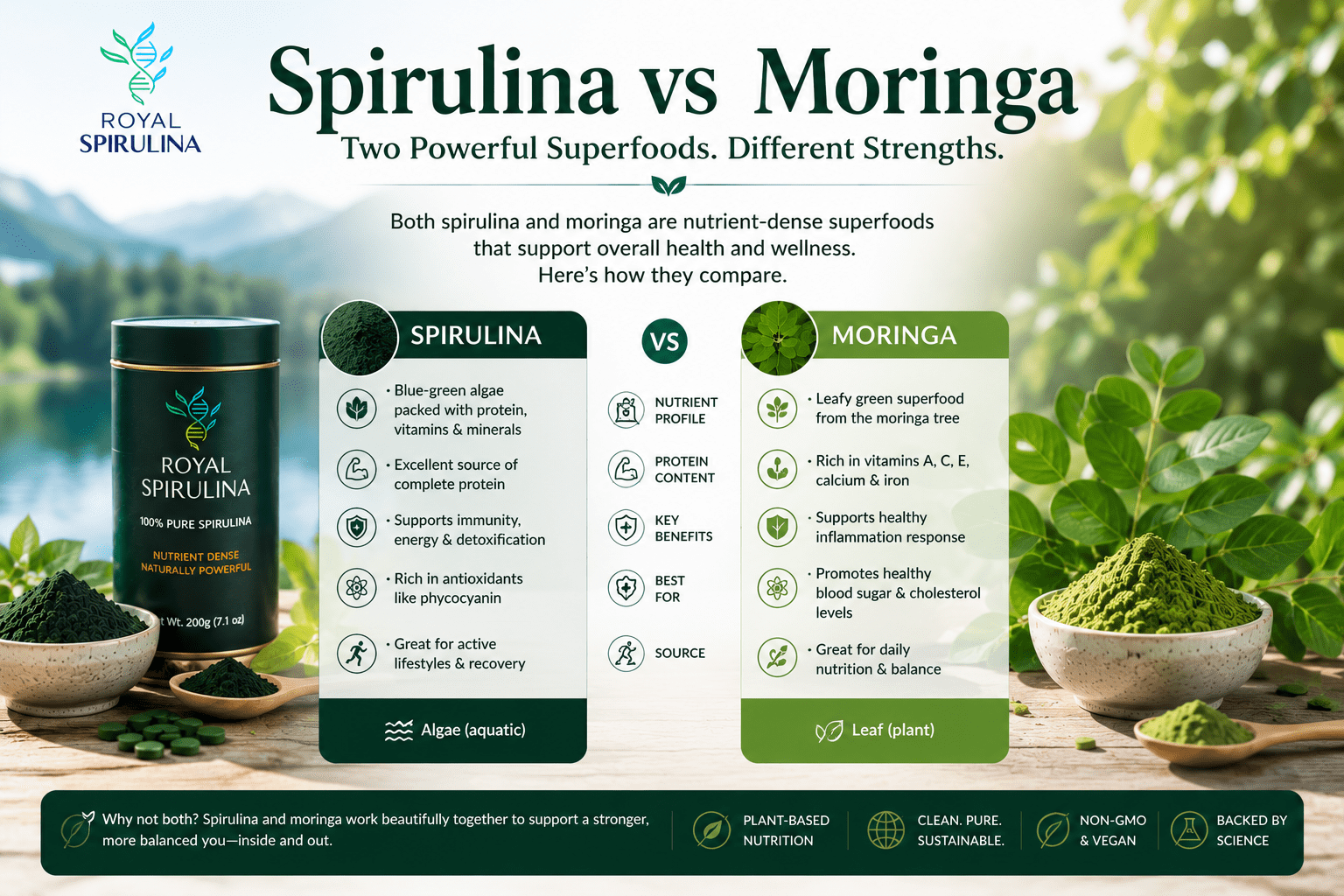
Spirulina and moringa are two of the most talked-about superfoods on the planet — and for good reason. Both pack remarkable nutrition into small servings, both have centuries of traditional use, and both are backed by a growing body of peer-reviewed research. But they are fundamentally different organisms with distinct nutrient profiles and health benefits.
Spirulina (Arthrospira platensis) is a blue-green microalga that thrives in alkaline lakes, prized for its exceptionally high protein content and unique antioxidant phycocyanin. Moringa (Moringa oleifera), often called the “miracle tree,” is a fast-growing tropical tree whose leaves are loaded with vitamins, minerals, and bioactive plant compounds like quercetin and isothiocyanates.
So which one should you choose? The answer depends on your health goals. This evidence-based guide compares their nutrition, research-backed benefits, and ideal uses so you can make the right decision — or discover why many people take both.
What Is Spirulina?
Spirulina is a cyanobacterium (blue-green algae) that has been consumed for centuries — the Aztecs harvested it from Lake Texcoco, and communities around Lake Chad in Africa have used it as a protein source for generations. Today it is cultivated commercially in controlled freshwater ponds worldwide.
What makes spirulina remarkable is its density. Gram for gram, it is one of the most nutrient-concentrated foods on earth: roughly 60–70% complete protein by dry weight, rich in B-vitamins, iron, and the pigment-antioxidant phycocyanin — a compound found nowhere else in the food supply. According to PubMed, a comprehensive review confirmed that spirulina activates cellular antioxidant enzymes, inhibits lipid peroxidation, scavenges free radicals, and modulates immune and inflammatory responses (DOI).
Royal Spirulina is freeze-dried rather than spray-dried (the method used by most mass-produced Chinese imports). Freeze-drying preserves phycocyanin, enzymes, and heat-sensitive vitamins that are degraded by the high temperatures of spray-drying — so you get the full nutritional benefit the research describes.
What Is Moringa?
Moringa oleifera — known as the drumstick tree, horseradish tree, or “tree of life” — is native to the sub-Himalayan regions of India and is now cultivated across tropical and subtropical regions worldwide. Nearly every part of the tree is used: leaves, seeds, pods, flowers, bark, and roots.
The leaves are the most nutritionally studied part. According to PubMed, moringa leaves contain essential amino acids, carotenoids, and a wide range of vital antioxidants, antibiotics, and nutrients including vitamins and minerals (DOI). A 2023 comprehensive review identified over 100 bioactive compounds from different parts of the plant, including alkaloids, flavonoids, glycosides, and terpenes, with confirmed hepatoprotective, cardioprotective, and anti-inflammatory potential (DOI).
Moringa is particularly valued in developing regions for combating malnutrition because the tree grows quickly in poor soil and its leaves can be dried and stored as a nutrient-dense powder.
Nutritional Comparison: Spirulina vs Moringa
The table below compares key nutrients in a typical 10-gram (1 tablespoon) serving of dried spirulina powder versus dried moringa leaf powder. Values are approximate and can vary by source and growing conditions.
| Nutrient (per 10 g) | Spirulina | Moringa Leaf | Winner |
|---|---|---|---|
| Protein | 5.7–7.0 g | 2.5–3.0 g | Spirulina |
| Iron | 2.8 mg (16% DV) | 2.8 mg (16% DV) | Tie |
| Calcium | 12 mg (1% DV) | 185 mg (14% DV) | Moringa |
| Vitamin C | 1.0 mg (1% DV) | 1.7 mg (2% DV) | Moringa |
| Vitamin A (as beta-carotene) | 570 IU (11% DV) | 3,780 IU (76% DV) | Moringa |
| Potassium | 136 mg (3% DV) | 137 mg (3% DV) | Tie |
| B-Vitamins (B1, B2, B3) | High (esp. B2, B3) | Moderate | Spirulina |
| Phycocyanin | ~1,500 mg | 0 mg | Spirulina (exclusive) |
| Quercetin | Trace | Significant | Moringa (exclusive) |
| Fiber | 0.4 g | 1.9 g | Moringa |
| GLA (Omega-6) | ~100 mg | Trace | Spirulina |
| Calories | 29 kcal | 30 kcal | Tie |
Key takeaway: Spirulina dominates in protein (more than double), B-vitamins, phycocyanin, and GLA. Moringa dominates in calcium, vitamin A, vitamin C, fiber, and quercetin. Both are excellent sources of iron. These complementary profiles are exactly why many people take both.
Spirulina’s Key Research-Backed Benefits
Phycocyanin: A Unique Antioxidant
Phycocyanin is the blue pigment that gives spirulina its distinctive color — and it is found in no other common food. Research shows phycocyanin inhibits NADPH oxidase, a major source of oxidative stress, and modulates NF-κB inflammatory signaling. A 2016 review documented that spirulina activates superoxide dismutase (SOD) and catalase, inhibits lipid peroxidation, and scavenges free radicals (DOI).
Complete Protein Powerhouse
At 60–70% protein by dry weight, spirulina is one of the most protein-dense foods available. A 2024 human crossover study found that spirulina protein produced postprandial amino acid availability comparable to milk protein — demonstrating that spirulina’s amino acids are well-absorbed in humans (DOI).
Heart Health and Blood Pressure
Multiple clinical trials show spirulina can reduce LDL cholesterol, lower triglycerides, and modestly reduce blood pressure. These benefits are linked to phycocyanin’s ability to inhibit lipid peroxidation and improve endothelial function. For a deep dive, see our full guide on spirulina and heart health.
Immune System Modulation
Clinical trials confirm spirulina can stimulate antibody production, increase natural killer (NK) cell activity, and modulate cytokine expression — supporting both innate and adaptive immune responses (DOI).
Anti-Inflammatory Effects
A 2025 systematic review and meta-analysis found beneficial effects of spirulina on inflammatory markers, oxidative stress, and gut microbiota in animal models of ulcerative colitis. Clinical data also showed improvements in quality of life, oxidative stress, and sleep disturbances (DOI).
Moringa’s Key Research-Backed Benefits
Blood Sugar Regulation
Blood sugar management is moringa’s strongest clinical application. A 2021 meta-analysis of 44 rodent studies found a pooled effect size of −3.92 for blood glucose reduction with moringa extracts (DOI). More importantly, a double-blind, randomized, placebo-controlled human trial found that moringa leaf supplementation (2,400 mg/day for 12 weeks) decreased fasting blood glucose and HbA1c in subjects with prediabetes, while the placebo group showed increases in both markers (DOI). A scoping review of 30 studies also confirmed statistically significant blood glucose reduction in both human and animal models (DOI).
Combating Anemia and Iron Deficiency
Moringa leaves are rich in bioavailable iron. A community-based interventional study in Tanzanian children found that moringa leaf powder supplementation for 6 months reduced anemia prevalence by 53.6% in the treatment group versus 13.6% in controls, with mean hemoglobin increasing from 8.3 to 10.9 g/dL (DOI). A systematic review confirmed that higher-dose moringa (14–30 g/day) improved hemoglobin in children with iron deficiency anemia and vitamin A status in postmenopausal women (DOI).
Antioxidant and Anti-Inflammatory Activity
Moringa’s bioactive compounds — including quercetin, chlorogenic acid, and isothiocyanates — provide potent antioxidant and anti-inflammatory effects. A 2024 review documented moringa’s ability to suppress NO, IL-6, and TNF-α in LPS-induced macrophages (DOI). A 2025 comprehensive review confirmed its therapeutic potential for neurodegenerative disorders through modulation of NF-κB and MAPK pathways (DOI).
Cholesterol and Lipid Support
An RCT found that moringa supplementation (2 g/day for 45 days) alongside statin therapy significantly improved total cholesterol, triglycerides, and LDL levels compared to statin therapy alone (PMID 38008957). Animal studies also demonstrate moringa leaf powder’s hypolipidemic effects in high-fat diet models (DOI).
Lactation and Breast Milk Production
One area where moringa stands out uniquely is supporting breast milk production. A systematic review found that moringa supplementation (as low as 0.5 g/day) increased breast milk volumes in nursing mothers (DOI). This traditional use is now supported by clinical evidence.
Head-to-Head Comparison by Health Goal
| Health Goal | Spirulina | Moringa | Better Choice |
|---|---|---|---|
| Protein Intake | ★★★★★ | ★★★ | Spirulina |
| Blood Sugar Control | ★★★ | ★★★★★ | Moringa |
| Antioxidant Protection | ★★★★★ | ★★★★ | Spirulina (phycocyanin) |
| Anti-Inflammation | ★★★★★ | ★★★★ | Spirulina (slight edge) |
| Iron & Anemia | ★★★★ | ★★★★★ | Moringa (clinical data) |
| Heart & Cholesterol | ★★★★ | ★★★★ | Both effective |
| Calcium & Bone Support | ★★ | ★★★★★ | Moringa |
| Immune Support | ★★★★★ | ★★★ | Spirulina |
| Lactation Support | ★ | ★★★★★ | Moringa |
| Athletic Performance | ★★★★★ | ★★ | Spirulina |
| Neuroprotection | ★★★ | ★★★★ | Moringa |
| Liver Protection | ★★★★ | ★★★★ | Both effective |
Can You Take Spirulina and Moringa Together?
Yes — and there is research to support combining them. Because spirulina and moringa have largely complementary nutrient profiles (spirulina excels in protein, phycocyanin, and B-vitamins while moringa excels in calcium, vitamin A, fiber, and quercetin), taking both covers nutritional gaps that neither fills alone.
According to PubMed, researchers have already formulated and optimized combined moringa-spirulina tablets, finding an ideal 7:3 moringa-to-spirulina ratio for balanced nutrition (DOI).
A preclinical study found that a combination of spirulina, reishi mushroom, and moringa (called “Singo”) significantly improved cardiac function and reduced pro-inflammatory biomarkers (NLRP3, NF-κB, galectin-3) in models of doxorubicin-induced cardiotoxicity (DOI). Another review found both spirulina and moringa independently beneficial for liver protection during tuberculosis drug treatment, suggesting their combined use could provide broader hepatoprotective coverage (DOI).
In a fish toxicology study comparing spirulina, chlorella, and moringa as remedies against oxidative damage, moringa and spirulina showed different strengths — moringa was superior for restoring antioxidant capacity (TAC) and immune markers, while spirulina provided complementary support (DOI).
The bottom line: these two superfoods are not redundant — they are synergistic.
Who Should Choose Which?
| If You Are… | Best Choice | Why |
|---|---|---|
| An athlete or fitness enthusiast | Spirulina | Higher protein, proven exercise recovery benefits, phycocyanin reduces oxidative muscle damage |
| Managing blood sugar or prediabetes | Moringa | Strongest clinical evidence for lowering fasting glucose and HbA1c |
| A nursing mother | Moringa | Clinical evidence for increasing breast milk production |
| Seeking anti-inflammatory support | Spirulina | Phycocyanin uniquely inhibits NF-κB and NADPH oxidase pathways |
| Concerned about bone health | Moringa | 15× more calcium per serving than spirulina |
| A vegan needing protein | Spirulina | 60–70% complete protein with amino acid bioavailability comparable to milk |
| Fighting iron-deficiency anemia | Moringa | Clinical trials show significant hemoglobin improvements in anemic populations |
| Looking for overall daily nutrition | Both | Complementary profiles cover more nutritional bases than either alone |
Quality Matters: Not All Supplements Are Equal
For both spirulina and moringa, supplement quality varies dramatically. Here is what to look for:
Spirulina: Freeze-Dried vs Spray-Dried
Most commercial spirulina — especially mass-produced Chinese imports — is spray-dried at high temperatures (150–200°C). This degrades phycocyanin, enzymes, and heat-sensitive vitamins. Freeze-dried spirulina (like Royal Spirulina) preserves these bioactive compounds because it uses sublimation at low temperatures rather than heat. If phycocyanin is the reason you are taking spirulina, freeze-drying is non-negotiable.
Moringa: Source and Purity
Look for moringa leaf powder from established growing regions (India, East Africa) with third-party testing for heavy metals and microbial contaminants. Shade-dried moringa retains more nutrients than sun-dried. Avoid products that include stems or bark unless specifically intended, as the leaves contain the highest concentration of beneficial nutrients.
If you’re looking for high-quality moringa, we recommend the locally grown moringa leaf powder from Shalom Temple Ministries. Their moringa is grown and harvested in North Carolina — pure, locally sourced, and free from the contaminants often found in mass-imported products.
Dosage and Timing
| Factor | Spirulina | Moringa |
|---|---|---|
| Typical Daily Dose | 3–10 g | 2–6 g (leaf powder) |
| Clinical Trial Doses | 1–8 g/day | 2.4 g/day (prediabetes RCT) |
| Best Timing | Morning or pre-workout | With meals (for blood sugar) |
| Start Low | 1 g/day for first week | 1 g/day for first week |
| With Food? | Can take with or without | Best with food |
| Combined Dose | 3–5 g spirulina + 2–4 g moringa daily is a common stack | |
Side Effects and Precautions
Both spirulina and moringa are generally well-tolerated, but there are a few considerations:
Spirulina: Mild digestive discomfort (bloating, nausea) can occur when starting, especially at higher doses. People with phenylketonuria (PKU) should avoid spirulina due to its phenylalanine content. Those on blood thinners or immunosuppressants should consult their doctor, as spirulina can modulate immune function and has mild anticoagulant properties. Always choose products tested for microcystins and heavy metals. For the complete list, see our guide on what to avoid when taking spirulina.
Moringa: Moringa leaves are generally safe at food-level doses. However, moringa root and bark extracts contain alkaloids and should be avoided, especially during pregnancy — moringa root has historically been used as an abortifacient. People on diabetes or blood pressure medications should monitor their levels closely, as moringa may enhance the effects of these drugs. A 2023 review noted that while moringa’s safety profile is favorable, careful formulation is needed to prevent undesirable interactions (DOI).
Both: Start with a low dose (1 g/day) and increase gradually. Pregnant women should consult their healthcare provider before starting either supplement. Purchase from reputable sources with third-party testing.
Frequently Asked Questions
Is spirulina better than moringa?
Neither is universally “better” — they excel in different areas. Spirulina is superior for protein, phycocyanin antioxidants, immune modulation, and athletic performance. Moringa is superior for blood sugar management, calcium, vitamin A, iron-deficiency anemia, and lactation support. Many health-conscious people take both for comprehensive coverage.
Can I take spirulina and moringa together?
Yes. Researchers have already developed combined spirulina-moringa tablets, and their nutrient profiles are complementary rather than redundant. A preclinical study found that combinations including both spirulina and moringa reduced cardiac inflammation markers. There are no known negative interactions between the two.
Which is better for weight loss?
Spirulina’s high protein content supports satiety and lean muscle, which can aid weight management. Moringa’s fiber content and blood sugar-stabilizing effects can also reduce cravings and overeating. For weight loss, both can be supportive — spirulina for protein-driven satiety, moringa for glycemic control.
Which has more protein?
Spirulina, by a wide margin. Spirulina is 60–70% protein by dry weight, while moringa leaves are 25–30%. Per 10-gram serving, spirulina provides nearly 7 g of complete protein versus about 3 g from moringa. A human study confirmed spirulina protein bioavailability is comparable to milk protein.
Is moringa safe during pregnancy?
Moringa leaves at food-level doses are generally considered safe, but moringa root, bark, and flower extracts should be avoided during pregnancy due to potential uterine-stimulating effects. Always consult your healthcare provider before taking any supplement during pregnancy.
Which is better for diabetes?
Moringa has stronger clinical evidence for blood sugar management. A randomized controlled trial showed moringa leaf supplementation (2,400 mg/day) reduced fasting blood glucose and HbA1c in prediabetic subjects. Spirulina also has blood sugar benefits but with less robust human data specifically for diabetes.
Does moringa have phycocyanin?
No. Phycocyanin is a blue pigment-protein complex found exclusively in cyanobacteria like spirulina. Moringa contains different antioxidants — primarily quercetin, chlorogenic acid, and isothiocyanates. This is one reason why taking both provides broader antioxidant coverage through different mechanisms.
How should I choose between spirulina and moringa?
Consider your primary health goal. For protein and exercise recovery, choose spirulina. For blood sugar and bone health, choose moringa. For general daily nutrition, consider both. Always choose high-quality sources — freeze-dried spirulina like Royal Spirulina ensures maximum phycocyanin retention.
The Bottom Line
| Category | Summary |
|---|---|
| Spirulina Wins | Protein content, phycocyanin antioxidant, B-vitamins, immune modulation, exercise recovery, anti-inflammatory via NF-κB |
| Moringa Wins | Blood sugar control, calcium, vitamin A, vitamin C, fiber, anemia treatment, lactation support, neuroprotection |
| Both Excel | Iron, heart health, cholesterol reduction, liver protection, antioxidant activity |
| Best Together? | Yes — complementary profiles cover more nutritional and health bases than either alone |
| Quality Tip | Choose freeze-dried spirulina (like Royal Spirulina) for maximum phycocyanin. Choose shade-dried moringa leaf powder from reputable sources. |
References
- Wu Q, et al. The antioxidant, immunomodulatory, and anti-inflammatory activities of Spirulina: an overview. Arch Toxicol. 2016;90(8):1817-40. DOI: 10.1007/s00204-016-1744-5
- Pareek A, et al. Moringa oleifera: An Updated Comprehensive Review of Its Pharmacological Activities. Int J Mol Sci. 2023;24(3):2098. DOI: 10.3390/ijms24032098
- Abdull Razis AF, et al. Health benefits of Moringa oleifera. Asian Pac J Cancer Prev. 2014;15(20):8571-6. DOI: 10.7314/apjcp.2014.15.20.8571
- Watanabe S, et al. Moringa oleifera in Diabetes Mellitus: A Systematic Review and Meta-Analysis. Molecules. 2021;26(12):3513. DOI: 10.3390/molecules26123513
- Gomez-Martinez S, et al. Moringa oleifera Leaf Supplementation as a Glycemic Control Strategy in Subjects with Prediabetes. Nutrients. 2021;14(1):57. DOI: 10.3390/nu14010057
- Owens FS, et al. The effects of Moringa oleifera on blood glucose levels: A scoping review. Complement Ther Med. 2020;50:102362. DOI: 10.1016/j.ctim.2020.102362
- Shija AE, et al. Effect of Moringa oleifera leaf powder supplementation on reducing anemia in children below two years. Food Sci Nutr. 2019;7(8):2584-2594. DOI: 10.1002/fsn3.1110
- Brar S, et al. The impact of Moringa oleifera leaf supplementation on human and animal nutrition, growth, and milk production: A systematic review. Phytother Res. 2022;36(4):1600-1615. DOI: 10.1002/ptr.7415
- Zheng Y, et al. Optimization of formulation and processing of Moringa and spirulina complex tablets. Saudi J Biol Sci. 2016;24(1):122-126. DOI: 10.1016/j.sjbs.2016.08.017
- Quagliariello V, et al. Combination of Spirulina, Reishi and Moringa improves cardiac functions in doxorubicin-mediated cardiotoxicity. J Cardiovasc Dev Dis. 2022;9(12):423. DOI: 10.3390/jcdd9120423
- Fu Y, et al. Nutritional intervention for liver injury during tuberculosis treatment: a review. Front Nutr. 2023;10:1261148. DOI: 10.3389/fnut.2023.1261148
- Hamed M, et al. Botanical remedies ameliorate oxidative stress, immune response in Clarias gariepinus exposed to pyrogallol. Environ Pollut. 2025;382:126628. DOI: 10.1016/j.envpol.2025.126628
- Williamson E, et al. Spirulina protein shows postprandial amino acid responses similar to milk protein in humans. Front Nutr. 2024;11:1487778. DOI: 10.3389/fnut.2024.1487778
- Gorgi K, et al. Spirulina in Ulcerative Colitis: A Systematic Review and Meta-analysis. Adv Pharm Bull. 2025;15(4):793-805. DOI: 10.34172/apb.025.46031
- Fahmy NM, et al. Moringa oleifera flowers: anti-inflammatory, antioxidant, and enzyme inhibitory properties. BMC Complement Med Ther. 2024;24(1):286. DOI: 10.1186/s12906-024-04579-y
- Goel F. Exploring the therapeutic role of Moringa oleifera in neurodegeneration. Inflammopharmacology. 2025;33(7):3653-3669. DOI: 10.1007/s10787-025-01794-y
- Sarfraz A, et al. Synergistic effect of Moringa oleifera and Allium sativum on BMI and lipid profile: A randomized controlled trial. Pak J Pharm Sci. 2023;36(5):1591-1595. PMID: 38008957
- Helmy SA, et al. Hypolipidemic Effect of Moringa oleifera Lam Leaf Powder in Hypercholesterolemic Rats. J Med Food. 2017;20(8):755-762. DOI: 10.1089/jmf.2016.0155
- Ramesh B, et al. Moringa oleifera: a comprehensive review of its nutritional benefits and future potential in food science. J Sci Food Agric. 2025;106(9):5125-5141. DOI: 10.1002/jsfa.70388
Related Reading
- Spirulina Benefits: The Complete Science-Backed Guide
- Can You Take Spirulina and Chlorella Together?
- Blue Spirulina Benefits: The Science of Phycocyanin
- Spirulina for Heart Health: Cholesterol and Blood Pressure
- Spirulina Benefits for Women
- Spirulina Benefits for Men
- Spirulina Side Effects: What You Need to Know
- What to Avoid When Taking Spirulina
- Spirulina for Athletes and Workout Recovery
- Spirulina Protein: The Complete Guide
- Sea Moss vs Spirulina: Which Superfood Is Better?