Disclaimer: This article is for informational purposes only and is not medical advice. Always consult your healthcare provider before starting any supplement, especially if you take prescription medications.
Table of Contents
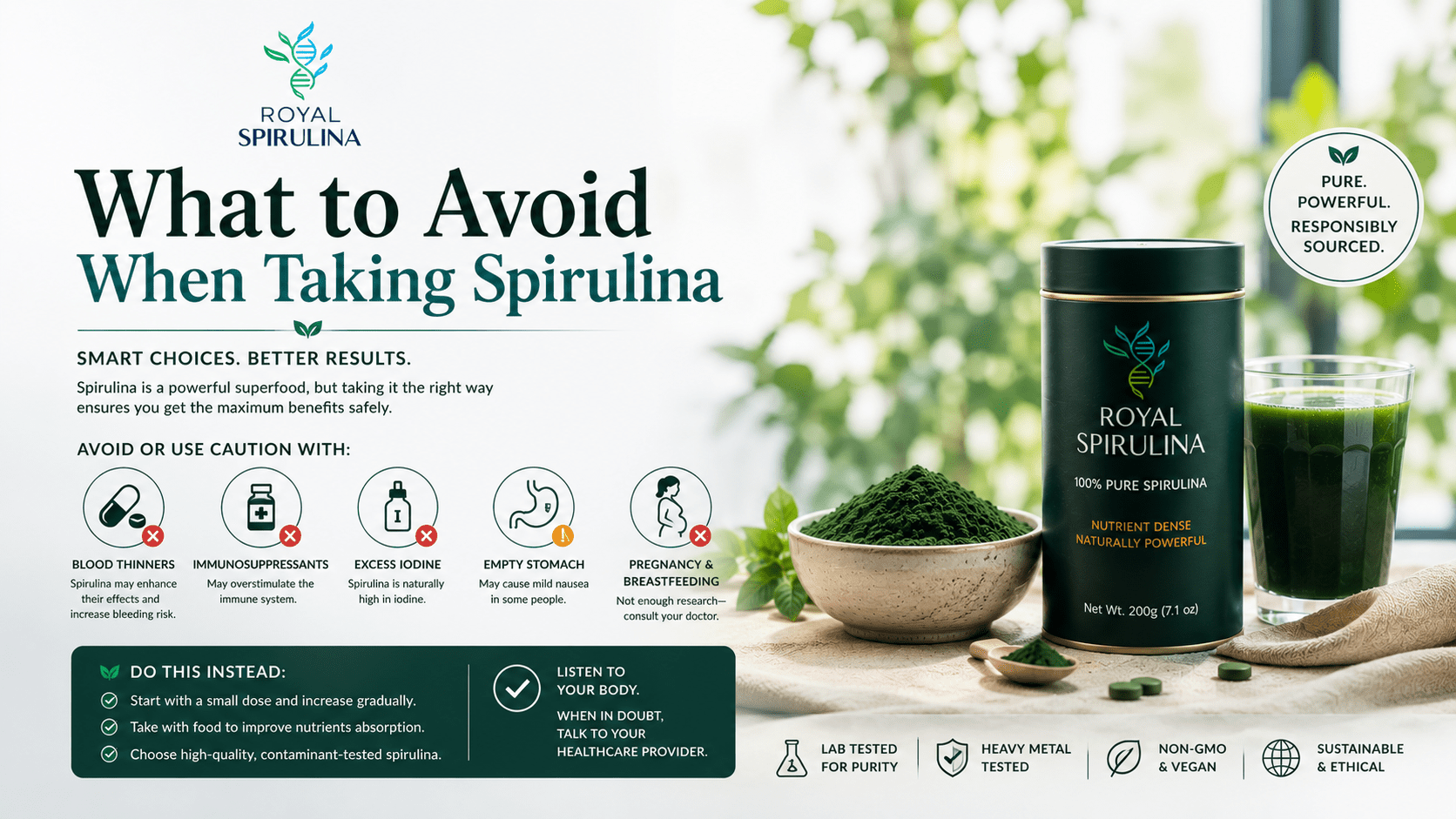
- Why This Article Matters
- Medications to Avoid or Use Cautiously
- Medical Conditions That Require Caution
- Foods and Drinks to Avoid Mixing
- Supplements to Be Careful With
- When to Take Spirulina (and When Not To)
- Contamination Risks: What to Watch For
- Pregnancy and Breastfeeding
- Frequently Asked Questions
- The Bottom Line
- References
Why This Article Matters
Spirulina has GRAS (Generally Recognized As Safe) status from the FDA, and clinical studies using up to 10 grams daily for six months have reported no significant adverse effects in healthy adults (Marles et al., 2011). It is one of the safest supplements available when sourced properly.
But “safe for most people” doesn’t mean “safe with everything.” Spirulina has real biological activity — it lowers blood pressure, reduces blood sugar, stimulates the immune system, inhibits COX-2 inflammation, and provides significant amounts of iron, vitamin K, and protein. These are the same properties that make it beneficial, but they also mean it can interact with certain medications, foods, supplements, and medical conditions.
This guide covers what to avoid, what to time carefully, and what to watch for — so you get the benefits without the risks. For a complete overview of what spirulina does, see Spirulina Benefits: The Complete Guide.
Medications to Avoid or Use Cautiously with Spirulina
Blood Thinners and Anticoagulants
Medications: Warfarin (Coumadin), heparin, enoxaparin (Lovenox), apixaban (Eliquis), rivaroxaban (Xarelto), clopidogrel (Plavix), aspirin (daily therapy)
Why it matters: Spirulina contains vitamin K — approximately 25 mcg per 10-gram serving. Vitamin K promotes blood clotting and directly opposes the mechanism of warfarin, which works by inhibiting vitamin K-dependent clotting factors. Additionally, spirulina’s phycocyanin has demonstrated antiplatelet activity, which could theoretically add to the bleeding risk when combined with antiplatelet drugs like clopidogrel or aspirin (Shih et al., 2009).
What to do: If you take warfarin, talk to your doctor before starting spirulina. The vitamin K content is relatively low compared to leafy greens (one cup of kale provides 1,000+ mcg), but consistency matters — any change in vitamin K intake can shift your INR readings. If you take other anticoagulants or daily aspirin, the risk is lower but should still be discussed with your prescriber.
Immunosuppressant Drugs
Medications: Cyclosporine, tacrolimus, azathioprine, mycophenolate, methotrexate, corticosteroids (prednisone), biologics (adalimumab, infliximab)
Why it matters: Spirulina is a documented immunostimulant. It enhances NK (natural killer) cell activity, increases interferon-gamma production, promotes macrophage activation, and boosts antibody responses (Wu et al., 2016). This is the opposite of what immunosuppressant drugs are designed to do. Taking spirulina while on immunosuppressants could theoretically reduce the effectiveness of these medications, putting organ transplant recipients at risk of rejection or triggering autoimmune flares.
Lee and Werth (2004) published case reports in Archives of Dermatology documenting patients whose autoimmune conditions (pemphigus vulgaris and dermatomyositis) flared after taking spirulina and other immunostimulatory supplements. This is the strongest clinical evidence that spirulina’s immune activation is not just a theoretical concern.
What to do: If you take any immunosuppressant medication — especially for organ transplant, autoimmune disease, or cancer treatment — do not take spirulina without explicit approval from your prescribing physician.
Diabetes Medications
Medications: Metformin, glipizide, glyburide, insulin, pioglitazone, sitagliptin (Januvia), empagliflozin (Jardiance)
Why it matters: Spirulina has demonstrated blood sugar-lowering effects in clinical trials. A systematic review and meta-analysis (Hamedifard et al., 2022) found that spirulina supplementation significantly reduced fasting blood glucose in patients with metabolic syndrome. Spirulina protein hydrolysates also inhibit DPP-IV by up to 74.2%, protecting GLP-1 — the same mechanism targeted by drugs like sitagliptin. Combining spirulina with diabetes medications could cause blood sugar to drop too low (hypoglycemia), especially with insulin or sulfonylureas (glipizide, glyburide).
What to do: If you take diabetes medications, monitor your blood sugar more frequently when starting spirulina. Start with a low dose (1–2 grams) and increase gradually. Tell your doctor, as they may need to adjust your medication dose. For the full breakdown of spirulina’s blood sugar mechanisms, see Spirulina vs. Berberine for Blood Sugar.
Blood Pressure Medications
Medications: Lisinopril, enalapril, losartan, amlodipine, metoprolol, hydrochlorothiazide
Why it matters: A meta-analysis by Machowiec et al. (2021) confirmed that spirulina produces statistically significant reductions in both systolic and diastolic blood pressure. Spirulina’s phycocyanin inhibits ACE (the same enzyme targeted by ACE inhibitor drugs) and enhances nitric oxide production. Combining spirulina with blood pressure medications could cause blood pressure to drop too low (hypotension), resulting in dizziness, lightheadedness, or fainting.
What to do: If you take blood pressure medication, start spirulina at a low dose and monitor your blood pressure at home. Report any symptoms of hypotension (dizziness upon standing, fatigue, blurred vision) to your doctor. This interaction is manageable with monitoring — many people successfully take both — but your doctor should know.
NSAIDs and Anti-Inflammatory Drugs
Medications: Ibuprofen, naproxen, aspirin, celecoxib (Celebrex)
Why it matters: Spirulina’s phycocyanin is a selective COX-2 inhibitor (Shih et al., 2009) — it reduces inflammation through the same pathway as celecoxib and non-selective NSAIDs. This isn’t necessarily dangerous, but stacking spirulina with NSAIDs means you’re inhibiting COX-2 from two directions simultaneously. This could theoretically increase the risk of bleeding (since COX-2 inhibition reduces thromboxane production) or mask symptoms that would otherwise prompt medical attention.
What to do: Occasional NSAID use alongside spirulina is unlikely to cause problems. But if you take daily NSAIDs for chronic pain, discuss spirulina with your doctor. Some people find spirulina reduces their need for NSAIDs — which is a benefit, not a risk — but the transition should be managed. Learn more about phycocyanin’s anti-inflammatory mechanisms in Blue Spirulina Benefits: What Phycocyanin Does for Your Body.
Medical Conditions That Require Caution
Autoimmune Diseases
Conditions: Multiple sclerosis (MS), lupus (SLE), rheumatoid arthritis, psoriasis, Crohn’s disease, type 1 diabetes, Hashimoto’s thyroiditis, pemphigus vulgaris, dermatomyositis
Why it matters: As documented by Lee and Werth (2004), spirulina’s immunostimulatory effects can activate or worsen autoimmune conditions. Autoimmune diseases are caused by an overactive immune system attacking the body’s own tissues. Spirulina boosts immune activity — including NK cells, T cells, and inflammatory cytokines — which is exactly what you don’t want when your immune system is already overactive.
What to do: If you have any autoimmune condition, consult your rheumatologist or immunologist before taking spirulina. Some people with well-controlled autoimmune conditions may tolerate small amounts, but this should be an individual decision with your doctor, not a self-directed experiment. For research on spirulina and one specific autoimmune condition, see Spirulina and Rheumatoid Arthritis: What 13+ Studies Say.
Phenylketonuria (PKU)
Spirulina contains phenylalanine — an essential amino acid that people with PKU cannot metabolize properly. Because spirulina is 60–70% protein and contains all essential amino acids, even a moderate dose provides meaningful amounts of phenylalanine. People with PKU should avoid spirulina entirely unless their metabolic specialist approves a specific amount within their phenylalanine budget.
Bleeding Disorders
Conditions: Hemophilia, von Willebrand disease, thrombocytopenia
Phycocyanin’s antiplatelet and COX-2 inhibiting properties could theoretically increase bleeding risk in people who already have impaired clotting. If you have a diagnosed bleeding disorder, discuss spirulina with your hematologist before use.
Kidney Disease
Spirulina is high in protein (60–70% by weight) and contains nucleic acids that produce uric acid when metabolized. People with chronic kidney disease (CKD) may need to limit protein and purine intake. Additionally, spirulina’s mineral content (iron, potassium) could be problematic for people on restricted mineral diets due to kidney failure. If you have kidney disease, consult your nephrologist about whether spirulina fits within your dietary restrictions.
Gout
The nucleic acid content in spirulina (approximately 4–6% RNA) breaks down into purines and then uric acid. High uric acid levels trigger gout flares. If you have gout or hyperuricemia, spirulina could potentially worsen your condition. Discuss with your doctor and monitor uric acid levels if you choose to try it.
Foods and Drinks to Avoid Mixing with Spirulina
Hot Beverages and Hot Foods
Why it matters: Phycocyanin — the compound responsible for the majority of spirulina’s health benefits — begins to denature above 60°C (140°F). Adding spirulina to hot coffee, hot tea, or hot soup destroys the very compound you’re paying for. The protein structure unravels, and phycocyanin loses its biological activity as an antioxidant, anti-inflammatory, and enzyme inhibitor.
What to do: Always add spirulina to cold or room-temperature foods and drinks. Smoothies, cold juices, salad dressings, and energy balls are ideal. If adding to a cooked dish, stir it in after the food has cooled below 60°C. Learn more about optimal preparation methods in our 10 Easy Methods for Using Spirulina Powder.
Coffee and Caffeinated Drinks (Timing)
Why it matters: Coffee’s tannins and chlorogenic acids can bind to iron and reduce its absorption by up to 80%. Spirulina is a significant source of iron (28.5 mg per 100g), and drinking coffee at the same time reduces how much of that iron your body absorbs. Caffeine may also irritate the stomach when combined with spirulina in sensitive individuals.
What to do: Don’t mix spirulina directly into coffee. Instead, separate them by at least 30–60 minutes. Take spirulina with your morning smoothie, then have coffee an hour later — or vice versa.
Dairy and High-Calcium Foods (Timing)
Why it matters: Calcium competes with iron for absorption in the intestine. High-calcium foods (milk, yogurt, cheese) consumed at the same time as spirulina can reduce iron absorption. This doesn’t make the combination dangerous — it just means you’re getting less benefit from spirulina’s iron content.
What to do: If you’re taking spirulina specifically for its iron content (see Spirulina for Iron Deficiency), separate it from dairy by 1–2 hours. If iron isn’t your primary concern, this timing isn’t critical.
Alcohol
Why it matters: Alcohol generates massive amounts of oxidative stress and inflammation — exactly the processes spirulina works to reduce. While spirulina has actually shown liver-protective effects against alcohol-induced damage in animal studies, drinking alcohol while taking spirulina essentially makes the supplement work against the damage rather than providing proactive benefits. You’re canceling out much of what you’re paying for.
What to do: Occasional moderate alcohol consumption won’t negate all of spirulina’s benefits. But if you’re taking spirulina for liver health, cardiovascular protection, or anti-inflammatory effects, reducing alcohol consumption will dramatically amplify the results.
Supplements to Be Careful With
Iron Supplements
Spirulina already provides substantial iron — approximately 2.8 mg per 10-gram serving (about 15–35% of daily requirements depending on sex). Adding a separate iron supplement on top of spirulina could push total iron intake above recommended levels, especially for men and postmenopausal women who have lower iron requirements. Excess iron is a pro-oxidant that causes oxidative damage — the opposite of what you want from a health supplement.
What to do: If you’re taking spirulina, you probably don’t need a separate iron supplement unless blood tests show you’re iron-deficient. If you do need supplemental iron, your doctor should factor in spirulina’s iron contribution when determining your dose.
Other Immune-Boosting Supplements
Supplements: Echinacea, elderberry, astragalus, medicinal mushrooms (reishi, turkey tail), beta-glucans
Stacking multiple immunostimulatory supplements can overstimulate the immune system. Lee and Werth (2004) noted that combinations of immune-boosting supplements (echinacea plus spirulina) were associated with autoimmune flares. For people with normal immune function, this stacking is unlikely to cause problems. But for anyone with autoimmune tendencies, family history of autoimmune disease, or chronic inflammatory conditions, combining multiple immune stimulants is not recommended.
High-Dose Antioxidant Stacks
Supplements: High-dose vitamin C (>1000 mg), high-dose vitamin E (>400 IU), N-acetylcysteine (NAC), alpha-lipoic acid
Spirulina is already a potent antioxidant through phycocyanin’s NADPH oxidase inhibition and Nrf2 pathway activation. Adding large doses of other antioxidants creates diminishing returns — your body has a finite amount of oxidative stress, and overwhelming antioxidant capacity can paradoxically interfere with healthy signaling processes (like exercise adaptation and immune function). Moderate supplementation alongside spirulina is fine; mega-dosing is unnecessary and potentially counterproductive.
When to Take Spirulina (and When Not To)
| Timing | Recommendation | Why |
|---|---|---|
| Morning (empty stomach) | Best for absorption | Maximum nutrient absorption without food competition |
| With breakfast smoothie | Best for most people | Good absorption, easy on the stomach, tastes great |
| 30–60 min before exercise | Good for athletes | Supports fat oxidation and reduces exercise-induced oxidative stress |
| With hot coffee or tea | Avoid | Heat destroys phycocyanin; tannins reduce iron absorption |
| With dairy products | Separate by 1–2 hours | Calcium reduces iron absorption |
| Late evening | Acceptable but not ideal | B vitamins in spirulina may provide mild energy; some prefer morning dosing |
| Before surgery (2 weeks prior) | Stop taking | Antiplatelet effects could increase bleeding risk during surgery |
Contamination Risks: What to Watch For
The most serious risks associated with spirulina aren’t from spirulina itself — they’re from contaminants in poorly sourced products. The United States Pharmacopeia safety evaluation (Marles et al., 2011) found that spirulina is safe when grown under controlled conditions, but flagged contamination as the primary safety concern.
Microcystins
Spirulina grown in open ponds — particularly in unregulated environments — can be contaminated with Microcystis aeruginosa, a different blue-green alga that produces hepatotoxins called microcystins. These are liver-damaging compounds that accumulate with chronic exposure. The LactMed database (National Library of Medicine) specifically warns that “products that are grown in uncontrolled conditions can contain heavy metals and other contaminants” and that “some products can be contaminated with the blue-green algae species Microcystis aeruginosa.”
Heavy Metals
Spirulina is a bioaccumulator — it absorbs minerals from its growing medium. In controlled, clean environments, this is how spirulina concentrates beneficial nutrients like iron, zinc, and selenium. In contaminated water, it concentrates lead, mercury, arsenic, and cadmium. Spirulina imported from regions with poor water quality controls poses the greatest risk.
How to Protect Yourself
Choose USA-grown spirulina. Domestically produced spirulina from controlled, closed cultivation systems eliminates the risk of wild algae contamination and heavy metal exposure. Royal Spirulina is grown in the USA under controlled conditions, ensuring purity and freedom from microcystin and heavy metal contamination.
Choose freeze-dried over spray-dried. Beyond contamination concerns, the processing method determines how much active phycocyanin reaches you. Spray-drying at 150–200°C destroys phycocyanin’s biological activity. Freeze-drying preserves the full concentration of the heat-sensitive compounds responsible for spirulina’s benefits. For a detailed quality comparison, see Best Spirulina Powder: Why Freeze-Dried Quality Matters.
Check for third-party testing. Look for products that test for microcystins, heavy metals (lead, mercury, arsenic, cadmium), and microbial contamination. If a company doesn’t publish or share their test results, that’s a red flag.
Pregnancy and Breastfeeding
There are no controlled human studies on spirulina during pregnancy or breastfeeding. The LactMed database (National Library of Medicine) states that “no data exist on the excretion of any components of spirulina into breastmilk or on the safety and efficacy of spirulina in nursing mothers or infants.”
While spirulina’s nutrient profile (iron, B vitamins, complete protein) would theoretically be beneficial during pregnancy, the lack of safety data means most healthcare providers advise caution. The contamination risk — particularly heavy metals and microcystins — is especially concerning during pregnancy and nursing, when the developing fetus and infant are most vulnerable to toxic exposure.
What to do: If you’re pregnant, planning to become pregnant, or breastfeeding, discuss spirulina with your OB-GYN or midwife before taking it. If they approve, use only high-quality, USA-grown, tested spirulina from a reputable source.
Frequently Asked Questions
Can I take spirulina with prescription medications?
It depends on the medication. Spirulina is safe with most medications, but requires caution with blood thinners (due to vitamin K content), immunosuppressants (spirulina boosts immunity), diabetes medications (spirulina lowers blood sugar), and blood pressure medications (spirulina lowers BP). Always tell your doctor you’re taking spirulina, especially if you’re on any of these drug categories.
Does spirulina interact with thyroid medication?
Spirulina contains small amounts of iodine, which can affect thyroid function. If you take levothyroxine (Synthroid) or other thyroid medications, take spirulina at least 2–4 hours apart from your thyroid medication, as the iron and calcium in spirulina could reduce thyroid drug absorption. Consult your endocrinologist, especially if you have Hashimoto’s thyroiditis (an autoimmune condition where spirulina’s immune stimulation could be problematic).
Should I stop spirulina before surgery?
Yes — it’s recommended to stop spirulina at least 2 weeks before any planned surgery. Phycocyanin has antiplatelet properties and COX-2 inhibiting effects that could increase bleeding risk during and after surgical procedures. Resume after your surgeon clears you, typically 1–2 weeks post-surgery.
Can I mix spirulina with protein powder?
Absolutely — this is one of the best combinations. Spirulina adds complete protein, iron, B vitamins, phycocyanin, and antioxidants to your protein shake. Just make sure the shake is cold or room temperature, not heated. For a detailed look at spirulina’s protein content, see Spirulina Protein: The Complete Guide.
Is it safe to take spirulina every day?
Yes, for healthy adults without the conditions or medication interactions described in this article. Clinical studies have used daily doses of 1–10 grams for up to 6 months without significant adverse effects (Marles et al., 2011). Most people take 3–5 grams daily for general health. For more on dosing, see Spirulina Side Effects: What You Need to Know.
Can I give spirulina to children?
Spirulina has been used in childhood malnutrition programs and is generally considered safe for children at reduced doses (typically 1–3 grams depending on age and weight). However, quality is even more critical for children — only use tested, USA-grown spirulina. Consult your pediatrician before giving spirulina to children, especially those under 4 years old.
Does spirulina interfere with birth control?
There is no evidence that spirulina interferes with hormonal birth control (pills, patches, rings, IUDs). Spirulina does not affect liver enzyme activity in ways that would alter hormonal contraceptive metabolism.
Can I take spirulina if I have allergies to seafood or shellfish?
Spirulina is not a fish, shellfish, or marine organism — it’s a freshwater cyanobacterium. Seafood and shellfish allergies are triggered by specific proteins (tropomyosin, parvalbumin) that spirulina does not contain. However, if you have known algae allergies or severe multiple food allergies, start with a very small test dose and watch for reactions. True spirulina allergy is extremely rare but not impossible.
The Bottom Line
| Category | What to Avoid or Watch | Risk Level |
|---|---|---|
| Blood thinners (warfarin) | Vitamin K opposes warfarin; antiplatelet effects | High — consult doctor |
| Immunosuppressants | Spirulina boosts immune system, opposes drug action | High — consult doctor |
| Autoimmune diseases | Immune stimulation can trigger flares | High — consult specialist |
| Diabetes medications | Additive blood sugar lowering; hypoglycemia risk | Moderate — monitor closely |
| Blood pressure medications | Additive BP lowering; hypotension risk | Moderate — monitor closely |
| Hot beverages | Destroys phycocyanin above 60°C | Wastes benefits — always avoid |
| Coffee / tea (timing) | Tannins reduce iron absorption | Low — separate by 30–60 min |
| Dairy (timing) | Calcium competes with iron absorption | Low — separate by 1–2 hours |
| Contaminated products | Microcystins, heavy metals in uncontrolled sources | High — choose USA-grown, tested |
| PKU | Contains phenylalanine | High — avoid or consult specialist |
| Before surgery | Antiplatelet effects; stop 2 weeks prior | Moderate — follow protocol |
| Pregnancy / nursing | No controlled human safety data | Moderate — consult OB-GYN |
Spirulina is one of the safest and most well-studied supplements available. The interactions described in this article affect a small percentage of users — primarily those on specific medications or with specific medical conditions. For the vast majority of healthy adults, spirulina is safe for daily use with no special precautions beyond choosing a high-quality source.
The most important takeaway: quality is the biggest safety factor. Cheap, imported spirulina from uncontrolled open ponds carries real contamination risks. Royal Spirulina is USA-grown and freeze-dried, ensuring both purity (no microcystins, no heavy metals) and potency (full phycocyanin preservation at 15%+). When you choose quality spirulina and follow the guidelines in this article, the benefits far outweigh the risks.
References
- Marles RJ, Barrett ML, Barnes J, et al. United States Pharmacopeia safety evaluation of spirulina. Crit Rev Food Sci Nutr. 2011;51(7):593-604. doi:10.1080/10408391003721719. PubMed
- Lee AN, Werth VP. Activation of autoimmunity following use of immunostimulatory herbal supplements. Arch Dermatol. 2004;140(6):723-727. doi:10.1001/archderm.140.6.723. PubMed
- Wu Q, Liu L, Miron A, Klimova B, Wan D, Kuca K. The antioxidant, immunomodulatory, and anti-inflammatory activities of Spirulina: an overview. Arch Toxicol. 2016;90(8):1817-1840. doi:10.1007/s00204-016-1744-5. PubMed
- Shih CM, Cheng SN, Wong CS, Kuo YL, Chou TC. Antiinflammatory and antihyperalgesic activity of C-phycocyanin. Anesth Analg. 2009;108(4):1303-1310. doi:10.1213/ane.0b013e318193e919. PubMed
- Hamedifard Z, Milajerdi A, Reiner Z, Taghizadeh M, Kolahdooz F, Asemi Z. The effects of spirulina on glycemic control and serum lipoproteins in patients with metabolic syndrome and related disorders: a systematic review and meta-analysis. Phytother Res. 2022;36(10):3915-3926. PubMed
- Machowiec P, Ręka G, Szczepanik M, et al. Effect of spirulina supplementation on systolic and diastolic blood pressure: systematic review and meta-analysis. Phytother Res. 2021;35(12):6842-6852. PubMed
- Drugs and Lactation Database (LactMed). Spirulina. Bethesda (MD): National Institute of Child Health and Human Development; 2021 Jun. PubMed
- Kalafati M, Jamurtas AZ, Nikolaidis MG, et al. Ergogenic and antioxidant effects of spirulina supplementation in humans. Med Sci Sports Exerc. 2010;42(1):142-151. PubMed
Related Reading
Spirulina Benefits: The Complete Guide — Comprehensive overview of all spirulina health benefits.
Spirulina Side Effects: What You Need to Know — Detailed guide to potential side effects and how to manage them.
Blue Spirulina Benefits: What Phycocyanin Does for Your Body — The science behind spirulina’s most powerful compound.
Spirulina Protein: The Complete Guide — 60–70% complete protein, amino acid profile, and digestibility.
Spirulina Benefits for Men: What the Research Shows — Testosterone, heart, prostate, and performance benefits.
Spirulina Benefits for Women: What the Research Shows — Iron, hormones, pregnancy considerations, and more.
Spirulina vs. Berberine for Blood Sugar — DPP-IV inhibition vs. AMPK activation compared.
Spirulina for Iron Deficiency Anemia — Research on spirulina as an iron source.
Best Spirulina Powder: Why Freeze-Dried Quality Matters — How to choose safe, high-quality spirulina.
10 Easy Methods for Using Spirulina Powder — Best preparation methods to preserve phycocyanin.
Spirulina for Heart Health: Cholesterol & Blood Pressure — How spirulina lowers LDL cholesterol, triglycerides, and blood pressure based on multiple meta-analyses.
Spirulina for Allergies & Hay Fever: What 9 PubMed Studies Say — Clinical trials show spirulina reduces sneezing, congestion, and itching — one study matched cetirizine (Zyrtec).
Best Time to Take Spirulina: Morning or Night? — Science-backed guidance on when to take spirulina for maximum absorption, energy, and sleep benefits.
Does Spirulina Break a Fast? What the Science Says — Find out whether spirulina breaks your fast — and why it might actually enhance your fasting results.
Spirulina for Liver Health: NAFLD, Fatty Liver & Detox — How spirulina protects against fatty liver disease through antioxidant, anti-inflammatory, and metabolic pathways.
Sea Moss vs Spirulina: Which Superfood Is Better? — Comprehensive comparison of nutrition, health benefits, safety, and scientific evidence between these two popular supplements.