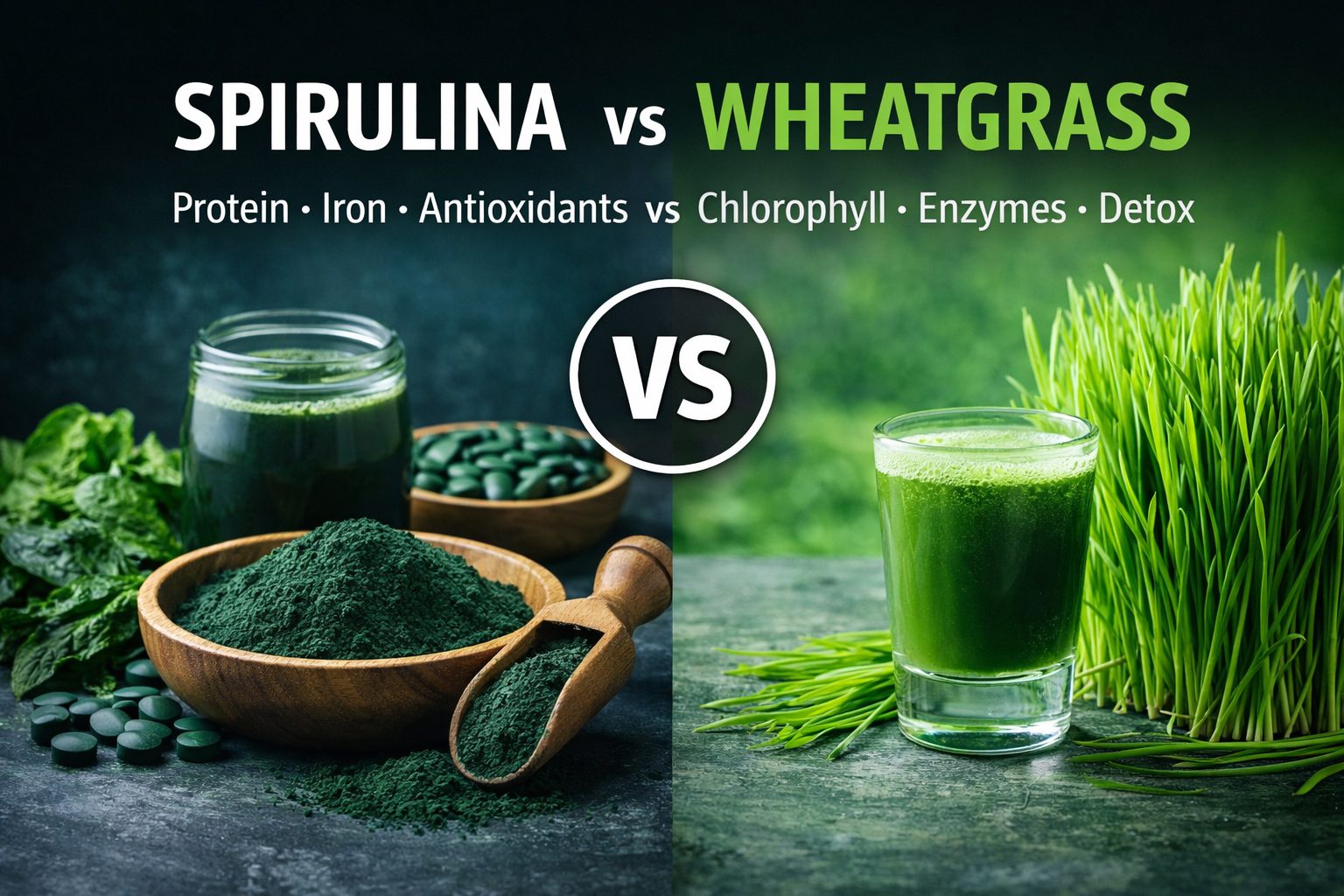
Spirulina vs wheatgrass — two of the most popular green superfood supplements on the market. Both are nutrient-dense, come in powder form, and are associated with a wide range of health benefits. But they are fundamentally different foods with different nutritional profiles, strengths, and best use cases. If you’re choosing between them — or wondering if you need both — this complete spirulina vs wheatgrass comparison will help you decide.
What Is Spirulina?
Spirulina is a blue-green algae (cyanobacterium) that has been consumed for centuries, first by Aztec civilizations harvesting it from Lake Texcoco. Learn about the fascinating history and origin of spirulina. Modern freeze-dried spirulina retains up to 69–74% complete protein alongside phycocyanin, iron, B vitamins, and a full spectrum of antioxidants.
Royal Spirulina is grown in the USA using a controlled freeze-drying process — not spray-dried or imported — independently rated #1 by Goodnature.com. View our third-party lab results and certificate of analysis.
What Is Wheatgrass?
Wheatgrass is the young grass of the wheat plant (Triticum aestivum), harvested before the grain develops. It’s rich in chlorophyll, vitamin K, vitamin C, and digestive enzymes. Importantly, it contains gluten precursors in the seed — though the grass itself is typically considered gluten-free when harvested at the right stage and processed cleanly.
Spirulina vs Wheatgrass: Head-to-Head Nutritional Comparison
| Nutrient (per 100g) | Spirulina | Wheatgrass | Winner |
|---|---|---|---|
| Protein | 57–70g | 2.2g | Spirulina |
| Iron | 28mg | 0.6mg | Spirulina |
| Vitamin A | 68,000 IU | 1,458 IU | Spirulina |
| Magnesium | 195mg | 22mg | Spirulina |
| Potassium | 1,363mg | 218mg | Spirulina |
| B Vitamins (B1, B2, B3) | High | Low | Spirulina |
| Vitamin K | 25.5mcg | 176.9mcg | Wheatgrass |
| Vitamin C | 10.1mg | 17mg | Wheatgrass |
| Chlorophyll | Low | Very High | Wheatgrass |
| Phycocyanin | High (unique) | None | Spirulina |
| Complete Protein | Yes (all 9 EAAs) | No | Spirulina |
For the complete breakdown of spirulina’s vitamins, phytopigments, and minerals, see our detailed analysis.
Where Spirulina Clearly Wins vs Wheatgrass
Protein dominance: Spirulina contains 60–70g of complete protein per 100g — all 9 essential amino acids, with a biological value rivaling meat. Wheatgrass provides only ~2g of incomplete protein per 100g. For anyone using a superfood to support muscle, recovery, or satiety, spirulina wins decisively. See our full comparison: Spirulina Protein vs Meat.
Iron content: Spirulina delivers ~28mg iron per 100g vs wheatgrass’s 0.6mg — nearly 47x more. For women, vegetarians, or anyone managing iron deficiency, this is a significant advantage. More on this: Spirulina for Iron Deficiency and Anemia.
Phycocyanin — a unique advantage: Spirulina contains phycocyanin, a blue antioxidant pigment with no equivalent in wheatgrass or any other plant food. Phycocyanin has documented anti-inflammatory, neuroprotective, and anti-cancer properties. Wheatgrass simply has no comparable compound.
GLA fatty acids: Spirulina provides gamma-linolenic acid (GLA), an anti-inflammatory omega-6 fatty acid not found in wheatgrass. Learn more about GLA research.
Antioxidant density: Spirulina’s ORAC (antioxidant capacity) score far exceeds wheatgrass, driven by phycocyanin, beta-carotene, and tocopherols. This makes spirulina a top-ranked superfood.
Where Wheatgrass Has an Edge in the Spirulina vs Wheatgrass Debate
Chlorophyll: Wheatgrass is one of the richest sources of chlorophyll available — the green pigment that may support blood detoxification, digestive health, and wound healing. While spirulina does contain chlorophyll, wheatgrass delivers significantly more.
Vitamin K: Wheatgrass provides nearly 7x more vitamin K than spirulina — important for blood clotting and bone density.
Digestive enzymes: Fresh wheatgrass juice contains live enzymes that support digestion. This benefit is largely lost in dried wheatgrass powders, however.
Alkalizing effect: Wheatgrass has a strong alkalizing effect on the body, which some proponents believe helps balance pH and supports detoxification.
Spirulina vs Wheatgrass: Which Is Better for Your Goals?
Choose spirulina if you want: Maximum protein, iron, antioxidants, immune support, athletic performance, brain health, or a complete whole-food supplement with the most comprehensive nutrient profile. Spirulina also shows promise for blood sugar management and cancer research.
Choose wheatgrass if you want: Chlorophyll support, vitamin K, digestive enzyme activity (from fresh juice), or a strong alkalizing effect.
Use both if: You want comprehensive green nutrition — spirulina as your daily protein-antioxidant foundation, and wheatgrass as a chlorophyll and digestive complement. Spirulina also works as a prebiotic to support gut health.
Processing Quality Matters in Spirulina vs Wheatgrass
With both supplements, processing method is critical. Spray-dried spirulina loses significant phycocyanin, protein quality, and heat-sensitive vitamins. Freeze-dried spirulina retains the full nutrient profile. Similarly, fresh wheatgrass juice is nutritionally superior to dried wheatgrass powders.
For spirulina, freeze-dried is the gold standard — and it’s what Royal Spirulina exclusively uses. Be aware of potential detox symptoms when starting either supplement. Learn how to use spirulina powder for best results.
Frequently Asked Questions About Spirulina vs Wheatgrass
Is spirulina better than wheatgrass?
For most health goals — protein, iron, antioxidants, immune support, and brain health — spirulina is nutritionally superior. Wheatgrass has advantages in chlorophyll and vitamin K. The best choice depends on your specific health goals.
Can I take spirulina and wheatgrass together?
Yes, they complement each other well. Spirulina provides protein, iron, phycocyanin, and B vitamins, while wheatgrass adds chlorophyll, vitamin K, and alkalizing compounds. Many health enthusiasts use both in morning smoothies. See our spirulina recipes for ideas.
Which is better for weight loss, spirulina or wheatgrass?
Spirulina has stronger evidence for weight management. Its high protein content supports satiety and muscle maintenance, and studies have shown reductions in BMI and waist circumference with spirulina supplementation. Wheatgrass is very low calorie but lacks appetite-regulating protein.
Is spirulina or wheatgrass better for detox?
Both support detoxification through different mechanisms. Spirulina binds heavy metals (mercury, lead, arsenic) and supports liver function — see spirulina heavy metal detox. Wheatgrass’s chlorophyll may aid blood and digestive detox. For heavy metal chelation specifically, spirulina has the stronger clinical evidence.
Can I give spirulina or wheatgrass to my pets?
Spirulina is safe and beneficial for pets. Learn about spirulina for dogs, cats, and horses with dosage guidelines.
How does spirulina compare to other plant proteins?
Spirulina outperforms most plant proteins. See our soy vs spirulina comparison and spirulina protein vs meat analysis.
Which spirulina is highest quality?
Freeze-dried, USA-grown spirulina delivers the highest nutrient density. Royal Spirulina is freeze-dried, independently rated #1 by Goodnature.com, with lab-verified 69–74% protein content.
More Spirulina Resources
- Spirulina Health Benefits: 8 Science-Backed Reasons
- Protein in Spirulina: Complete Analysis
- Spirulina and Diabetes Research
- Spirulina and Cancer Research
- Type 2 Diabetes Clinical Studies
- Spirulina and Nursing Mothers
- Nutritional Value of Spirulina
- Spirulina and Tryptophan for Mental Wellness
- 7 Ways Animal Protein Damages Health
- The Human Microbiome
- Celtic Sea Salt Benefits
The Verdict: Spirulina Is the More Complete Superfood
For sheer nutritional breadth, protein content, iron, antioxidant power, and research-backed health benefits, spirulina wins the spirulina vs wheatgrass comparison. Royal Spirulina is the gold standard — freeze-dried, USA-grown, and rated #1.