Last Updated: March 9, 2026
When shopping for spirulina powder, you’ll see two main types: freeze-dried and spray-dried. The difference between these processing methods isn’t just technical jargon—it fundamentally determines the nutritional value, potency, and effectiveness of the spirulina you’re buying.
Understanding freeze-dried vs spray-dried spirulina could mean the difference between getting a premium superfood packed with living nutrients or settling for a heat-damaged product that’s lost much of its value. If you’re exploring the health benefits of spirulina, processing method matters more than most people realize.
Try Royal Spirulina — USA-Grown & Freeze-Dried
Rated #1 by Goodnature.com. Our premium freeze-dried spirulina preserves maximum nutrients. Use code WELCOME10 for 10% off your first order!
Shop Royal Spirulina Now →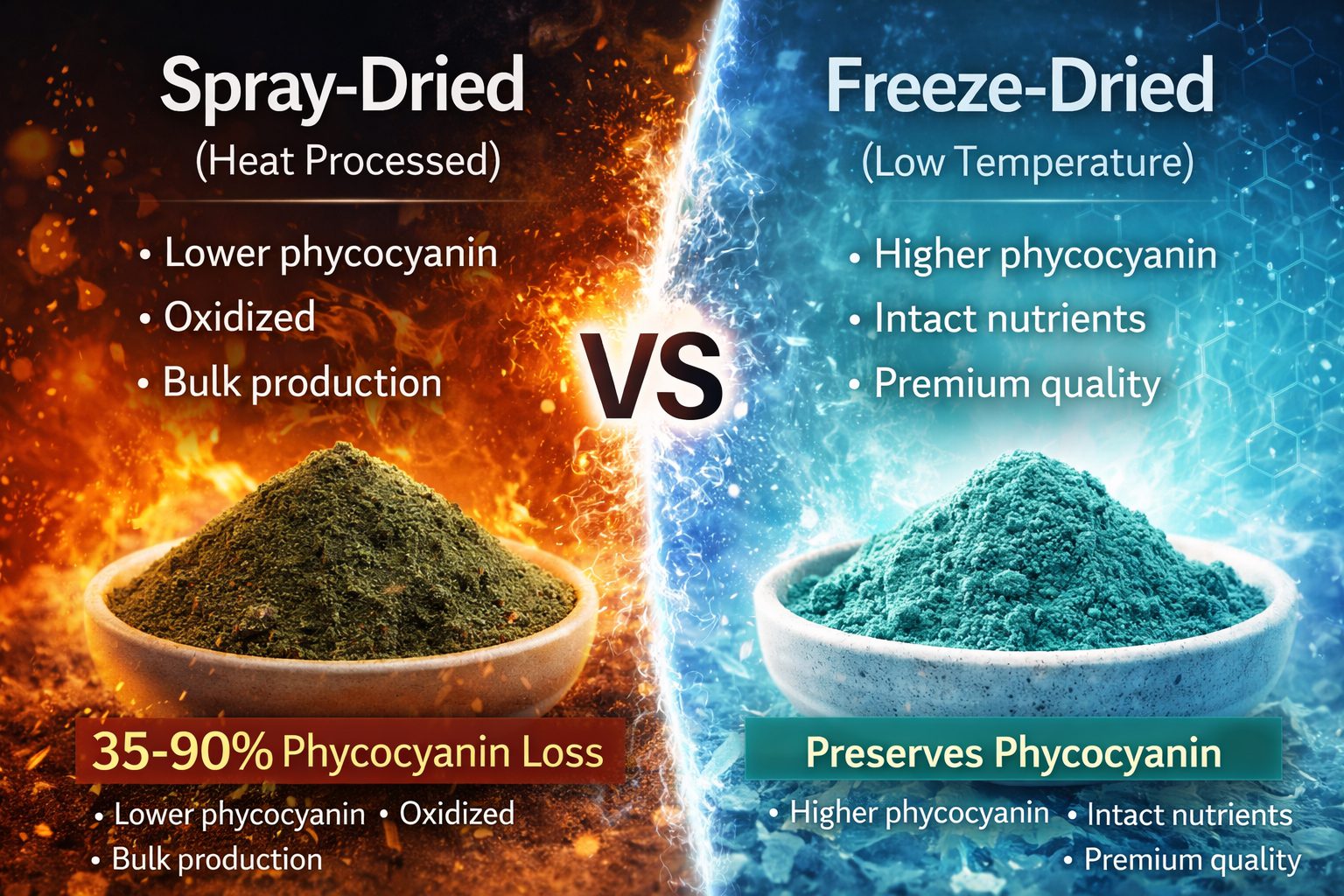
This comprehensive guide breaks down exactly what each processing method does to spirulina, how they compare, and which one is worth your investment.
What is Spray-Dried Spirulina?
Spray-drying is the most common commercial method for turning fresh spirulina into powder. It’s fast, cost-effective, and produces a shelf-stable product—which is why most spirulina brands use this method.
The Spray-Drying Process
Here’s what happens during spray-drying:
- Fresh spirulina is harvested from growing tanks and filtered
- The spirulina is mixed into a liquid slurry
- The slurry is heated to 150-200°F (65-93°C)
- Hot air is blasted through spray chambers to rapidly evaporate moisture
- Dried spirulina powder is collected at the bottom of the chamber
The entire process takes only minutes, making it extremely efficient for mass production.
Advantages of Spray-Dried Spirulina
- Lower cost: Spray-drying equipment is less expensive and faster than freeze-drying
- Longer shelf life: The high heat kills bacteria more completely
- Wider availability: Most spirulina brands use this method
- Easier to produce at scale: Commercial operations can process large volumes quickly
Disadvantages of Spray-Dried Spirulina
The high heat exposure during spray-drying causes significant nutritional degradation:
- Destroys heat-sensitive vitamins: B-complex vitamins break down at high temperatures
- Denatures enzymes: Beneficial enzymes are inactivated by heat
- Reduces phycocyanin content: The valuable blue pigment with anticancer properties degrades significantly
- Damages cellular structure: Living cells are destroyed by heat exposure
- Oxidizes nutrients: High heat increases oxidation of delicate compounds
- Often appears duller in color: The vibrant blue-green becomes more olive or brownish
Research suggests spray-dried spirulina loses 30-40% of its nutritional potency compared to freeze-dried alternatives.
What is Freeze-Dried Spirulina?
Freeze-drying (lyophilization) is a premium processing method that preserves spirulina in a state closest to its living form. It’s more expensive and time-consuming, but the nutritional benefits justify the cost.
The Freeze-Drying Process
Freeze-drying uses a completely different approach:
- Fresh spirulina is harvested and immediately frozen at sub-zero temperatures
- Frozen spirulina is placed in a vacuum chamber
- Pressure is reduced dramatically inside the chamber
- Ice sublimates directly from solid to vapor without passing through liquid phase
- The process occurs at temperatures well below 32°F (0°C)
- Dried spirulina powder retains its cellular structure
The entire process takes 24-48 hours, making it significantly slower than spray-drying but vastly superior for nutrient preservation.
Advantages of Freeze-Dried Spirulina
- Maximum nutrient retention: Preserves heat-sensitive vitamins, enzymes, and phycocyanin
- Living cellular structure: Maintains 35 billion living cells per pound
- Higher bioavailability: Your body can absorb and utilize more nutrients
- Superior phycocyanin levels: The blue antioxidant pigment remains concentrated
- Vibrant color: Deep blue-green color indicates nutrient preservation
- Better taste and texture: Generally milder flavor profile
- No heat damage: Complete amino acid and enzyme profiles remain intact
Disadvantages of Freeze-Dried Spirulina
- Higher cost: The equipment and time required make it more expensive
- Limited availability: Fewer brands offer freeze-dried options
- Longer production time: Can’t produce as quickly as spray-drying
Freeze-Dried vs Spray-Dried Spirulina: Side-by-Side Comparison
| Factor | Freeze-Dried | Spray-Dried |
|---|---|---|
| Processing Temperature | Below 32°F (0°C) | 150-200°F (65-93°C) |
| Nutrient Retention | 95-98% | 60-70% |
| Phycocyanin Content | High (preserved) | Reduced (degraded) |
| Living Cells | 35 billion per pound | Killed by heat |
| Enzyme Activity | Intact | Denatured |
| Color | Vibrant blue-green | Dull olive-green |
| Processing Time | 24-48 hours | Minutes |
| Cost | Higher ($100+/lb) | Lower ($15-30/lb) |
| Bioavailability | Superior | Reduced |
| Common Brands | Royal Spirulina, E3Live | NOW Foods, Nutrex, Vimergy |
The Science Behind Freeze-Dried vs Spray-Dried Spirulina
How Heat Destroys Spirulina’s Nutrients
Temperature is the critical factor. Here’s what happens at different heat levels:
Above 104°F (40°C): Enzyme activity begins to decline
Above 122°F (50°C): Proteins start to denature
Above 140°F (60°C): Significant vitamin degradation occurs
Above 158°F (70°C): Phycocyanin breaks down rapidly
Above 176°F (80°C): Cellular structure is destroyed
Since spray-drying operates at 150-200°F, the spirulina spends critical minutes in the temperature range where maximum nutrient damage occurs.
Why Freeze-Drying Preserves Everything
Freeze-drying works because of a phenomenon called sublimation. When water ice is placed under vacuum at very low temperatures, it transforms directly from solid to vapor without ever becoming liquid.
This means:
- No heat exposure to damage nutrients
- Cellular walls remain intact
- Enzymes stay in their active form
- Phycocyanin pigments are preserved
- The molecular structure of proteins isn’t altered
Think of it as hitting “pause” on fresh spirulina rather than “cooking” it.
Nutrient Retention: The Numbers Don’t Lie
That’s a 30-40% nutrient loss every time you choose spray-dried over freeze-dried spirulina. Over weeks and months of daily supplementation, this gap compounds dramatically.
Visual Differences You Can See
Color Comparison
Freeze-Dried Spirulina: Deep, vibrant blue-green color that looks almost electric. When mixed with water, it creates a rich, intensely colored liquid.
Spray-Dried Spirulina: Duller, more olive-green or brownish-green color. The color is visibly less vibrant, indicating degraded phycocyanin.
The color difference isn’t just aesthetic—it’s a direct indicator of phycocyanin content and overall nutrient preservation.
See the Difference for Yourself
Watch: What to look for when choosing quality spirulina — color, sourcing, purity, and more
Texture Comparison
Freeze-Dried Spirulina: Tends to be slightly fluffier and lighter. Mixes more easily into liquids with less clumping.
Spray-Dried Spirulina: Often denser and more prone to clumping when mixed with liquids.
7 Quality Factors That Separate Premium Spirulina from the Rest
Not all spirulina is created equal, and freeze-drying is just one piece of the quality puzzle. Here are the seven factors that determine whether you’re getting a genuinely premium product or a nutritionally compromised one:
1. Purity and Phycocyanin Content
The single most important quality indicator is phycocyanin content — the blue antioxidant pigment that gives spirulina its distinctive color. Freeze-dried spirulina preserves phycocyanin at levels that spray-dried simply cannot match. Look for products free from contaminants, fillers, or additives. A high phycocyanin content (visible as intense blue) is your strongest signal of quality.
2. Sourcing and Growing Conditions
Where spirulina is grown matters enormously. Clean, uncontaminated water is essential because spirulina absorbs whatever is in its growing environment. The vast majority of commercial spirulina powder is sourced from China, where quality controls can be inconsistent. Royal Spirulina is one of the rare brands that is grown in the USA under strict quality controls — a distinction that makes a real difference.
3. Third-Party Certifications
Always look for certifications from reputable organizations and third-party lab testing for purity. A brand that provides a Certificate of Analysis (COA) is one that stands behind its product. Be skeptical of brands that make quality claims but can’t back them up with independent testing.
4. Color and Smell
Quality spirulina should have a vibrant dark green/blue color and a fresh, seaweed-like smell. Dull olive-green or brownish powder indicates heat damage from spray-drying, oxidation, or poor storage. This visual test alone can tell you a lot about what you’re buying.
5. Packaging and Storage
Premium spirulina should be packaged in a way that prevents exposure to light, air, and moisture — all of which degrade nutrients over time. Look for opaque, airtight containers. Brands that sell spirulina in clear packaging or thin plastic bags are signaling that preservation isn’t their priority.
6. Nutritional Transparency
Check the nutritional content on the label to ensure it has a high protein content and a good balance of vitamins and minerals. Royal Spirulina has been independently tested at 68-74% protein — among the highest in the industry. Brands that don’t disclose specific lab-tested nutritional data likely have lower potency.
7. Brand Reputation
Research the brand’s reputation and customer reviews to gauge their credibility and product quality. Look for independent reviews from third-party sites (not just testimonials on the brand’s own website). When Goodnature.com conducted their independent comparison, they rated Royal Spirulina 10/10 — the highest score of any brand tested.
Does the Price Difference Justify Freeze-Dried Spirulina?
Freeze-dried spirulina typically costs 2-3x more than spray-dried. Is it worth it?
Cost Per Nutrient Analysis
While freeze-dried costs more per pound, the actual cost per nutrient may be similar or better:
Example:
- Spray-dried: $20/lb with 60-70% nutrient retention = $28-33 per pound of active nutrients
- Freeze-dried: $50/lb with 95-98% nutrient retention = $51-53 per pound of active nutrients
You’re paying about 50-60% more for freeze-dried, but getting significantly more bioavailable nutrition per dose.
Think about it this way: If you’re taking spirulina daily for 6 months, would you rather absorb 95% of the nutrients from each dose, or only 60-70%? Over 180 days, that 30-40% daily gap adds up to months of lost nutritional benefit — nutrients you paid for but never received.
When Freeze-Dried Makes Sense
Choose freeze-dried spirulina if you:
- Want maximum nutritional benefit per serving
- Use spirulina for specific health goals (athletic performance, recovery, immune support)
- Value quality over cost
- Take smaller doses but want them to be more effective
- Are sensitive to digestive issues (freeze-dried is often gentler on the gut microbiome)
When Spray-Dried Might Be Acceptable
Spray-dried could work if you:
- Are on a very tight budget
- Want to try spirulina before investing in premium quality
- Use it primarily for color in spirulina recipes rather than nutrition
- Take very large doses (1+ tablespoon daily) where cost adds up significantly
However, even in these cases, the superior nutrition of freeze-dried often justifies the cost difference.
What Independent Testing Shows
When Goodnature.com conducted independent testing of spirulina brands, they found clear quality differences between processing methods:
Freeze-Dried Brands (Royal Spirulina): Rated 10/10 – vibrant color, superior taste, confirmed high phycocyanin through sensory testing
Spray-Dried Brands (Most commercial options): Rated 2-6/10 – duller color, stronger unpleasant taste, less impressive sensory qualities
The review specifically noted: “Their freeze dried spirulina powder is bright and vibrant and very high in nutrients, due to a proprietary process of harvesting the spirulina that leaves the cell walls intact.”
Read the full review: Goodnature Spirulina Comparison
For our own detailed brand comparison, see Best Spirulina Powder 2026: 8 Brands Tested.
How to Identify Quality Processing
Many brands don’t clearly state their processing method. Here’s how to tell:
Signs of Freeze-Dried Spirulina
- Brand explicitly states “freeze-dried” or “lyophilized”
- Deep, vibrant blue-green color
- Higher price point ($100+/lb)
- Mentions living cells or active enzymes
- Emphasizes cold processing
- Often sold in smaller quantities (50g-200g)
Signs of Spray-Dried Spirulina
- No processing method mentioned (default assumption: spray-dried)
- Lower price point ($15-30/lb)
- Dull or olive-green color
- Available in bulk quantities (1 lb+)
- Generic quality claims without specifics
Important: If a brand doesn’t specify freeze-dried, assume it’s spray-dried. Premium freeze-dried brands always advertise this as a key differentiator. Always look for a Certificate of Analysis (COA) to verify quality claims.
Storage and Shelf Life Differences
Freeze-Dried Spirulina
Shelf Life: 2-3 years when stored properly
Storage: Cool, dark, dry place in airtight container
Nutrient Stability: Maintains potency longer due to less oxidation during processing
Spray-Dried Spirulina
Shelf Life: 1-2 years when stored properly
Storage: Cool, dark, dry place in airtight container
Nutrient Stability: Already degraded during processing, continues gradual decline
Environmental and Sustainability Considerations
Freeze-drying requires more energy than spray-drying due to longer processing times and vacuum equipment. However:
- Higher nutrient density means less product needed per dose
- Better preservation reduces waste from spoilage
- Premium pricing supports smaller, often more sustainable operations
- USA-grown freeze-dried options reduce transportation emissions
Spirulina itself is one of the most sustainable protein sources on earth, with a history stretching back thousands of years.
The Bottom Line: Which Should You Choose?
For most people seeking genuine spirulina health benefits, freeze-dried is unquestionably superior. The 40% higher nutrient retention, preserved enzymes, living cellular structure, and higher phycocyanin content make it worth the premium price.
Spray-dried spirulina isn’t worthless, but it’s a significantly compromised product. You’re essentially paying for heat-damaged spirulina that’s lost much of what makes spirulina valuable in the first place.
If you’re new to spirulina, learn how to use spirulina powder to get the most from your investment. Some people experience mild detox symptoms when starting — this is normal and typically passes within a few days.
Our Recommendation: If you’re going to invest in spirulina supplementation, invest in freeze-dried. The price difference per dose is minimal when you account for the superior nutrition, and you’ll actually experience the benefits that spirulina is known for.
Try Premium Freeze-Dried Spirulina
Royal Spirulina offers pharmaceutical-grade freeze-dried spirulina powder with:
- 69-74% complete protein
- 35 billion living cells per pound
- High phycocyanin content
- USA-grown under strict quality controls
- Third-party lab tested for purity
- Rated 10/10 by independent reviewers
Get Premium Freeze-Dried Spirulina
More Spirulina Resources
Explore our other guides:
- Best Spirulina Powder 2026: 8 Brands Tested & Compared
- Spirulina Health Benefits: 8 Science-Backed Reasons
- How to Use Spirulina Powder: 10 Easy Methods
- 7 Easy Spirulina Recipes Under 15 Minutes
- Spirulina for Iron Deficiency and Anemia
- Spirulina for Heavy Metal Detox
- Spirulina and Cancer Research
- Spirulina GLA Benefits
- Spirulina for Liver Health: NAFLD, Fatty Liver & Detox
- Sea Moss vs Spirulina: Which Superfood Is Better? — Comprehensive comparison of nutrition, health benefits, safety, and scientific evidence between these two popular supplements
Try Royal Spirulina — USA-Grown & Freeze-Dried
Rated #1 by Goodnature.com. Our premium freeze-dried spirulina preserves maximum nutrients. Use code WELCOME10 for 10% off your first order!
Shop Royal Spirulina Now →