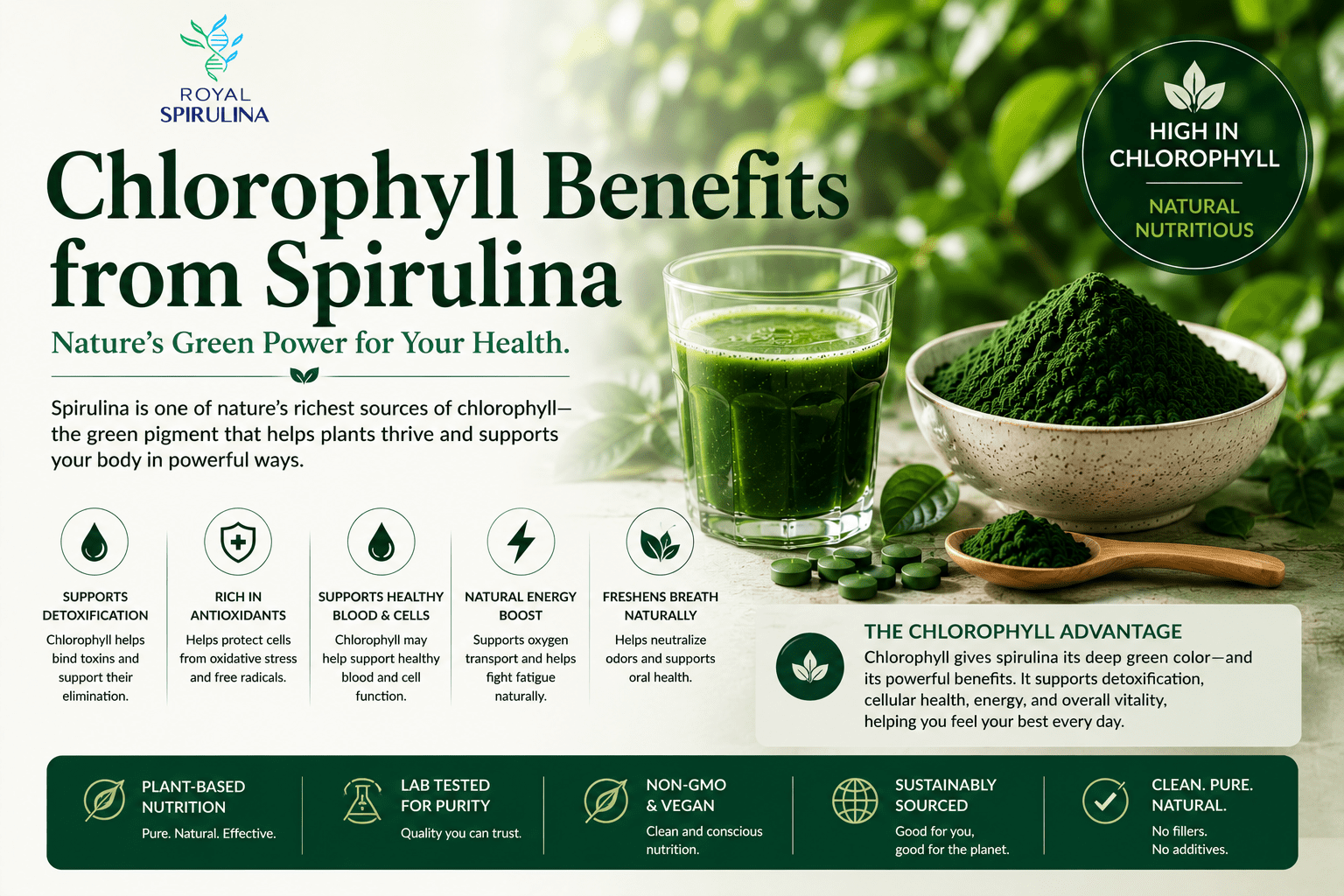
Chlorophyll Benefits: Why Spirulina Is One of Nature’s Richest Chlorophyll Sources
Every green plant on Earth owes its color to chlorophyll — the pigment that captures sunlight and converts it into life-sustaining energy. But chlorophyll does far more than power photosynthesis. A growing body of peer-reviewed research reveals that chlorophyll and its derivatives possess potent antioxidant, anti-cancer, blood-building, and detoxification properties that can profoundly benefit human health.
Among all whole-food sources, spirulina stands out as one of the most concentrated and bioavailable sources of natural chlorophyll, delivering roughly 1,000–1,500 mg of chlorophyll per 100 grams of dried biomass. Unlike leafy greens that lock their nutrients behind tough cellulose cell walls, spirulina’s soft cell membrane allows near-complete digestion and absorption — meaning more of that chlorophyll actually reaches your bloodstream. When combined with spirulina’s exclusive blue pigment phycocyanin and its exceptional protein density of 55–70% by dry weight, the result is a superfood whose chlorophyll benefits are both concentrated and uniquely synergistic.
In this comprehensive guide, we examine what the science says about chlorophyll’s health benefits, compare chlorophyll content across popular green foods, and explain why freeze-dried spirulina — like Royal Spirulina — preserves more of this vital pigment than conventional processing methods.
Chlorophyll Content in Common Foods
Not all green foods are created equal when it comes to chlorophyll concentration. The table below compares approximate chlorophyll content across popular dietary sources. Note that values for fresh foods are given per 100 g of raw, uncooked weight, while dried and powdered forms reflect the concentrated product.
| Food Source | Form | Chlorophyll (mg per 100 g) | Notes |
|---|---|---|---|
| Chlorella | Dried powder | 2,000–3,000 | Highest chlorophyll, but tough cell wall limits digestibility |
| Spirulina | Dried powder | 1,000–1,500 | Highly digestible; no cellulose wall; contains phycocyanin |
| Wheatgrass | Dried powder | ~540 | Popular juice ingredient; lower protein content |
| Spinach | Dried / Fresh | ~430 dried / ~24 fresh | Good source when dried; fresh leaves are mostly water |
| Parsley | Fresh | ~212 | Concentrated for a fresh herb; used in small quantities |
| Alfalfa | Dried | ~152 | Traditionally used in chlorophyll supplements |
| Matcha | Powder | ~140 | Shade-grown tea; contains caffeine |
| Kale | Fresh | ~50 | Popular superfood; requires cooking for best absorption |
| Broccoli | Fresh | ~13 | Low chlorophyll per weight; better known for sulforaphane |
While chlorella edges out spirulina in raw chlorophyll concentration, this comparison can be misleading. Chlorella’s rigid cellulose cell wall must be mechanically cracked before nutrients become accessible, and even then, digestibility remains significantly lower than spirulina’s. Spirulina also delivers a unique advantage that no other chlorophyll source can match: the presence of phycocyanin, a blue pigment found exclusively in cyanobacteria, which works synergistically with chlorophyll to amplify antioxidant and anti-inflammatory effects.
What Is Chlorophyll?
Chlorophyll is the green pigment responsible for absorbing light energy during photosynthesis — the process by which plants, algae, and cyanobacteria convert carbon dioxide and water into glucose and oxygen. It is found in the chloroplasts of plant cells and exists in several forms, with chlorophyll a and chlorophyll b being the most common in the human diet. Spirulina, classified as a cyanobacterium, primarily contains chlorophyll a along with phycobiliproteins as its major pigment components.
What makes chlorophyll fascinating from a nutritional standpoint is its striking structural similarity to hemoglobin, the oxygen-carrying molecule in human red blood cells. Both molecules share an identical porphyrin ring structure — a flat arrangement of carbon and nitrogen atoms — but differ in their central metal ion. Hemoglobin contains iron at its core, while chlorophyll contains magnesium. This molecular kinship has led researchers to investigate whether dietary chlorophyll can support blood formation and oxygen transport in the body, and the evidence is increasingly compelling.
In plants, chlorophyll is embedded within lipid membranes and bound to proteins, which can limit its extraction during digestion. However, in spirulina, the absence of a cellulose cell wall means chlorophyll is released more efficiently into the digestive tract, giving spirulina a significant bioavailability advantage over terrestrial plant sources.
Chlorophyll Benefits for Health
Antioxidant and Anti-Cancer Properties
One of the most extensively studied benefits of chlorophyll is its capacity to combat oxidative stress and inhibit cancer development. A comprehensive 2023 review published in Molecules confirmed that chlorophylls possess antioxidant, antimutagenic, antigenotoxic, anti-cancer, and anti-obesogenic activities, positioning them as multifunctional protective compounds with broad therapeutic potential [1].
The anti-cancer mechanisms of chlorophyll appear to operate through several pathways. A separate 2023 study demonstrated that removal of chlorophyll pigments from plant extracts remarkably reduced their cytotoxic effect against the HL-60 leukemic cell line, establishing that chlorophylls are “of paramount importance for tumor-killing ability” in plant-based compounds [2]. This finding is particularly significant because it isolates chlorophyll as a key active component rather than a bystander pigment.
Animal studies have added further weight to these findings. Research published in Cancer Letters showed that chlorophyllin — a water-soluble derivative of chlorophyll — produced a dose-related inhibition of mutagenesis, markedly attenuating DNA adduct formation and achieving a significant reduction in both incidence and multiplicity of skin tumors in mice [11]. In a transplacental carcinogenesis model, chlorophyllin supplementation resulted in significantly less lymphoma-dependent mortality and a 50% reduction in lung tumor multiplicity, suggesting that chlorophyll’s protective effects may even extend to the developing fetus [4].
Blood Building and Anemia Support
The structural resemblance between chlorophyll and hemoglobin is more than a biochemical curiosity — it has measurable clinical implications. A 2023 study on chlorophyll administration in male rats demonstrated significant increases in white blood cells (WBCs), red blood cells (RBCs), hemoglobin, hematocrit, mean corpuscular hemoglobin concentration (MCHC), and platelet counts at both 14 and 28 days of treatment [5]. These improvements across virtually every major blood parameter suggest that chlorophyll plays a broad supportive role in hematopoiesis.
Clinical evidence in humans is equally encouraging. A Phase IV clinical trial evaluating Shengxuening (SXN), a sodium iron chlorophyllin tablet, achieved an 84.8% effective rate for treating iron deficiency anemia, with significant increases in hemoglobin levels observed in both adults and children. Notably, adverse events occurred in only 4.07% of participants, confirming an excellent safety profile [6].
Research on sodium copper chlorophyllin further demonstrated its ability to increase platelet counts and hemoglobin levels in aplastic anemia models while correcting imbalanced CD4/CD8 ratios and increasing regulatory T-cells — suggesting both blood-building and immune-modulating effects [7].
Perhaps the most compelling case comes from a 2024 case report in which spirulina and chlorophyll supplementation helped a male infant with hereditary spherocytosis sustain normal hemoglobin levels for more than 7 months without requiring packed red blood cell (PRBC) transfusions [8]. While a single case report does not constitute definitive proof, it provides a powerful illustration of chlorophyll’s blood-supporting potential in even severe hematological conditions.
Detoxification and Aflatoxin Binding
One of chlorophyll’s most well-documented mechanisms of action is its ability to physically bind and neutralize toxic compounds, particularly aflatoxins — potent carcinogens produced by mold that contaminate grains, peanuts, and other staple foods worldwide. A landmark study published in Carcinogenesis found that natural chlorophyll reduced hepatic DNA adduction by 55%, aflatoxin B1-albumin adducts by 71%, and major urinary adducts by 92% in a multi-organ carcinogenesis model. The mechanism was elegantly simple: chlorophyll inhibited aflatoxin B1 uptake by forming a non-covalent molecular complex with the toxin, effectively trapping it before it could cause damage [3].
A comprehensive 2012 review in Toxicology confirmed these findings and extended them to human populations, noting that chlorophyllin tightly binds to and reduces the bioavailability of aflatoxins and significantly reduced genotoxic aflatoxin B biomarkers in human clinical trials. The authors concluded that chlorophyll supplementation “holds promise as a practical means of reducing AFB-induced liver cancer,” particularly in developing countries where aflatoxin exposure is endemic [10].
This detoxification capacity makes chlorophyll-rich spirulina particularly valuable for supporting liver health and protecting against environmental toxin exposure.
Gut Health and Microbiome Support
Emerging research has revealed a fascinating connection between chlorophyll and the gut microbiome. A 2018 study published in Frontiers in Physiology demonstrated that chlorophyllin modulates gut microbiota composition and inhibits intestinal inflammation to ameliorate hepatic fibrosis. Specifically, chlorophyllin supplementation led to a down-regulation of Firmicutes and up-regulation of Bacteroidetes — a shift associated with improved metabolic health and reduced inflammation. The anti-inflammatory mechanism involved inhibition of the NF-κB pathway via suppression of IKK phosphorylation, a key signaling cascade in chronic inflammatory disease [9].
This gut-liver axis connection is particularly relevant because it suggests chlorophyll’s benefits extend beyond direct antioxidant activity. By favorably reshaping the microbial ecosystem in the intestine, chlorophyll may indirectly protect distant organs from inflammatory damage — a finding with broad implications for metabolic health, autoimmune conditions, and chronic disease prevention.
Skin Health and Wound Healing
Chlorophyll and its derivatives have a long history of use in dermatology. Chlorophyllin has been used topically to promote wound healing, reduce inflammation, and control body odor since the mid-20th century. More recent research suggests that chlorophyll’s antioxidant properties help protect skin cells from UV-induced oxidative damage, while its anti-inflammatory effects may benefit conditions such as acne and rosacea.
The anti-obesogenic properties documented in the 2023 Molecules review [1] also have indirect implications for skin health, as metabolic improvements in weight management are closely linked to reductions in chronic low-grade inflammation that can manifest as skin conditions. Regular consumption of chlorophyll-rich foods like spirulina supports both internal metabolic balance and external appearance.
Chlorophyll vs. Chlorophyllin: Understanding the Difference
When researching chlorophyll supplements, you will frequently encounter two terms: chlorophyll and chlorophyllin. While related, they are distinct compounds with different properties. Understanding the difference is important for making informed supplementation decisions.
| Property | Natural Chlorophyll | Chlorophyllin (Semi-Synthetic) |
|---|---|---|
| Chemical Nature | Fat-soluble porphyrin with magnesium center and phytol tail | Water-soluble derivative; magnesium often replaced with copper; phytol tail removed |
| Source | Whole foods: spirulina, chlorella, leafy greens, algae | Manufactured from natural chlorophyll via saponification with copper salts |
| Solubility | Fat-soluble; requires dietary fat for optimal absorption | Water-soluble; dissolves readily in water and digestive fluids |
| Bioavailability | Moderate; enhanced by fat co-ingestion and cell wall disruption | Higher in aqueous environments; more readily absorbed in the gut |
| Stability | Sensitive to heat, light, and pH changes; degrades during cooking and processing | More stable; copper center resists degradation better than magnesium |
| Common Forms | Whole-food powders, freeze-dried spirulina, fresh juices | Liquid chlorophyll drops, capsules, tablets (sodium copper chlorophyllin) |
| Key Research Uses | Whole-food nutrition, blood building, dietary antioxidant intake | Aflatoxin binding, anti-cancer studies, anemia treatment (SXN tablets) |
| Additional Compounds | Comes with co-factors: carotenoids, phycocyanin (in spirulina), vitamins, minerals | Isolated compound; lacks the synergistic matrix of whole foods |
Most “liquid chlorophyll” products sold commercially are actually sodium copper chlorophyllin, not natural chlorophyll. While chlorophyllin has demonstrated impressive benefits in clinical research — including the Phase IV trial showing an 84.8% effective rate for iron deficiency anemia [6] and potent aflatoxin-binding capacity [10] — it is a semi-synthetic derivative that lacks the full spectrum of co-nutrients found in whole-food chlorophyll sources.
Consuming chlorophyll from whole-food sources like spirulina offers the advantage of the complete nutrient matrix: natural chlorophyll alongside carotenoids, phycocyanin, B-vitamins, iron, and high-quality protein. This synergistic combination is difficult to replicate with isolated supplements and represents one of the strongest arguments for choosing whole spirulina over chlorophyllin drops or tablets.
Why Spirulina Is Among the Richest Chlorophyll Sources
Spirulina’s status as one of nature’s premier chlorophyll sources stems from three converging advantages: extraordinary concentration, superior digestibility, and unique synergistic compounds.
At 1,000–1,500 mg of chlorophyll per 100 grams, spirulina delivers a chlorophyll payload that dwarfs virtually every common food in the human diet. A typical daily serving of 3–10 grams of spirulina — the safety dosage range confirmed by peer-reviewed literature [13] — provides approximately 30–150 mg of chlorophyll. To obtain the same amount from fresh spinach, you would need to consume roughly 125–625 grams — between a quarter pound and well over a pound of raw leaves daily.
But concentration alone does not tell the full story. Spirulina is a cyanobacterium, not a plant, and its cell structure reflects this distinction. Unlike chlorella and terrestrial green vegetables, spirulina lacks a cellulose cell wall. Its soft mucopolysaccharide membrane is easily broken down by human digestive enzymes, yielding a digestibility rate exceeding 85%. This means that the chlorophyll in spirulina is not merely present — it is genuinely available to your body.
Spirulina also contains a unique combination of pigments found in no other single food source. In addition to chlorophyll a, spirulina provides phycocyanin (the blue pigment responsible for its characteristic blue-green color), carotenoids including beta-carotene and zeaxanthin, and a complete protein profile comprising 55–70% protein by dry weight [12]. The interaction between these compounds creates synergistic effects — for example, phycocyanin and chlorophyll together demonstrate greater antioxidant capacity than either pigment alone. You can learn more about this synergy in our guide to phycocyanin benefits.
How Freeze-Drying Preserves Chlorophyll
Chlorophyll is a heat-sensitive molecule. Exposure to high temperatures causes the magnesium atom at its center to be displaced by hydrogen ions — a process called pheophytinization — which converts vibrant green chlorophyll into dull olive-brown pheophytin. This degradation not only changes the color of spirulina but significantly reduces its biological activity. Light exposure and acidic conditions further accelerate chlorophyll breakdown.
This is precisely why processing method matters enormously when choosing a spirulina product. The two primary drying methods used in commercial spirulina production are spray drying and freeze drying, and they produce dramatically different results for chlorophyll preservation.
Spray drying — the method used by most large-scale producers, particularly low-cost Chinese imports — exposes spirulina biomass to temperatures typically ranging from 150°C to 200°C (300–400°F). At these temperatures, chlorophyll degradation is rapid and substantial. The resulting powder often has a noticeably duller green color and reduced pigment activity.
Freeze drying (lyophilization), by contrast, removes moisture through sublimation under vacuum at temperatures well below freezing. Because the spirulina is never exposed to heat, the chlorophyll molecules remain structurally intact — their magnesium centers preserved, their porphyrin rings undamaged. Freeze-dried spirulina retains its deep, vivid green color and the full biological potency of its chlorophyll, phycocyanin, and other heat-sensitive nutrients.
Royal Spirulina is freeze-dried, ensuring that the chlorophyll content you see on the label is the chlorophyll content your body actually receives. This commitment to low-temperature processing represents a fundamental quality difference compared to spray-dried spirulina products, where a significant fraction of the original chlorophyll has already been degraded before the product reaches your hands. For a detailed comparison of these processing methods, see our complete guide to freeze-dried vs. spray-dried spirulina.
Frequently Asked Questions
1. What does chlorophyll do for the body?
Chlorophyll serves multiple biological functions in the human body. Research has demonstrated that it acts as a potent antioxidant that neutralizes free radicals and protects DNA from damage [1]. It supports blood formation by stimulating red blood cell production and increasing hemoglobin levels [5, 6]. Chlorophyll also functions as a natural detoxifier, particularly effective at binding aflatoxins and other environmental toxins before they can cause cellular damage [3, 10]. Additionally, chlorophyll modulates the gut microbiome, promoting beneficial bacterial populations while suppressing inflammation [9].
2. How much chlorophyll is in spirulina compared to other foods?
Spirulina contains approximately 1,000–1,500 mg of chlorophyll per 100 grams of dried powder, making it one of the most concentrated whole-food chlorophyll sources available. This is roughly 40–60 times more than fresh spinach (24 mg/100 g), 20–30 times more than fresh kale (50 mg/100 g), and 7–10 times more than matcha powder (140 mg/100 g). While chlorella contains slightly more chlorophyll per gram (2,000–3,000 mg/100 g), spirulina’s superior digestibility and unique phycocyanin content make it the more practical and versatile choice for most people.
3. Can chlorophyll help with anemia?
Yes, clinical evidence supports chlorophyll’s role in managing anemia. A Phase IV clinical trial of sodium iron chlorophyllin tablets achieved an 84.8% effective rate for iron deficiency anemia, with significant hemoglobin increases in both adults and children [6]. Research has also shown that sodium copper chlorophyllin can increase platelet counts and hemoglobin in aplastic anemia models [7]. A 2024 case report documented a male infant with hereditary spherocytosis who maintained normal hemoglobin levels for over 7 months on spirulina and chlorophyll supplementation without requiring blood transfusions [8]. While these results are promising, individuals with anemia should work with their healthcare provider to develop a comprehensive treatment plan.
4. Is liquid chlorophyll the same as chlorophyll in spirulina?
No. Most commercial “liquid chlorophyll” products contain sodium copper chlorophyllin, a semi-synthetic, water-soluble derivative in which the natural magnesium center has been replaced with copper and the phytol tail has been removed. While chlorophyllin has demonstrated benefits in clinical research, it is chemically distinct from the natural chlorophyll a found in spirulina. Spirulina delivers chlorophyll within its complete nutrient matrix — alongside phycocyanin, carotenoids, proteins, and minerals — providing synergistic benefits that isolated chlorophyllin supplements cannot replicate.
5. Does chlorophyll really detoxify the body?
The detoxification claims for chlorophyll are among the most well-supported by scientific evidence — particularly regarding aflatoxin binding. Research has shown that natural chlorophyll forms non-covalent molecular complexes with aflatoxin B1, reducing hepatic DNA damage by 55%, albumin adducts by 71%, and urinary biomarkers by 92% [3]. A comprehensive review confirmed that chlorophyllin significantly reduced genotoxic aflatoxin biomarkers in human clinical trials and holds promise as a practical means of preventing aflatoxin-induced liver cancer [10]. These detoxification effects are specific and well-documented, distinct from vague “cleansing” claims that lack scientific support.
6. How much spirulina should I take to get enough chlorophyll?
A daily serving of 3–10 grams of spirulina — the established safe dosage range confirmed by peer-reviewed research [13] — provides approximately 30–150 mg of natural chlorophyll. This is a substantial amount, comparable to eating several large servings of leafy green vegetables. For most health goals, 5 grams (one teaspoon of powder or 10 standard tablets) daily is a practical starting point that delivers meaningful chlorophyll along with spirulina’s full complement of nutrients. For personalized dosing guidance, consult our spirulina dosage guide.
7. Why is freeze-dried spirulina better for chlorophyll content?
Chlorophyll is highly sensitive to heat. When spirulina is spray-dried at temperatures of 150–200°C, the magnesium atom at the center of the chlorophyll molecule is displaced through a process called pheophytinization, converting active chlorophyll into inactive pheophytin. Freeze drying removes moisture at sub-zero temperatures under vacuum, preserving the chlorophyll molecule in its complete, biologically active form. This is why freeze-dried spirulina — such as Royal Spirulina — retains a deeper green color and higher chlorophyll potency than spray-dried alternatives, particularly the low-cost Chinese imports that dominate the global market.
8. Can I take chlorophyll and spirulina together?
Since spirulina is already one of the richest natural sources of chlorophyll, taking additional chlorophyll supplements alongside spirulina is generally unnecessary for most people. The 30–150 mg of natural chlorophyll in a standard spirulina serving, combined with phycocyanin, carotenoids, and complete protein, provides a comprehensive pigment and nutrient profile. However, there is no known safety concern with combining the two. Some individuals take both spirulina and chlorella, which provides an even higher chlorophyll intake along with chlorella’s growth factor — see our guide on taking spirulina and chlorella together for more information.
Scientific References
- Martins T, Barros AN, Rosa E, Antunes L. “Enhancing Health Benefits through Chlorophylls and Chlorophyll-Rich Agro-Food: A Comprehensive Review.” Molecules. 2023;28(14):5344. PMID: 37513218; DOI: 10.3390/molecules28145344
- Chrobak E, et al. “Removal of chlorophyll pigments remarkably reduced the cytotoxic effect of plant extracts against the HL-60 leukemic cell line.” Molecules. 2023;28(6):2779. PMID: 36985751; DOI: 10.3390/molecules28062779
- Simonich MT, et al. “Natural chlorophyll inhibits aflatoxin B1-induced multi-organ carcinogenesis in the rat.” Carcinogenesis. 2007;28(6):1294-1302. PMID: 17290047; DOI: 10.1093/carcin/bgm027
- Castro DJ, et al. “Chlorophyllin provides potent chemoprotection in a transplacental carcinogenesis model.” Carcinogenesis. 2009;30(2):315-320. PMID: 19073876; DOI: 10.1093/carcin/bgn280
- Al-Groom RM, Al-Kubaisy HMAM. “Improvement of Blood Parameters of Male Rats Exposed to Different Injection Doses of Liquid Chlorophyll.” Cureus. 2023;15(3):e36044. PMID: 37056524; DOI: 10.7759/cureus.36044
- Zhang Y, et al. “Phase IV clinical trial of Shengxuening (SXN), a sodium iron chlorophyllin tablet, for iron deficiency anemia.” Evidence-Based Complementary and Alternative Medicine. 2019;2019:8796234. PMID: 30941201; DOI: 10.1155/2019/8796234
- Chen Y, et al. “Sodium copper chlorophyllin increases platelet count and hemoglobin in aplastic anemia rats and corrects immune imbalance.” Evidence-Based Complementary and Alternative Medicine. 2022;2022:6792866. PMID: 35434141; DOI: 10.1155/2022/6792866
- Case report: Spirulina and chlorophyll supplementation in hereditary spherocytosis. 2024. PMID: 39316539
- Zheng H, et al. “Chlorophyllin Modulates Gut Microbiota and Inhibits Intestinal Inflammation to Ameliorate Hepatic Fibrosis.” Frontiers in Physiology. 2018;9:1671. PMID: 30564133; DOI: 10.3389/fphys.2018.01671
- Dashwood RH. “Chlorophyllin — a review of the evidence for its chemopreventive potential.” Toxicology. 2012;294(2-3):53-57. PMID: 22640941; DOI: 10.1016/j.tox.2012.05.016
- Hashem HA, et al. “Chlorophyllin dose-related inhibition of mutagenesis and carcinogenesis.” Cancer Letters. 1995;95(1-2):177-181. PMID: 7621442; DOI: 10.1016/0304-3835(95)03822-e
- Trotta T, et al. “Spirulina: composition, pigments, protein content, and biological activities.” Journal of Basic Microbiology. 2023;63(5):525-547. PMID: 36720046; DOI: 10.1002/jobm.202200704
- Sorrenti V, et al. “Spirulina: safety, pigment composition, and recommended dosage.” Applied Food Research. 2022;2(2):100185. PMID: 35916491; DOI: 10.1080/27697061.2022.2103852
Related Reading
- The Complete Guide to Spirulina Benefits
- Spirulina Benefits for Women
- Spirulina and Chlorella Together: Benefits and How to Combine Them
- Spirulina vs. Chlorella: A Detailed Comparison
- Blue Spirulina Benefits: The Science of Phycocyanin
- Spirulina for Liver Health: What the Research Shows
- What Happens When You Take Spirulina Every Day
- Spirulina for Athletes and Workout Recovery
- Freeze-Dried vs. Spray-Dried Spirulina: The Complete Guide
- Spirulina Dosage Guide: How Much Should You Take?
- Spirulina Side Effects: What to Know Before You Start
- Spirulina Powder vs. Tablets vs. Capsules: Which Form Is Best?