Disclaimer: This article is for informational purposes only and is not medical advice. Always consult your healthcare provider before starting any supplement.
Table of Contents
- What Is Blue Spirulina?
- The Science of Phycocyanin
- Antioxidant Power: How Phycocyanin Protects Your Cells
- Anti-Inflammatory Effects: A Natural COX-2 Inhibitor
- Immune System Support
- Liver and Kidney Protection
- Brain and Nervous System Support
- Phycocyanin + Trehalose: The Enhanced Neuroprotective Formula
- Exercise Performance and Fat Burning
- Blood Sugar and the GLP-1 Connection
- Blue Spirulina vs. Green Spirulina
- Why Processing Method Matters
- How to Use Blue Spirulina
- Frequently Asked Questions
- The Bottom Line
- References
What Is Blue Spirulina?
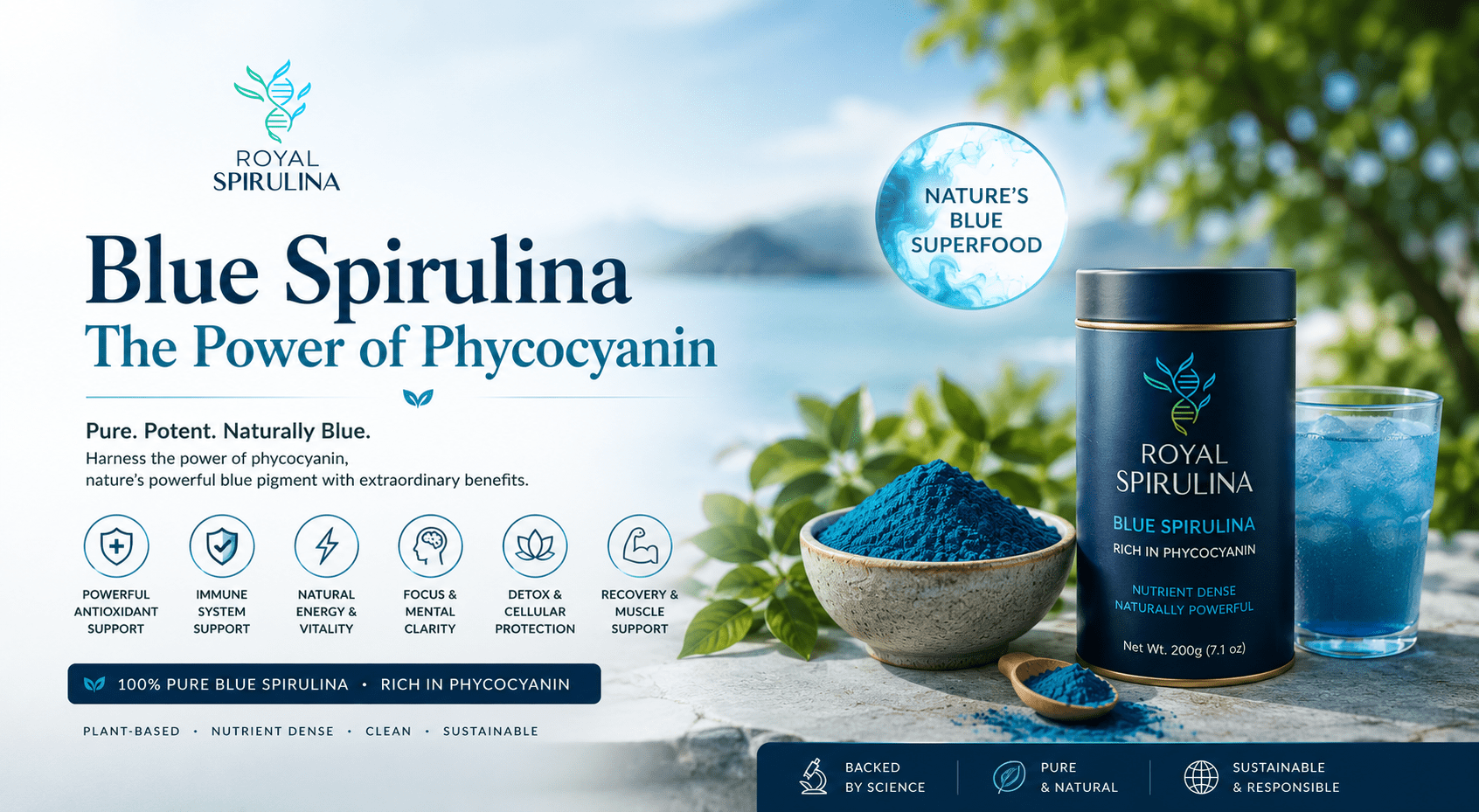
Blue spirulina has become one of the most popular superfood ingredients on social media — turning smoothie bowls, lattes, and energy bites a striking blue without any artificial dyes. But blue spirulina is not a different species of algae. It’s phycocyanin, a blue pigment-protein extracted from regular spirulina (Spirulina platensis).
What most people don’t realize is that phycocyanin isn’t just a pretty color. It’s the single most studied bioactive compound in spirulina, with published research documenting antioxidant, anti-inflammatory, neuroprotective, hepatoprotective, and immunomodulatory effects. Many of the health benefits attributed to spirulina are actually driven by this one molecule.
This article examines what the peer-reviewed research says about phycocyanin — the compound that makes blue spirulina blue — and why its concentration in your spirulina product matters more than most people think.
The Science of Phycocyanin
Phycocyanin (C-phycocyanin, or C-PC) is a phycobiliprotein — a light-harvesting pigment-protein complex that spirulina uses to capture light energy for photosynthesis. It absorbs orange and red wavelengths and reflects blue, giving spirulina its characteristic blue-green color.
What makes phycocyanin medically interesting is its chromophore: phycocyanobilin (PCB). PCB is an open-chain tetrapyrrole structurally similar to bilirubin — a potent antioxidant naturally produced by your body when it breaks down hemoglobin. This structural similarity is why phycocyanin mimics many of bilirubin’s protective effects, including inhibiting NADPH oxidase (a major source of cellular oxidative stress) and activating the Nrf2 antioxidant pathway.
Phycocyanin typically makes up 15–20% of spirulina’s dry weight in high-quality products, making spirulina one of the most concentrated natural sources of this compound. No other commonly consumed food provides phycocyanin — it is unique to cyanobacteria.
Antioxidant Power: How Phycocyanin Protects Your Cells
Phycocyanin’s antioxidant activity is among the most thoroughly documented of any natural compound. A comprehensive review in Archives of Toxicology (Wu et al., 2016) analyzed the evidence and identified multiple antioxidant mechanisms:
Direct free radical scavenging. Phycocyanin directly neutralizes reactive oxygen species (ROS) including superoxide radicals, hydroxyl radicals, and peroxyl radicals. Its scavenging capacity is comparable to or greater than many synthetic antioxidants.
NADPH oxidase inhibition. NADPH oxidase is a family of enzymes that generates superoxide as its primary product. It’s a major source of oxidative stress in chronic disease. Phycocyanobilin inhibits NADPH oxidase activity, reducing oxidative stress at its source rather than just mopping up free radicals after they’re created. This “upstream” mechanism is considered more therapeutically significant than simple free radical scavenging.
Nrf2 pathway activation. Phycocyanin activates the Nrf2 (nuclear factor erythroid 2-related factor 2) transcription factor, which turns on your body’s own antioxidant defense genes — including superoxide dismutase (SOD), catalase, glutathione peroxidase, and heme oxygenase-1 (HO-1). A 2024 study in the Journal of Advanced Research confirmed that phycocyanin’s therapeutic effects in COPD mice operated through this Nrf2/HO-1/NQO1 pathway (Li et al., 2024).
Lipid peroxidation inhibition. Phycocyanin prevents the oxidative degradation of cell membrane lipids, protecting cell integrity and reducing the formation of malondialdehyde (MDA) and other toxic lipid peroxidation byproducts.
DNA damage protection. Research shows phycocyanin protects DNA from oxidative damage, which is relevant to both aging and cancer prevention.
The Wu et al. review noted an important finding: there appears to be a threshold dose above which phycocyanin’s antioxidant activity plateaus. This suggests that consistent daily intake at effective doses is more important than megadosing.
Anti-Inflammatory Effects: A Natural COX-2 Inhibitor
Phycocyanin’s anti-inflammatory properties may be its most practically significant benefit. The research shows it works through the same pathways targeted by common pharmaceutical anti-inflammatories — but without the gastrointestinal side effects.
COX-2 inhibition. Phycocyanin selectively inhibits cyclooxygenase-2 (COX-2), the enzyme responsible for producing inflammatory prostaglandins. This is the same target as NSAIDs like ibuprofen and celecoxib. However, unlike NSAIDs, phycocyanin shows selectivity for COX-2 over COX-1, meaning it reduces inflammation without disrupting the COX-1-dependent protective mucus lining of the stomach (Shih et al., 2009).
NF-kB suppression. Phycocyanin inhibits the NF-kB (nuclear factor kappa-B) signaling pathway — the master switch that activates inflammatory gene expression. By suppressing NF-kB, phycocyanin reduces the production of pro-inflammatory cytokines including TNF-alpha, IL-1beta, and IL-6. The Wu et al. (2016) review confirmed that spirulina regulates the ERK1/2, JNK, p38, and IkB pathways.
Nitric oxide modulation. Phycocyanin inhibits inducible nitric oxide synthase (iNOS), reducing excessive nitric oxide production that contributes to inflammatory tissue damage.
These anti-inflammatory mechanisms explain why spirulina has shown benefit in inflammatory conditions ranging from rheumatoid arthritis to allergic rhinitis. A review in Mini Reviews in Medicinal Chemistry (Mysliwa-Kurdziel and Solymosi, 2017) confirmed phycocyanin’s anti-inflammatory effects across multiple disease models.
Immune System Support
Phycocyanin doesn’t simply boost the immune system — it modulates it, supporting balanced immune function. The research shows effects on multiple branches of immunity:
Natural killer (NK) cell activation. Studies show phycocyanin enhances NK cell activity, which is your body’s first line of defense against virus-infected cells and abnormal cells. This is particularly relevant for cancer surveillance.
Antibody production. Clinical trials reviewed by Wu et al. (2016) demonstrated that spirulina supplementation stimulates antibody production, improving the adaptive immune response to pathogens.
Cytokine regulation. Rather than indiscriminately stimulating immune activity, phycocyanin up- or downregulates cytokine expression depending on context. It can suppress excessive inflammatory cytokines (relevant in autoimmune conditions) while enhancing protective immune signaling — a balancing act that crude immune stimulants cannot achieve.
Macrophage activation. Phycocyanin has been shown to enhance macrophage phagocytic activity, improving the immune system’s ability to clear pathogens and cellular debris.
This immunomodulatory profile makes phycocyanin particularly interesting for women, who experience autoimmune diseases at 2–10 times the rate of men. For more on spirulina’s benefits specific to women, see Spirulina Benefits for Women.
Liver and Kidney Protection
Phycocyanin has demonstrated hepatoprotective (liver-protecting) and nephroprotective (kidney-protecting) effects in multiple studies, primarily through its antioxidant and anti-inflammatory mechanisms.
Liver protection: Research shows phycocyanin reduces liver enzyme markers (ALT, AST) and prevents hepatocyte damage in models of drug-induced liver injury, non-alcoholic fatty liver disease (NAFLD), and toxic exposure. The mechanism involves reducing oxidative stress in liver tissue, inhibiting inflammatory cytokine production, and supporting hepatocyte regeneration.
Kidney protection: Zheng et al. (2013) demonstrated that phycocyanin and phycocyanobilin from spirulina protect against diabetic nephropathy — one of the most common complications of diabetes. The protective effect was linked to NADPH oxidase inhibition, which reduces the oxidative stress that damages kidney filtration units (glomeruli) in diabetic patients.
The Mysliwa-Kurdziel and Solymosi (2017) review in Mini Reviews in Medicinal Chemistry confirmed both hepatoprotective and nephroprotective effects as well-documented properties of phycobiliproteins.
Brain and Nervous System Support
Phycocyanin’s neuroprotective effects are an active area of research. The structural similarity between phycocyanobilin and bilirubin — which is known to be neuroprotective at low physiological concentrations — provides a plausible mechanism.
Research has shown that phycocyanin protects neuronal cells from oxidative injury through several pathways: scavenging reactive oxygen species in neural tissue, reducing neuroinflammation by inhibiting microglial activation and NF-kB signaling, protecting against ischemia-reperfusion injury in brain tissue, and supporting mitochondrial function in neurons.
The comprehensive review by Mysliwa-Kurdziel and Solymosi (2017) classified neuroprotection as one of phycocyanin’s established pharmacological effects, alongside its antioxidant, anti-inflammatory, and hepatoprotective properties.
While most neuroprotection research has been preclinical, the consistent results across multiple models suggest phycocyanin may support long-term brain health — particularly through its anti-inflammatory and antioxidant mechanisms, since neuroinflammation and oxidative stress are central to neurodegenerative disease progression.
Phycocyanin + Trehalose: The Enhanced Neuroprotective Formula
Royal Spirulina now offers Phycocyanin with Trehalose — a formula designed to amplify the neuroprotective benefits of phycocyanin with a compound that has its own impressive body of research behind it.
What is trehalose? Trehalose is a naturally occurring disaccharide (two glucose molecules linked together) found in plants, fungi, and certain invertebrates. It has gained significant scientific attention for its ability to stabilize proteins, protect cell membranes, and activate cellular housekeeping pathways that clear damaged proteins from the brain.
A 2024 review published in Neuroscience International titled “Trehalose: Neuroprotective Effects and Mechanisms” (Halbe and Bhatt, 2024) analyzed the current evidence and identified five key neuroprotective mechanisms:
1. Autophagy enhancement. Trehalose activates autophagy — the cell’s built-in recycling system that clears out damaged proteins and organelles. It does this by inhibiting the mTOR pathway and activating AMPK, which in turn activates TFEB (transcription factor EB), the master regulator of autophagy genes. This is particularly relevant to neurodegenerative diseases where toxic protein aggregates accumulate in the brain.
2. Prevention of protein misfolding and aggregation. Trehalose acts as a chemical chaperone, forming hydrogen bonds with proteins that stabilize their correct three-dimensional structure. This prevents the misfolding and clumping of proteins like amyloid-beta (Alzheimer’s), alpha-synuclein (Parkinson’s), huntingtin (Huntington’s), and SOD1 (ALS). By keeping proteins properly folded, trehalose addresses neurodegenerative disease at one of its root causes.
3. Osmoprotective and membrane stabilization. Trehalose protects cell membranes by interacting directly with the phospholipid bilayer, maintaining membrane integrity during cellular stress. This is especially important for neurons, which are highly sensitive to membrane disruption.
4. Anti-inflammatory activity. Like phycocyanin, trehalose suppresses the NF-kB inflammatory pathway, reducing production of pro-inflammatory cytokines IL-1β and TNF-α. This complementary anti-inflammatory effect means the two compounds work through overlapping but distinct mechanisms for enhanced neuroinflammation control.
5. Gut-brain axis modulation. Emerging research shows trehalose has prebiotic effects, promoting beneficial gut bacteria that influence brain health through the gut-brain axis. This is a growing area of neuroscience research, and trehalose’s ability to positively modulate the gut microbiome adds another dimension to its neuroprotective profile.
Why phycocyanin + trehalose together? Phycocyanin and trehalose complement each other through distinct but synergistic mechanisms. Phycocyanin provides direct antioxidant protection and COX-2/NF-kB inhibition, while trehalose activates the cellular cleanup pathways (autophagy) that remove the damaged proteins and organelles that antioxidants alone cannot clear. Together, they address neurodegeneration from both sides: reducing the oxidative and inflammatory damage that causes protein misfolding, and enhancing the cellular machinery that clears misfolded proteins once they form.
Additionally, trehalose’s protein-stabilizing properties help preserve phycocyanin’s own structure — the same heat-sensitive protein structure that makes freeze-drying so important. This means the trehalose in the formula also functions as a natural stabilizer for the phycocyanin itself.
Exercise Performance and Fat Burning
Phycocyanin’s benefits extend to exercise performance and body composition, largely through its activation of AMPK (AMP-activated protein kinase) and its antioxidant protection against exercise-induced oxidative stress.
A study by Kalafati et al. (2010) gave moderately trained men spirulina (6g/day) for four weeks and measured fat oxidation during sustained exercise. The spirulina group showed significantly increased fat oxidation rates during a 2-hour treadmill run, while also showing reduced markers of oxidative stress. The body preferentially burned fat over carbohydrates.
Hernandez-Lepe et al. (2019) found that spirulina supplementation (4.5g/day) combined with exercise led to significantly greater reductions in body fat compared to exercise alone over 6 weeks.
Phycocyanin is the likely driver of these effects through two mechanisms: AMPK activation shifts cellular energy metabolism from fat storage toward fat oxidation, and phycocyanin’s antioxidant activity protects muscles from exercise-induced oxidative damage, supporting faster recovery.
For a detailed analysis of the weight loss evidence, see Spirulina for Weight Loss: What 12 Studies Actually Show.
Blood Sugar and the GLP-1 Connection
One of the most exciting recent discoveries about spirulina is its connection to GLP-1 — the same hormone targeted by weight-loss drugs like Ozempic and Wegovy.
Spirulina protein hydrolysates (which include phycocyanin-derived peptides) have demonstrated up to 74.2% inhibition of DPP-IV — the enzyme that destroys your body’s natural GLP-1 within about 2 minutes of its release. By protecting GLP-1 from degradation, spirulina may enhance your body’s natural appetite regulation, insulin signaling, and gastric emptying control.
Additionally, spirulina extracts have been shown to directly stimulate insulin secretion and reduce carbohydrate absorption, providing multiple pathways for blood sugar support.
Phycocyanin contributes to these effects through its anti-inflammatory and antioxidant protection of pancreatic beta cells — the cells that produce insulin. By reducing the oxidative stress that progressively damages beta cells in type 2 diabetes, phycocyanin helps preserve insulin-producing capacity over time.
For a deep dive into these mechanisms, see Spirulina and GLP-1 and What Is DPP-IV? The Enzyme Behind GLP-1. For a comparison with another popular blood sugar supplement, read Spirulina vs. Berberine for Blood Sugar.
Blue Spirulina vs. Green Spirulina: What’s the Difference?
This is one of the most common questions people ask, and the answer matters more than most brands will tell you.
| Feature | Blue Spirulina (Phycocyanin Extract) | Green Spirulina (Whole Spirulina) |
|---|---|---|
| What it is | Isolated phycocyanin pigment | Complete spirulina organism |
| Color | Vivid blue | Dark green |
| Taste | Virtually tasteless | Mild algae/seaweed flavor |
| Phycocyanin | High concentration (isolated) | 15-20% of dry weight (in quality products) |
| Protein | Minimal | 60-70% complete protein |
| Iron | Minimal | 28.5 mg per 100g |
| B vitamins | Minimal | B1, B2, B3, B12 |
| GLA (Omega-6) | None | ~100 mg per 10g |
| Chlorophyll | None (removed during extraction) | High |
| DPP-IV inhibition | Partial (phycocyanin only) | Full spectrum (up to 74.2%) |
| Best for | Natural food coloring, smoothie bowls | Comprehensive health benefits |
The key takeaway: blue spirulina is not a better version of spirulina. It’s a single extract that’s been stripped of everything except the blue pigment. You get phycocyanin — which is valuable — but you lose the complete protein, iron, B vitamins, chlorophyll, GLA, beta-carotene, and the full spectrum of peptides responsible for DPP-IV inhibition.
If your goal is health benefits, whole spirulina with high phycocyanin content gives you everything blue spirulina offers plus everything else. If your goal is a natural blue food colorant without algae flavor, blue spirulina extract makes sense.
Why Processing Method Matters
Here’s where phycocyanin content becomes a practical purchasing decision. Phycocyanin is a heat-sensitive protein. Its three-dimensional structure — which is essential for its biological activity — begins to denature (unfold and lose function) at temperatures above 60 degrees C (140 degrees F).
This creates a critical problem with how most spirulina is produced:
Spray-drying — used by the majority of spirulina producers, especially those importing from China — exposes spirulina to inlet temperatures of 150-200 degrees C. At these temperatures, a significant portion of phycocyanin is denatured and loses its biological activity. The powder may still look green, but the phycocyanin inside has been structurally damaged.
Freeze-drying removes moisture at low temperatures under vacuum, preserving the three-dimensional structure of phycocyanin and other heat-sensitive compounds (enzymes, chlorophyll, vitamins). Royal Spirulina is freeze-dried and grown in the USA, which is why it maintains phycocyanin concentrations of 15% or higher — the level found in the research studies that documented health benefits.
When evaluating spirulina products, phycocyanin percentage is the single best indicator of quality. Products that don’t list phycocyanin content or test below 10% are very likely spray-dried, meaning the very compound responsible for spirulina’s most significant health benefits has been partially destroyed before you even open the package.
How to Use Blue Spirulina
Whether you’re using blue spirulina extract (for color) or whole spirulina (for full benefits including phycocyanin), here are practical guidelines:
| Goal | Form | Daily Amount |
|---|---|---|
| Natural food coloring | Blue spirulina extract | 1/4 to 1/2 teaspoon |
| General antioxidant support | Whole spirulina (freeze-dried) | 2-3 grams |
| Anti-inflammatory support | Whole spirulina (freeze-dried) | 4-6 grams |
| Exercise performance | Whole spirulina (freeze-dried) | 4-6 grams |
| Metabolic and blood sugar support | Whole spirulina (freeze-dried) | 4-8 grams |
| Neuroprotective support | Phycocyanin with Trehalose | Follow product label |
Important: Avoid mixing spirulina into hot beverages or cooking it at high temperatures. Heat degrades phycocyanin. Add it to smoothies, cold juices, yogurt, or energy balls instead. If making a warm latte, let the liquid cool below 60 degrees C (140 degrees F) before stirring in spirulina.
Frequently Asked Questions
Is blue spirulina the same as regular spirulina?
No. Blue spirulina is phycocyanin — a single blue pigment-protein extracted from regular spirulina. Regular (green) spirulina is the whole organism, containing phycocyanin plus complete protein, iron, B vitamins, chlorophyll, GLA, and dozens of other nutrients. Blue spirulina gives you the blue color and phycocyanin’s antioxidant benefits, but you lose all the other nutritional components.
What does phycocyanin do for your body?
Phycocyanin is a potent antioxidant and anti-inflammatory compound. Published research documents its ability to scavenge free radicals, inhibit NADPH oxidase (a major source of cellular oxidative stress), activate the Nrf2 antioxidant pathway, selectively inhibit COX-2 (the same target as ibuprofen), suppress NF-kB inflammatory signaling, and support immune function. It also has demonstrated hepatoprotective, nephroprotective, and neuroprotective effects.
Is blue spirulina better than green spirulina?
For health benefits, no. Green (whole) spirulina contains phycocyanin plus complete protein, iron, B vitamins, chlorophyll, GLA, and other bioactives. Blue spirulina is useful as a natural food colorant but is nutritionally inferior to whole spirulina. If you want the health benefits of phycocyanin, choose high-quality whole spirulina with a phycocyanin content of 15% or higher.
How much phycocyanin should I take daily?
Most clinical studies showing health benefits used whole spirulina at doses of 2-8 grams per day, which delivers approximately 300-1,600 mg of phycocyanin (assuming 15-20% phycocyanin content in freeze-dried spirulina). Benefits have been observed at 2g daily within 4-8 weeks, with stronger effects at higher doses and longer durations.
Does cooking destroy phycocyanin?
Yes. Phycocyanin begins to denature at temperatures above 60 degrees C (140 degrees F). This is why processing method matters so much — spray-dried spirulina (exposed to 150-200 degrees C) loses significant phycocyanin activity, while freeze-dried spirulina preserves it. For the same reason, add spirulina to cold or room-temperature foods and beverages rather than hot ones.
Can phycocyanin help with inflammation and joint pain?
Research shows phycocyanin selectively inhibits COX-2 — the same inflammatory enzyme targeted by NSAIDs like ibuprofen — while sparing COX-1 (which protects the stomach lining). It also suppresses NF-kB signaling, reducing the production of inflammatory cytokines. Multiple studies have documented anti-inflammatory benefits, including in rheumatoid arthritis models where spirulina’s phycocyanin showed significant anti-arthritic activity.
Is phycocyanin safe?
Phycocyanin has an excellent safety profile. Spirulina has been consumed as food for centuries and has GRAS (Generally Recognized As Safe) status from the FDA. Clinical studies using up to 10g of spirulina daily for six months have reported no significant adverse effects. The primary safety consideration is sourcing — spirulina must be grown in controlled, contaminant-free environments. USA-grown, freeze-dried spirulina ensures both purity and phycocyanin potency.
Why is blue spirulina so expensive?
Blue spirulina extract requires an additional processing step: the phycocyanin must be separated from the rest of the spirulina biomass through water extraction and filtration. This process adds cost and reduces yield. However, you can get the same phycocyanin (plus all the other nutrients) by choosing high-quality whole spirulina — often at a lower per-serving cost.
What is Phycocyanin with Trehalose?
Phycocyanin with Trehalose is Royal Spirulina’s enhanced formula that combines phycocyanin extract with trehalose, a naturally occurring sugar with demonstrated neuroprotective properties. Trehalose activates autophagy (the cell’s cleanup system), prevents protein misfolding and aggregation, stabilizes cell membranes, and has its own anti-inflammatory effects. Together, phycocyanin and trehalose provide complementary neuroprotective benefits — phycocyanin reduces oxidative damage and inflammation, while trehalose enhances the cellular pathways that clear damaged proteins. A 2024 review in Neuroscience International documented trehalose’s neuroprotective mechanisms across multiple neurodegenerative disease models (Halbe and Bhatt, 2024).
The Bottom Line
| Benefit | What Research Shows | Evidence Level |
|---|---|---|
| Antioxidant protection | Scavenges free radicals, inhibits NADPH oxidase, activates Nrf2 | Strong (multiple reviews) |
| Anti-inflammatory | Selective COX-2 inhibition, NF-kB suppression | Strong (multiple studies) |
| Immune modulation | NK cell activation, antibody production, cytokine balance | Strong (clinical + preclinical) |
| Liver protection | Reduced liver enzymes, hepatocyte protection | Moderate-Strong (preclinical) |
| Kidney protection | Protection against diabetic nephropathy | Moderate (preclinical) |
| Neuroprotection | Neuronal cell protection, anti-neuroinflammation; enhanced by trehalose (autophagy activation, protein stabilization) | Moderate (preclinical, growing) |
| Fat oxidation | Increased fat burning during exercise via AMPK | Strong (human trials) |
| Blood sugar support | DPP-IV inhibition (74.2%), beta cell protection | Moderate-Strong |
Phycocyanin is the most pharmacologically active compound in spirulina, responsible for a disproportionate share of spirulina’s documented health benefits. Its antioxidant, anti-inflammatory, and immunomodulatory properties have been confirmed across dozens of peer-reviewed studies and multiple comprehensive reviews.
But here’s the practical takeaway: phycocyanin is a heat-sensitive protein. The benefits documented in research depend on consuming phycocyanin that hasn’t been damaged by high-temperature processing. Most spirulina on the market is spray-dried and imported from China, destroying a significant portion of its phycocyanin content before it reaches you.
Royal Spirulina is freeze-dried and USA-grown, preserving the full concentration of active phycocyanin. For those seeking targeted neuroprotective support, Royal Spirulina’s Phycocyanin with Trehalose formula combines the antioxidant and anti-inflammatory power of phycocyanin with trehalose’s proven ability to activate autophagy, prevent protein aggregation, and stabilize neuronal membranes — providing comprehensive brain health support backed by peer-reviewed research.
References
- Wu Q, Liu L, Miron A, Klimova B, Wan D, Kuca K. The antioxidant, immunomodulatory, and anti-inflammatory activities of Spirulina: an overview. Arch Toxicol. 2016;90(8):1817-1840. doi:10.1007/s00204-016-1744-5. PubMed
- Mysliwa-Kurdziel B, Solymosi K. Phycobilins and Phycobiliproteins Used in Food Industry and Medicine. Mini Rev Med Chem. 2017;17(13):1173-1193. doi:10.2174/1389557516666160912180155. PubMed
- Li W, Li Y, Wang Q, et al. Therapeutic effect of phycocyanin on chronic obstructive pulmonary disease in mice. J Adv Res. 2024;66:285-301. doi:10.1016/j.jare.2024.01.009. PubMed
- Shih CM, Cheng SN, Wong CS, Kuo YL, Chou TC. Antiinflammatory and antihyperalgesic activity of C-phycocyanin. Anesth Analg. 2009;108(4):1303-1310. doi:10.1213/ane.0b013e318193e919. PubMed
- Zheng J, Inoguchi T, Sasaki S, et al. Phycocyanin and phycocyanobilin from Spirulina platensis protect against diabetic nephropathy by inhibiting oxidative stress. Am J Physiol Regul Integr Comp Physiol. 2013;304(2):R110-R120. doi:10.1152/ajpregu.00648.2011. PubMed
- Kalafati M, Jamurtas AZ, Nikolaidis MG, et al. Ergogenic and antioxidant effects of spirulina supplementation in humans. Med Sci Sports Exerc. 2010;42(1):142-151. PubMed
- Hernandez-Lepe MA, Wall-Medrano A, Juarez-Oropeza MA, Ramos-Jimenez A, Hernandez-Torres RP. Spirulina and its hypolipidemic and antioxidant effects in humans: a systematic review. Nutr Hosp. 2019;36(6):1405-1416. PubMed
- Romay C, Gonzalez R, Ledon N, Remirez D, Rimbau V. C-phycocyanin: a biliprotein with antioxidant, anti-inflammatory and neuroprotective effects. Curr Protein Pept Sci. 2003;4(3):207-216. PubMed
- Halbe L, Bhatt LK. Trehalose: Neuroprotective Effects and Mechanisms — An Updated Review. Neurosci Int. 2024;5(4):32. doi:10.3390/neurosci5040032. PMC11503274
Related Reading
Spirulina Benefits: The Complete Guide — Comprehensive overview of all spirulina health benefits.
Spirulina Benefits for Women: What the Research Shows — Iron support, PCOS, weight management, skin health, and bone density.
Spirulina Benefits for Men: What the Research Shows — Testosterone, prostate, heart health, exercise performance, and male fertility.
Spirulina and Rheumatoid Arthritis: What 13+ Studies Say — Phycocyanin’s anti-inflammatory effects in joint protection and RA.
Spirulina for Weight Loss: What 12 Studies Actually Show — Clinical evidence for spirulina and body composition.
Spirulina vs. Berberine for Blood Sugar — How spirulina’s DPP-IV inhibition compares to berberine’s AMPK activation.
Spirulina and GLP-1: Nature’s Superfood and Your Weight Management System
What Is DPP-IV? The Enzyme Behind GLP-1 — The science behind the enzyme spirulina targets.
Foods That Naturally Boost GLP-1 — Other foods that support your body’s GLP-1 production.
Can You Take Spirulina with Ozempic? — Safety and synergy of combining spirulina with GLP-1 medications.
What to Avoid When Taking Spirulina — Drug interactions, foods to avoid, supplement conflicts, and safety precautions.
Spirulina for Heart Health: Cholesterol & Blood Pressure — Meta-analyses show spirulina lowers LDL by 33 mg/dL, triglycerides by 39 mg/dL, and blood pressure by 4–5 mmHg.
Spirulina and Chlorella Together: What Science Says — Can you take spirulina and chlorella together? Learn the complementary benefits and research-backed dosages for this powerful superfood combination.
Spirulina vs Moringa: Which Superfood Is Better? — A science-based comparison of spirulina and moringa covering nutrition, benefits, and who should take which.
Spirulina for Allergies & Hay Fever: What 9 PubMed Studies Say — Phycocyanin inhibits histamine release from mast cells, acting as a natural antihistamine. See 9 clinical studies reviewed.
Spirulina for Eye Health: Zeaxanthin, Macular Degeneration & Vision — How spirulina’s zeaxanthin and phycocyanin protect your eyes from macular degeneration and blue light damage.
Spirulina for Liver Health: NAFLD, Fatty Liver & Detox — How spirulina protects against fatty liver disease through antioxidant, anti-inflammatory, and metabolic pathways.