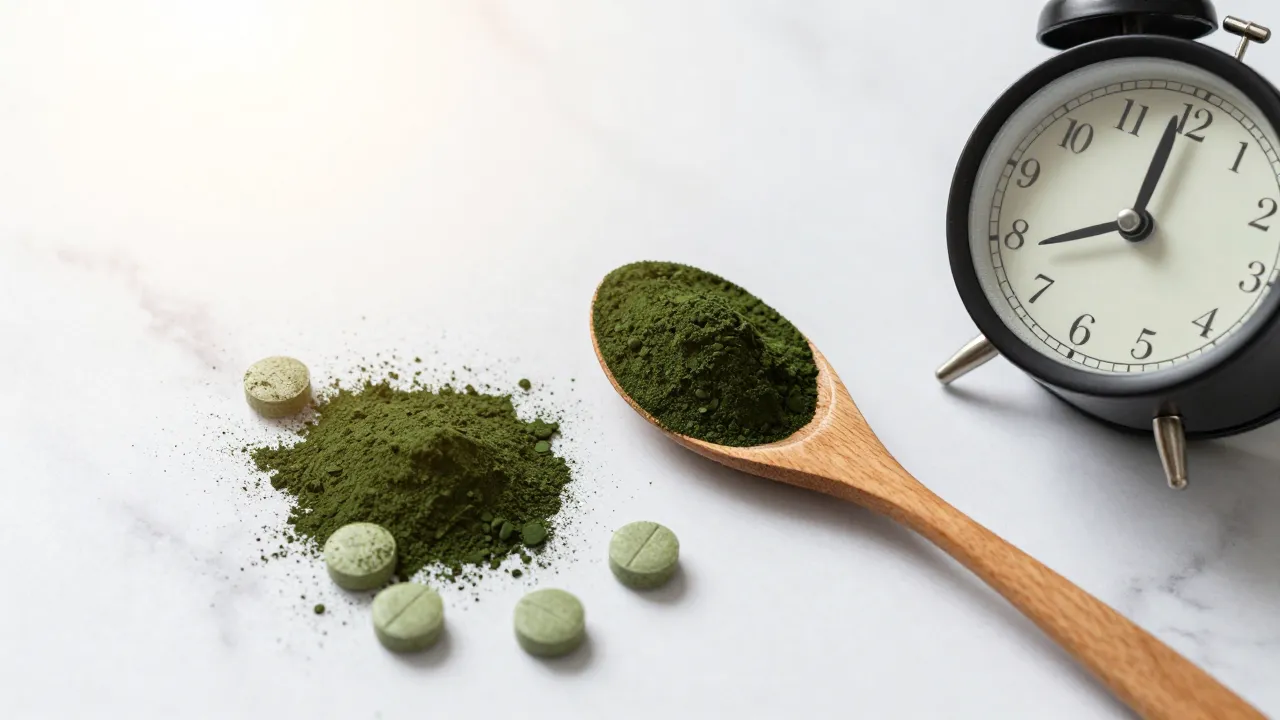
“Should I take spirulina in the morning or at night?” If you have recently started taking spirulina or are considering adding it to your wellness routine, this is probably one of the first questions on your mind. You are not alone — it is one of the most common questions we receive at Royal Spirulina, and the answer is more nuanced than most blogs suggest.
The truth is that spirulina is a remarkably versatile superfood. Unlike medications that require strict timing windows, spirulina can be taken at various times of day and still deliver its impressive range of benefits — from antioxidant protection and immune support to sustained natural energy. However, emerging research reveals that when you take spirulina, what you take it with, and what goals you are pursuing can meaningfully influence how well your body absorbs and utilizes its nutrients.
In this evidence-based guide, we break down the science behind spirulina timing — morning versus night, before versus after meals, and how to align your dosing schedule with your specific health goals. Every recommendation is grounded in peer-reviewed research, so you can make an informed decision that works for your lifestyle.
Does It Actually Matter When You Take Spirulina?
Let us start with the short answer: consistency matters more than timing. A systematic review by Sokary et al. (2024) found that most clinical studies administered spirulina daily for at least three months at doses of 1 to 8 grams per day, and the benefits accumulated over time regardless of the exact hour participants took their dose. The single most important factor is simply taking spirulina regularly.
That said, there are strategic advantages to certain times of day depending on your goals. Morning dosing may enhance energy and mental clarity, while evening dosing can support overnight recovery. And whether you take spirulina on an empty stomach or with a fat-containing meal significantly affects how well you absorb specific nutrients like zeaxanthin and beta-carotene. Let us explore each scenario.
Taking Spirulina in the Morning: The Benefits
For many people, morning is the ideal time to take spirulina. Here is why the science supports it:
Natural Energy Boost Without Caffeine
Spirulina is naturally rich in B vitamins (especially B12 analogues and B6), bioavailable iron, and complete protein — all of which play critical roles in cellular energy production. Unlike caffeine, which creates a spike-and-crash cycle, spirulina supports steady, sustained energy through genuine nutritional support of your mitochondria and oxygen-carrying capacity.
Reduced Mental Fatigue
A comprehensive review by Sorrenti et al. (2021) highlighted spirulina’s ability to reduce mental fatigue and support cognitive function. The mechanism involves spirulina’s rich antioxidant profile — particularly phycocyanin — which helps protect brain cells from oxidative stress. Taking spirulina in the morning means these neuroprotective compounds are circulating during your most mentally demanding hours.
Iron Absorption
Kapoor and Mehta (1992) demonstrated that iron bioavailability from spirulina is significant, though somewhat lower than pharmaceutical ferrous sulphate. Morning is generally considered the optimal time for iron absorption because stomach acid levels tend to be higher and there is less competition from other minerals consumed throughout the day. Additionally, Gogna et al. (2022) noted that spirulina does not hinder iron absorption because it lacks the phytate-containing pericarp found in plant-based iron sources.
Blood Sugar Stabilization
A meta-analysis by Hatami et al. (2021) found that spirulina supplementation significantly reduced fasting blood glucose levels. Taking spirulina in the morning — particularly before or with breakfast — may help set a more stable blood sugar trajectory for the rest of the day. This is especially relevant for individuals managing prediabetes or metabolic syndrome.
Taking Spirulina at Night: The Benefits
While morning dosing gets most of the attention, there are legitimate reasons to consider taking spirulina in the evening:
Antioxidant Recovery While You Sleep
Your body does much of its cellular repair and detoxification during sleep. Spirulina’s powerful antioxidants — including phycocyanin, zeaxanthin, beta-carotene, and superoxide dismutase — can support this overnight recovery process. If you have had a physically demanding day or significant environmental exposure (pollution, UV radiation), evening dosing provides antioxidant reinforcement precisely when your body is repairing itself.
No Stimulants — Will Not Disrupt Sleep
Unlike green tea, matcha, or other popular superfoods, spirulina contains zero caffeine and no stimulant compounds. You can take it before bed without any concern about disrupted sleep. Some users actually report that spirulina’s magnesium and B-vitamin content helps them feel more relaxed in the evening.
Digestive Benefits
Anecdotally, some people find that evening spirulina dosing supports next-morning digestion and regularity. While this has not been extensively studied in clinical trials, spirulina’s prebiotic effects on gut microbiota are well-documented, and overnight exposure may give beneficial bacteria more time to interact with spirulina’s bioactive compounds.
Taking Spirulina Before or After Meals?
The relationship between spirulina and meals is arguably more important than the time of day. Different nutrients in spirulina are absorbed differently depending on whether food — especially dietary fat — is present.
| Timing | Best For | Key Consideration |
|---|---|---|
| Empty stomach (30 min before meals) | Iron absorption, protein utilization, blood sugar management | May cause mild nausea in sensitive individuals |
| With meals (containing fat) | Carotenoid absorption (zeaxanthin, beta-carotene), overall nutrient uptake | Best for fat-soluble compounds; most well-tolerated |
| After meals | Digestive comfort, antioxidant protection | Slightly delayed absorption but excellent tolerance |
Fat-Soluble Carotenoids Need Dietary Fat
This is one of the most important findings for spirulina timing. Yu et al. (2012) demonstrated in a human clinical study that spirulina’s zeaxanthin — a critical carotenoid for eye health and antioxidant defense — was effectively absorbed only when taken alongside approximately 12 grams of dietary fat. Without fat, absorption was dramatically reduced.
Tudor et al. (2021) reinforced this finding, showing that zeaxanthin bioaccessibility from spirulina reached an impressive 42.8% when co-digested with coconut oil. This means if you are taking spirulina for its carotenoid benefits (eye health, skin protection, antioxidant support), you should take it with a meal that includes healthy fats — avocado, nuts, olive oil, coconut oil, or eggs.
Protein and Amino Acid Absorption
Shioji et al. (2021) studied the bioavailability of protein and amino acids from spirulina and found that key amino acids including alanine, glycine, valine, and leucine/isoleucine were markedly absorbed. Spirulina’s protein is already highly digestible (85-95% digestibility), and amino acid absorption can occur efficiently whether taken with food or on an empty stomach. For those prioritizing protein utilization — such as athletes or those building muscle — taking spirulina on a relatively empty stomach or 30 minutes before a meal may allow faster amino acid uptake.
Best Time Based on Your Health Goals
Your ideal spirulina timing depends on what you are trying to achieve. Use this table as a quick-reference guide:
| Health Goal | Recommended Timing | Why |
|---|---|---|
| Energy and mental clarity | Morning, with or before breakfast | B vitamins, iron, and protein support daytime energy; reduces mental fatigue (Sorrenti et al. 2021) |
| Eye health | With a fat-containing meal (any time) | Zeaxanthin needs dietary fat for absorption (Yu et al. 2012; Tudor et al. 2021) |
| Exercise performance | 30-60 min before workout | Antioxidant protection during exercise; amino acids for muscle fuel |
| Weight management | 30 min before meals | Protein content promotes satiety; may reduce appetite |
| Blood sugar support | Morning, before or with breakfast | May help stabilize fasting glucose throughout the day (Hatami et al. 2021) |
| Detoxification | Morning on empty stomach, or evening | Supports liver function and heavy metal chelation; evening supports overnight detox |
| Immune support | Any consistent time, with food | Daily consistency is key; phycocyanin and polysaccharides support immune modulation |
Spirulina Before or After a Workout?
If you exercise regularly, spirulina timing around your workouts can make a real difference in both performance and recovery.
Pre-Workout (30-60 Minutes Before)
Taking spirulina 30 to 60 minutes before exercise provides your muscles with readily available amino acids for fuel and floods your system with antioxidants (phycocyanin, superoxide dismutase) that protect against exercise-induced oxidative stress. The iron content also supports oxygen delivery to working muscles. Many athletes report sustained endurance without the jittery feeling associated with pre-workout supplements.
Post-Workout (Within 30 Minutes After)
Post-exercise, spirulina’s complete protein profile — including the branched-chain amino acids leucine, isoleucine, and valine highlighted by Shioji et al. (2021) — supports muscle repair and recovery. Its potent anti-inflammatory properties help reduce delayed onset muscle soreness (DOMS), getting you back to training sooner.
Spirulina for Athletes and Workout Recovery: The Complete Guide — Learn more about optimizing spirulina for exercise performance, endurance, and post-workout recovery.
Can You Take Spirulina on an Empty Stomach?
Yes, most people can take spirulina on an empty stomach without any issues. In fact, empty-stomach dosing may offer certain advantages: faster amino acid absorption, enhanced iron uptake, and more direct interaction with the gut microbiome.
However, a small percentage of people experience mild nausea or digestive discomfort when taking spirulina without food, particularly when first starting supplementation or at higher doses. If this happens to you, simply take your spirulina with a small meal or snack. This is not a sign of a problem with spirulina — it is simply how your digestive system responds to concentrated nutrition on an empty stomach.
Our recommendation: If you are new to spirulina, start by taking it with food for the first week, then experiment with empty-stomach dosing if you prefer. If your primary goal involves fat-soluble carotenoids (eye health, skin protection), always take spirulina with a meal containing fat.
How Much Spirulina to Take Per Day
According to the systematic review by Sokary et al. (2024), clinical studies have used spirulina doses ranging from 1 to 8 grams daily, with most studies administering the supplement for a minimum of three months to observe significant health benefits. Gogna et al. (2022) recommended a general dosage range of 3 to 10 grams per day for adults.
For most adults, we recommend 2 to 5 grams per day as an optimal daily dose. This provides meaningful amounts of protein, phycocyanin, carotenoids, iron, and B vitamins without being excessive.
Can you split the dose? Absolutely. Splitting your daily spirulina into two doses — for example, 2 grams in the morning and 2 grams in the evening — is a perfectly valid approach. This strategy allows you to capture the energy benefits of morning dosing while also supporting overnight recovery. It also maintains more consistent blood levels of spirulina’s bioactive compounds throughout the day.
Spirulina Dosage Guide: How Much Should You Take? — Our complete guide to finding your ideal spirulina dose based on your body weight, health goals, and the form you are using.
Why Freeze-Dried Spirulina Matters for Nutrient Timing
All the timing advice above assumes you are taking spirulina that actually contains the nutrients we have been discussing. Unfortunately, not all spirulina is equal — and the processing method makes a profound difference.
Many of spirulina’s most valuable compounds are heat-sensitive. Phycocyanin (the blue pigment responsible for much of spirulina’s anti-inflammatory and antioxidant power), zeaxanthin, B vitamins, and active enzymes begin degrading at temperatures as low as 40-50 degrees Celsius. Conventional spray-drying — the standard processing method for most Chinese-produced spirulina — subjects the algae to temperatures of 150-200 degrees Celsius, destroying a significant portion of these delicate compounds.
Royal Spirulina is freeze-dried, a process that removes moisture at low temperatures under vacuum conditions. This preserves the full spectrum of heat-sensitive nutrients — phycocyanin, zeaxanthin, beta-carotene, B vitamins, and enzymes — so that when you time your dose for optimal absorption, those nutrients are actually present and bioactive.
Freeze-Dried vs. Spray-Dried Spirulina: What You Need to Know — Why processing method is the hidden factor that determines whether your spirulina actually delivers on its promises.
Side Effects and Precautions
Spirulina is considered safe for most adults at recommended doses. However, you should be aware of a few timing-related considerations:
- If you take thyroid medication: Take spirulina at least 2 hours apart from your medication, as spirulina’s iodine content may theoretically interact.
- If you take blood thinners: Consult your doctor before adding spirulina, as its vitamin K content could affect anticoagulant efficacy.
- If you experience nausea: Switch from empty-stomach to with-food dosing, or reduce your dose temporarily.
- If you are pregnant or breastfeeding: Consult your healthcare provider before starting spirulina supplementation.
- If you have phenylketonuria (PKU): Spirulina contains phenylalanine and should be avoided.
What to Avoid When Taking Spirulina — A detailed look at drug interactions, contraindications, and foods to avoid with spirulina.
Spirulina Side Effects: What to Know Before You Start — Our honest guide to potential side effects and how to minimize them.
Frequently Asked Questions
Should I take spirulina in the morning or at night?
Both times work well, but morning dosing is generally preferred if you want an energy boost, mental clarity, and blood sugar support throughout the day. Evening dosing is excellent for antioxidant recovery during sleep. You can also split your dose between morning and evening to get the benefits of both.
Can I take spirulina on an empty stomach?
Yes, most people tolerate spirulina well on an empty stomach, and it may enhance iron and amino acid absorption. However, if you experience nausea, simply take it with food. If your goal is carotenoid absorption (eye health, antioxidants), always take spirulina with a fat-containing meal.
Should I take spirulina before or after a meal?
For fat-soluble nutrient absorption (zeaxanthin, beta-carotene), take spirulina with or immediately after a meal containing fat. Research by Yu et al. (2012) showed that zeaxanthin absorption requires dietary fat. For weight management and appetite control, taking spirulina 20 to 30 minutes before a meal may help promote satiety.
Can I take spirulina before bed?
Absolutely. Spirulina contains no caffeine or stimulant compounds, so it will not interfere with your sleep. Taking spirulina before bed supports your body’s overnight repair and detoxification processes with its rich antioxidant profile.
Does spirulina give you energy?
Yes, but not in the way caffeine does. Spirulina provides natural, sustained energy through its B vitamins, bioavailable iron (which supports oxygen transport), complete protein, and compounds that reduce mental fatigue (Sorrenti et al. 2021). You will not feel a sudden jolt, but many users report improved stamina and focus throughout the day.
Can I split my spirulina dose throughout the day?
Yes, splitting your daily dose is a great strategy. For example, taking 2 grams in the morning with breakfast and 2 grams in the evening with dinner maintains consistent blood levels of spirulina’s bioactive compounds and lets you benefit from both morning energy and evening recovery support.
Does spirulina interact with morning medications?
Spirulina may interact with certain medications including blood thinners (due to vitamin K), immunosuppressants (spirulina can stimulate the immune system), and thyroid medications (due to iodine content). Always separate spirulina from medications by at least one to two hours and consult your healthcare provider if you take prescription drugs.
How long does it take for spirulina to work?
Some benefits like energy and mental clarity can be noticed within the first one to two weeks. However, most clinical benefits — including changes in blood sugar, cholesterol, inflammation markers, and immune function — require consistent daily use for at least two to three months, according to the systematic review by Sokary et al. (2024). Patience and consistency are key.
Scientific References
- Yu B, Wang J, Suter PM, et al. Spirulina is an effective dietary source of zeaxanthin to humans. British Journal of Nutrition. 2012;108(4):611-619. PMID: 22313576. DOI: 10.1017/S0007114511005885
- Tudor C, Bohn T, Iddir M, et al. In vitro bioaccessibility of macular xanthophylls from commercial microalgal powders of Arthrospira platensis and Chlorella pyrenoidosa. Food Science & Nutrition. 2021;9(3):1896-1909. PMID: 33841808. DOI: 10.1002/fsn3.2150
- Shioji M, Moriyama T, Sato Y. Protein and amino acid digestibility of Arthrospira platensis in rats. Journal of Agricultural and Food Chemistry. 2021;69(43):12790-12800. PMID: 34677963. DOI: 10.1021/acs.jafc.1c04840
- Kapoor R, Mehta U. Iron bioavailability from Spirulina platensis: a study on rats. Plant Foods for Human Nutrition. 1992;42(4):351-356. PMID: 1293017.
- Sorrenti V, Castagna DA, Fortinguerra S, et al. Spirulina microalgae and brain health: a scoping review of experimental and clinical evidence. Marine Drugs. 2021;19(6):293. PMID: 34067317. DOI: 10.3390/md19060293
- Gogna S, Kaur J, Sharma K, et al. Spirulina— An edible cyanobacterium with potential therapeutic health benefits and toxicological consequences. Journal of the American Nutrition Association. 2022;42(6):559-572. PMID: 35916491. DOI: 10.1080/27697061.2022.2103852
- Hatami E, Ghalishourani SS, Najafgholizadeh A, et al. The effect of spirulina on type 2 diabetes: a systematic review and meta-analysis. Journal of Diabetes & Metabolic Disorders. 2021;20(1):883-892. PMID: 34178867. DOI: 10.1007/s40200-021-00760-z
- Sokary S, Al-Asmakh M, Zakaria Z, et al. The therapeutic potential of spirulina: a comprehensive systematic review of clinical trials. Journal of Dietary Supplements. 2024;21(4):507-533. PMID: 38251049. DOI: 10.1080/19390211.2023.2301366
Related Reading
Spirulina Benefits: The Complete Science-Backed Guide — An in-depth look at all the evidence-based health benefits of spirulina supplementation.
Spirulina Dosage Guide: How Much Should You Take? — Find your ideal daily dose based on your body weight, goals, and preferred form.
Spirulina for Athletes and Workout Recovery — How spirulina supports exercise performance, endurance, and post-workout muscle repair.
Spirulina Side Effects: What to Know Before You Start — An honest overview of possible side effects and how to avoid them.
What to Avoid When Taking Spirulina — Drug interactions, food conflicts, and contraindications every spirulina user should understand.
Freeze-Dried vs. Spray-Dried Spirulina: What You Need to Know — Why processing method is the most overlooked factor in spirulina quality.
Spirulina for Eye Health: Zeaxanthin, Lutein, and Vision Support — How spirulina’s carotenoids protect your eyes and support macular health.
Does Spirulina Break a Fast? — Can you take spirulina during intermittent fasting without losing the benefits?
Spirulina for Allergies and Hay Fever — The evidence for spirulina as a natural antihistamine and allergy relief supplement.
Blue Spirulina Benefits: The Power of Phycocyanin — Understanding phycocyanin, spirulina’s signature blue pigment and its remarkable anti-inflammatory properties.
Spirulina for Liver Health: NAFLD, Fatty Liver & Detox — How spirulina protects against fatty liver disease through antioxidant, anti-inflammatory, and metabolic pathways.