Spirulina for Heavy Metal Detox: What the Research Actually Shows (2026)
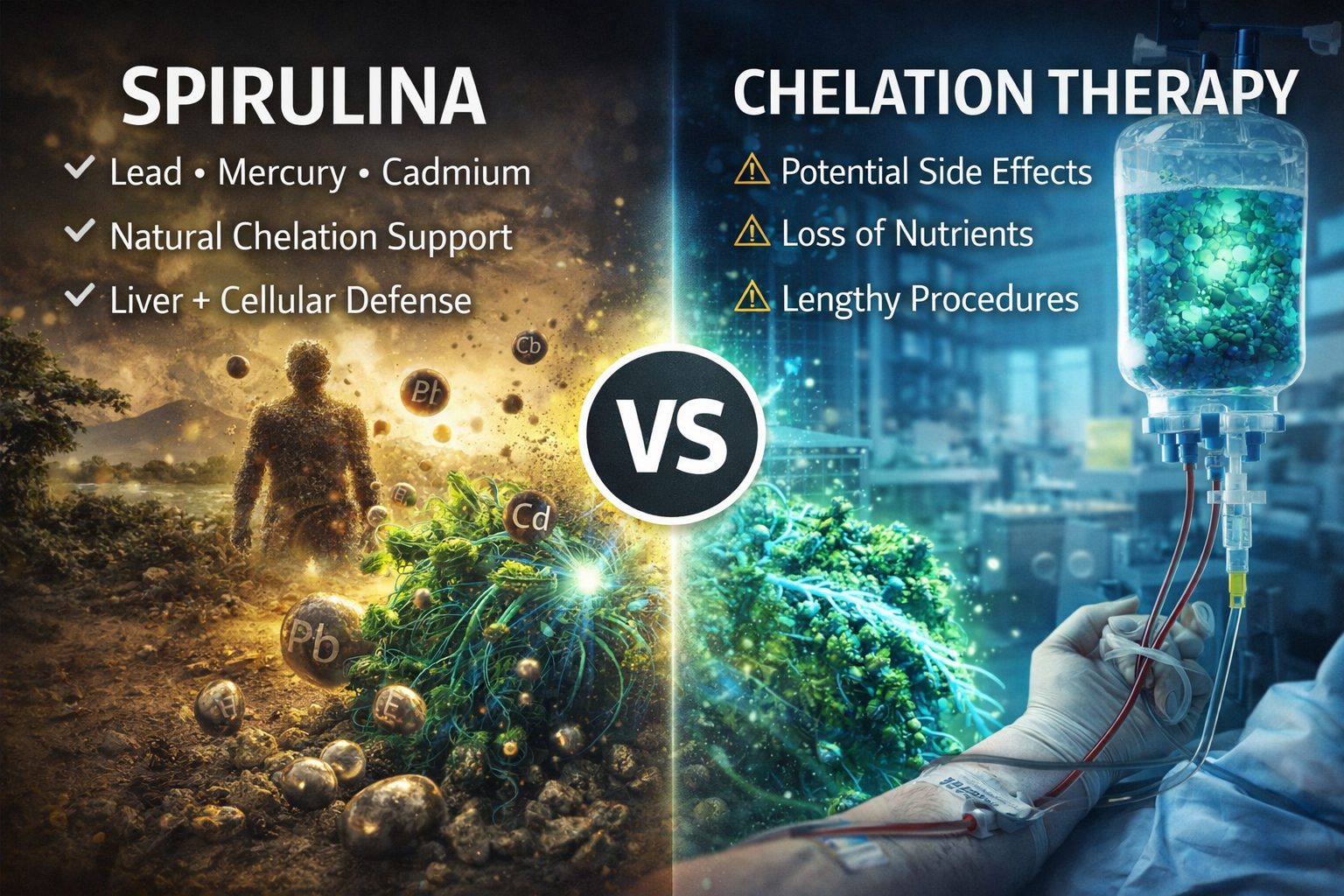
Heavy metal exposure is more common than most people realize. Lead in old paint and pipes, mercury in certain fish, arsenic in groundwater, and cadmium in cigarette smoke and some foods are persistent environmental threats. Over time, these metals accumulate in tissues and organs, contributing to neurological issues, kidney damage, fatigue, and immune dysfunction. Spirulina — particularly high-quality, freeze-dried spirulina — has gained serious scientific attention as a natural heavy metal chelator, binding to toxic metals and supporting their elimination from the body.
Here’s what the research actually shows and how to use spirulina as part of a smart detox protocol.
How Heavy Metals Accumulate in the Body
Heavy metals enter the body through food, water, air, and skin contact. Unlike organic toxins that the body can break down, heavy metals don’t metabolize — they accumulate in bones, the liver, kidneys, and brain over years of exposure.
Common sources of heavy metal exposure include:
- Mercury: Large fish (tuna, swordfish), dental amalgam fillings, industrial pollution
- Lead: Old paint, contaminated water, certain imported products
- Arsenic: Contaminated drinking water, rice, some pesticides
- Cadmium: Tobacco smoke, processed foods, industrial emissions
Chronic low-level exposure is associated with cognitive decline, fatigue, hormonal disruption, and increased cancer risk — see: Spirulina and Cancer: What the Research Shows. Heavy metal accumulation in brain tissue is also a recognized risk factor for Alzheimer’s disease — see: Spirulina and Alzheimer’s Disease: Brain Health Benefits & Research.
How Spirulina Works as a Heavy Metal Chelator
Spirulina binds to heavy metals through two primary mechanisms:
1. Phycocyanin and polysaccharides: The blue pigment phycocyanin and spirulina’s unique polysaccharide structure have demonstrated an affinity for binding heavy metal ions, particularly mercury, lead, and arsenic, facilitating their excretion.
2. Chlorophyll content: Spirulina’s high chlorophyll content has long been associated with binding to and neutralizing certain toxic compounds in the digestive tract before they are absorbed into systemic circulation.
Critically, spirulina appears to chelate toxic metals selectively — research suggests it does not significantly deplete beneficial minerals like zinc, magnesium, or calcium in the process, which is a major advantage over pharmaceutical chelation agents.
What the Research Says
The science on spirulina and heavy metal detoxification is genuinely compelling:
Mercury: A study published in the Journal of Environmental Science and Technology demonstrated that spirulina supplementation significantly reduced mercury accumulation in tissue, with researchers attributing the effect to phycocyanin’s chelating properties.
Lead and Arsenic: A landmark 2006 clinical trial in Bangladesh (one of the most arsenic-contaminated regions in the world) found that patients given spirulina plus zinc showed a 47% reduction in arsenic concentrations in hair compared to the placebo group — a dramatic finding that has driven significant ongoing research.
General oxidative protection: Heavy metals cause cellular damage largely through oxidative stress. Spirulina’s antioxidant compounds — particularly phycocyanin and beta-carotene — directly neutralize the free radicals generated by metal toxicity, providing a second layer of protection beyond simple chelation.
Diabetes connection: Heavy metal accumulation is a contributing factor to insulin resistance and pancreatic dysfunction. By reducing heavy metal burden, spirulina may provide complementary support for metabolic health. Learn more: Spirulina and Diabetes: Research-Backed Benefits for Blood Sugar.
Why Freeze-Dried Spirulina Is Critical for Detox
Ironically, low-quality spirulina from contaminated sources can actually contribute to heavy metal burden rather than reducing it. Spirulina grown in poorly controlled environments — particularly imported products from some regions of China and Korea — has tested positive for lead, mercury, and other contaminants.
Royal Spirulina is USA-grown and freeze-dried, with each batch third-party lab tested for heavy metal purity. This is non-negotiable when using spirulina for detox — you need a clean source.
How to Use Spirulina for Heavy Metal Detox
For a targeted detox protocol, consistency and dosage matter:
Recommended approach:
- Start with 1 tsp (3g) daily for the first week to assess tolerance
- Increase to 2–3 tsp (6–9g) daily for ongoing detox support
- Combine with zinc-rich foods or a zinc supplement — the arsenic study used spirulina + zinc synergistically
- Stay well hydrated to support kidney excretion of bound metals
- Run a 30–90 day protocol for meaningful results
For ideas on how to get your daily spirulina easily, see: How to Use Spirulina Powder: 10 Easy Methods for Maximum Benefits.
For a full overview of spirulina’s broad health benefits beyond detox, see: Spirulina Health Benefits: 8 Science-Backed Reasons to Take It Daily.
Frequently Asked Questions
Does spirulina really detox heavy metals?
Yes, multiple clinical and laboratory studies show spirulina has chelating properties that bind to mercury, lead, arsenic, and cadmium. The most compelling human study showed a 47% reduction in arsenic in patients supplementing with spirulina and zinc.
How much spirulina should I take for heavy metal detox?
Research protocols have used 250mg–8g per day. For practical daily use, 1–3 teaspoons (3–9g) of spirulina powder is a reasonable range. The Bangladesh arsenic study used 250mg spirulina extract twice daily, combined with zinc.
Can spirulina remove mercury specifically?
Yes, phycocyanin and spirulina polysaccharides have shown an affinity for mercury binding in both animal and in vitro studies. For significant mercury detox, high-dose protocols under medical supervision are recommended.
Does spirulina remove good minerals along with toxic metals?
Unlike pharmaceutical chelators like EDTA, spirulina appears to preferentially bind toxic heavy metals without significantly depleting essential minerals like zinc, magnesium, or calcium — a major advantage.
Is all spirulina safe for detox?
No. Spirulina from contaminated growing environments can contain the very heavy metals you’re trying to remove. Always choose USA-grown, third-party tested, freeze-dried spirulina for any detox purpose.
How long does it take for spirulina to detox heavy metals?
Meaningful chelation typically takes 30–90 days of consistent supplementation. The arsenic study ran for 16 weeks. Don’t expect overnight results — this is a gradual process that requires consistency.
Start Your Detox with the Cleanest Spirulina Available
Royal Spirulina is USA-grown, freeze-dried, and batch-tested for heavy metal purity — so you can detox with confidence. Rated #1 by Goodnature.com with a perfect 10/10 score.
